
Yoga for constipation: Choosing Yoga Therapy
Acknowledgement – School of Yoga is deeply grateful to late Dr. V. Sivaraman for his collaboration of Yoga Therapy for constipation.
Constipation is one of the most commonly known digestive issues that can affect people of all ages. Thankfully, there are simple solutions in yoga for constipation relief. Experts recommend choosing yoga for constipation, due to its simple and gentle way of healing.
Yoga for constipation: What is the meaning of constipation?
- First, constipation is the manifestation of hard bowel movements, usually less than 3 times a week, often painful.
- Also, it is important to understand that constipation is a symptom, not a disease.
- Consequently, this manifests as straining during bowel movement, or experiencing an incomplete bowel evacuation, due to hardening of the intestinal contents in the colon and large intestine.
- Lastly, constipation that is not treated can often lead to cancer, hemorrhoids or fissures.
Yoga for constipation: What is the relationship between digestion and constipation?
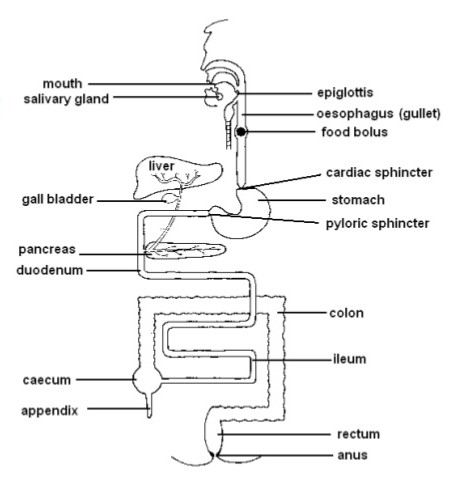
To understand constipation, we need to understand the digestion process, and how constipation fits in it.
Digestion is the process of converting food, which contains large and complex compounds into simple, soluble and usable compounds. For example, starch is broken down into glucose, protein into amino acids, and fat into fatty acids and glycerol.
Yoga for constipation: What is the digestion process?
- First, food is chewed in the mouth. This breaks down large portions of food into small pieces called bolus. At the same time, this food is mixed with saliva. Saliva performs the function of softening the food, adding a lubricant called mucous and mixing in amylase, which breaks down starch into simpler sugars.
- Next, the food passes into the alimentary canal through a pulsating process called peristalsis. Peristalsis not only moves the bolus towards the stomach, but the squeezing action assists in breaking down the bolus further.
- Finally, the food enters the stomach at the cardiac end. Here, the stomach breaks the food further by mechanical churning and chemically by addition of gastric juices (hydrochloric acid, pepsin and rennin). Simultaneously, some nutrients, such as vitamins, ethanol, glucose etc. get absorbed by the stomach. The semi-digested food, called chyme, is moved into the small intestine.
The small intestine performs 2 functions: Completion of digestion and absorption of products of digestion
- First, the chyme enters the duodenum. Here, bile from the liver and pancreatic juice from the pancreas are added. Bile reduces the acidity of the chyme and emulsifies the fatty compounds. Simultaneously, pancreatic juices are added by the pancreas. These are pancreatic amylase (converts starch to maltose), trypsin (converts protein to peptides) and lipase (convert fat compounds into glycerol and patty acids).
- Next, the chyme moves into the ileum. Here intestinal juices (which are basically enzymes) are secreted. Enzymes further break down maltose to glucose, and trypsin into peptidase.
- Finally, the completely broken down food nutrients are absorbed by the villi in the ileum.
- The balance chyme, which is now devoid of nutrients, passes into the large intestine. Here, the balance water is removed.
- Finally, the waste material is excreted is stored in the rectum and excreted through the anus.
What are the root causes of constipation?
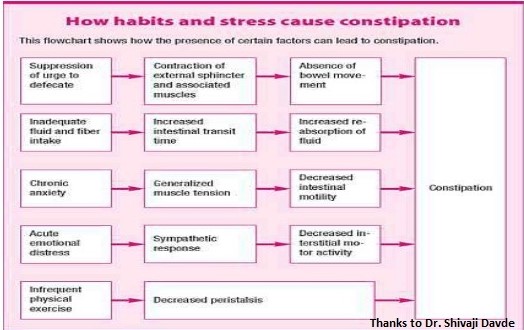
Before we learn the importance of yoga for constipation relief, let us understand which are the factors causing this health concern.
Constipation occurs because stools are not evacuating regularly from the system. This results in excessive water being removed. Consequently, the stools become hard and difficult to evacuate.
There are 3 reasons for this:
- Inadequate water in the diet, resulting in hard stools.
- Sluggish peristalsis, resulting in slow movement of matter in the large intestine. This is on account of low fibre content in the diet. There are 2 types of fibres, soluble and insoluble. Soluble fibre is mainly a carbohydrate which helps lower cholesterol and improves blood sugar control. Insoluble fibre is a bulking agent which, along with soluble fibre helps move food in the intestine. When this component is reduced, movement of food in the intestine is impaired and becomes sluggish.
- Suppression of the urge to defecate, which results in stools remaining in the intestines and getting hard.
- Anxiety tightens the abdominal muscles. This affects digestion and peristalsis. While there are multiple implications to anxiety, one of the outcomes could also be constipation. Constipation also occurs when there is anxiety and disturbance in the nerves of the lumbar and sacral region. This results in poor evacuation, feeling of incomplete evacuation, lack of control over evacuation, etc.
- Diet, bacteria in the intestine, type of fibre eaten, poor peristalsis, and stress result in production of flatus or gas. This can make constipation more difficult and embarrassing to manage, even though flatulence does not contribute to constipation but is a by-product of constipation.
Yoga for constipation: What are the solutions to constipation?
Before one begins practicing yoga for constipation relief, it is important to note that the solution to constipation depends a lot on lifestyle, and age. Yoga therapy for constipation will be successful if one pays attention to these lifestyle factors and diet habits.
- The main component of solution for constipation is water intake. Drink at least 2 litres of water per day. Also, practice “Usha Panam“, drinking a litre of water in the morning, on an empty stomach. This flushes the alimentary canal, induces peristalsis and forces evacuation of waste.
- Introduction of lime juice or coconut water in the diet increases the alkalinity in the stomach and assists in reducing acidity. This does not directly contribute to constipation, but alleviates the stress of acidity, which is often a by-product of constipation.
- Next important component for resolving constipation is the amount of fibre in the diet. The table below shows fibre content in each type of food.
Some examples of fibre content | ||
| Food group | Serving (mean) | Fiber g/serving |
| Cooked dry beans (legumes) | 0.5 cup | 8 |
| Dark-green vegetables | 0.5 cup | 6.4 |
| Whole grains | 28 g (1 oz) | 2.4 |
| Orange vegetables | 0.5 cup | 2.1 |
| Starchy vegetables | 0.5 cup | 1.7 |
| Other vegetables | 0.5 cup | 1.1 |
| Fruit | 0.5 cup | 1.1 |
| Meat | 28 g (1 oz) | 0.1 |
One can see that legumes, vegetables and grains have the best fibre contents. while meat has the lowest. However, it is important to note that even in grains such as wheat, bran has higher fibre content, while maida is constipating. Also, when water content is reduced, all the above foods begin to dry up prematurely and constipate.
- Asana can help substantially in bringing constipation under control, by inducing peristalsis.
- Pranayama is critical for inducing peristalsis and energising the nerves in the lumbar and sacral regions.
Thus, wise dietary choices and basic lifestyle changes, coupled with specific poses in yoga for constipation relief, will help the practitioners.
Yoga for constipation relief: The asana plan to overcome constipation
The recommended routine of yoga for constipation relief should be practiced only after obtaining consent from the doctor.
- Beginner – 3 months – All asanas to be performed slowly and after OK from doctor.
- Intermediate – 3 months – All asanas to be performed only after improvement is detected and after OK from doctor. Estimated time – 30 mins.
- Final – All asanas to be performed only after substantial improvement is detected and after OK from doctor. Estimated time – 45 mins.
Yoga for constipation relief : Recommended asanas (click on the asana to get a detailed process) | Beginner | Intermediate | Final | |
| No | Time frame | 3 months | 3 months | thereafter |
| 1 | Padmasana | 3 minutes | 3 minutes | 3 minutes |
| 2 | Trikonasana | 2 | 3 | 3 |
| 3 | Padahastasana | – | 2 | 2 |
| 4 | Virabhadrasana | 2 | 2 | 2 |
| 5 | Bhujangasana (very important) | 2 | 3 | 3 |
| 6 | Shalabhasana | – | 2 | 3 |
| 7 | Dhanurasana (very important) | 2 | 3 | 3 |
| 8 | Marjariasana | 1 | 2 | 2 |
| 9 | Pavanamuktasana (very important) | 2 | 3 | 3 |
| 10 | Ardha halasana | 2 | 2 | 2 |
| 11 | Sundara-viparitakarani | 5 minutes | 5 minutes | 10 minutes |
| 12 | Sarvangasana (very important) | – | – | 5 minutes |
| 13 | Matsyasana | – | – | 1 x 10 counts |
| 14 | Ardha matsyendrasana (important) | 1 x 10 counts | 2 x 10 counts | 2 x 10 counts |
| 15 | Uddiyana (very important) | 1 x 5 counts | 1 x 5 counts | 2 x 10 counts |
| 16 | Nadi shuddhi pranayama | 5 x 2 cycles | 5 x 2 cycles | 5 x 2 cycles |
| 17 | Kapalabhati (very important) | 20 x 2 cycles | 40 x 2 cycles | 50 x 2 cycles |
| 18 | Shavasana | 5 minutes | 5 minutes | 5 minutes |
| 19 | Meditation – dhyana (sit in silence and focus on the breath) | 10 minutes | 10 minutes | 10 minutes |