How does Shri Krishna explains sthitaprajna?
Sthithaprajna is a powerful concept of awareness. Watch the video below for an understanding of Sthithaprajna and it’s impact on everything we do.
What are the qualities of one who has reached sthitaprajna – (sthita = stable, heightened or resolute + prajna = awareness of the Self or situational awareness)?
- First, such a person in sthithaprajna is able to cast off all desires, even those in the form of ideas and become completely secure and satisfied in Brahman, by Brahman
- Second, such a person acts without bias and is not afraid of any outcome. Also, this person is indifferent and without agitation in pain as well as pleasure. Lastly, there is complete absence of longing for anything.
- Third, this person is unattached and without affection everywhere. Additionally, there are no swings in reaction, such as like-dislike, attraction-rejection. Consequently, this allows the person to control cognition (manas) from being hijacked by turbulent senses.
- Fourth, this person is able to withdraw his senses from all objects and keep his or her awareness steady.
How does a person in sthithaprajna behave?
- First, we know that stimuli create turbulence, owing to conflicting options brought about by conditioning (dharma).
- So, when a person is aware of the decision process, control over attachment (raga) and repulsion (dvesha) are achieved by controlling the reaction of cognition towards objects. Consequently, the person is undisturbed by change, neither seeking nor rejecting it, free from attachment, fear or anxiety
- Importantly, a person who reaches the state of sthitaprajna casts off all physical, intellectual and emotional attachments and becomes completely secure within himself. Additionally, such as person abandons desire and moves about free from longing, without ownership, without the sense of doer-ship and attains peace.
- Furthermore, this results in a reduction in overall misery in us and the person acquirs a tranquil consciousness because the intellect (buddhi) becomes steady. In fact, this is called the brahmika state.
- Conversely, fickle people display no intellect or steady vision (bhavanā) and no peace exists in those with no awareness (abhavayat). Hence these people find no peace?
- Importantly, this state of Brahman is not achieved by anyone who is fascinated by this achievement as an intellectual exercise, but by effort. However, once anyone achieves this state and gets transfixed there, and merges with
How does Shri Krishna describe a person in sthithaprajna?
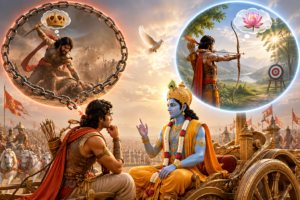
Shri Krishna is asking everyone to remain in the present, that’s all! In fact, in the present, there is no past or future and all the senses as well as allied apparatus are controlled. Furthermore, if there is no past, there can also be no memory, this means that all memory is erased. Additionally, if there is to be no future, there can be no planning or anxiety of outcome.
However, remaining in the present is not easy, it requires an awareness of the situation as it unfolds and develops.
Additionally, this awareness covers all physical, emotional and intellectual experiences. In fact, herein lies the subtlety as well as complexity of Śrī Kṛṣṇa’s advise.
The transliteration and translation of Srimad-bhagavad-gita, chapter 2 on sthithaprajna.
Note – The Saṃskṛta diacritic words are in red italics..
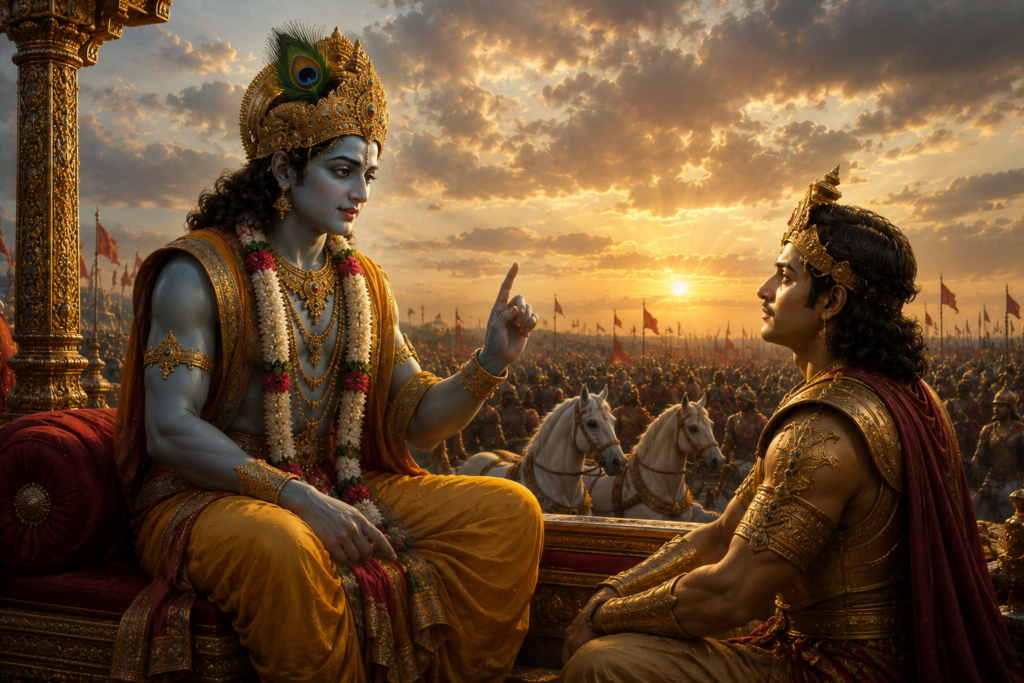
Arjuna said (54) What is the description of steady awareness (sthithaprajna) state of a person who is in a state of samādhi (sthitaprajña-sya kā bhāṣā samādhisthasya keśava ।), How does a person in this state speak, how does he sit, how does he walk (sthitadhīḥ kiṃ prabhāṣeta kimāsīta vrajeta kim ॥ 2-54॥).
Śrī Kṛṣṇa said (55-57) When one casts off all desires even in the form of ideas and is satisfied in the Self by the Self alone, that person is called sthithapragna (prajahāti yadā kāmānsarvānpārtha manogatān । ātmanyevātmanā tuṣṭaḥ sthitaprajna-stadocyate ॥ 2-55॥). In pain, without agitation, indifferent to pleasure, freed from attachment, fear and unmoved is called a sage (duḥkheṣvanudvignamanāḥ sukheṣu vigataspṛhaḥ । vītarāgabhayakrodhaḥ sthitadhīrmunirucyate ॥ 2-56॥). He who is without affection everywhere no matter whether obtained in good or bad, does not rejoice nor repel, in him awareness is fixed (yaḥ sarvatrānabhisnehastattatprāpya śubhāśubham । nābhinandati na dveṣṭi tasya prajñā pratiṣṭhitā ॥ 2-57॥).
(58-60) When he withdraws his senses from all sense objects like a tortoise withdraws its limbs awareness is steadied (yadā saṃharate cāyaṃ kūrmo’ṅgānīva sarvaśaḥ । indriyāṇīndriyārthebhyastasya prajñā pratiṣṭhitā ॥ 2-58॥). Abstaining from objects annul longing in a person (viṣayā vinivartante nirāhārasya dehinaḥ ।), longing even to experience the supreme turns away (rasavarjaṃ raso’pyasya paraṃ dṛṣṭvā nivartate ॥ 2-59॥). Indeed, even in the person who is persevering as well as wise, the turbulent senses violently hijack cognition (yatato hyapi kaunteya puruṣasya vipaścitaḥ । indriyāṇi pramāthīni haranti prasabhaṃ manaḥ ॥ 2-60॥).
(61-63) Indeed, they whose every sense has been restrained all together, sit devoted to me with senses under control is one whose awareness is complete (tāni sarvāṇi saṃyamya yukta āsīta matparaḥ । vaśe hi yasyendriyāṇi tasya prajñā pratiṣṭhitā ॥ 2-61॥). In man, thinking of objects results in attachment developing to them, from attachment desire is born, from desire anger rises (dhyāyato viṣayānpuṃsaḥ saṅgasteṣūpajāyate । saṅgātsañjāyate kāmaḥ kāmātkrodho’bhijāyate ॥ 2-62॥). From anger comes delusion, from delusion confusion of memory, from confusion of memory comes loss of reason, from loss of reason comes destruction (krodhādbhavati sammohaḥ sammohātsmṛtivibhramaḥ । smṛtibhraṃśād buddhināśo buddhināśātpraṇaśyati ॥ 2-63॥).
(64-66) Freedom from attachment and repulsion comes from exerting control over the churn of senses by objects, then a controlled Self is the outcome (rāgadveṣavimuktaistu viṣayānindriyaiścaran । orviyuktaistu ātmavaśyairvidheyātmā prasādamadhigacchati ॥ 2-64॥). The outcome of reduction in overall misery results in the appearance of a tranquil consciousness because quickly the intellect becomes steady (prasāde sarvaduḥkhānāṃ hānirasyopajāyate । prasannacetaso hyāśu buddhiḥ paryavatiṣṭhate ॥ 2-65॥). The fickle have no intellect nor steady vision (bhāvanā) and no peace in those without awareness (abhāvayat) how can happiness come to those that have no peace (nāsti buddhirayuktasya na cāyuktasya bhāvanā । na cābhāvayataḥ śāntiraśāntasya kutaḥ sukham ॥ 2-66॥).
The wandering senses are controlled in sthithaprajna
(67-69) The wandering senses are followed by the cognition which annihilate awareness like the wind takes away a boat on the water (indriyāṇāṃ hi caratāṃ yanmano’nuvidhīyate । tadasya harati prajñāṃ vāyurnāvamivāmbhasi ॥ 2-67॥). Therefore, one who has restrained the senses completely from sense objects, that persons awareness is steady (tasmādyasya mahābāho nigṛhītāni sarvaśaḥ । indriyāṇīndriyārthebhyastasya prajñā pratiṣṭhitā ॥ 2-68॥). When it is night for all beings, at this time awakens the self-controlled, in which all beings awaken that vision is cognised by the muni (yā niśā sarvabhūtānāṃ tasyāṃ jāgarti saṃyamī । yasyāṃ jāgrati bhūtāni sā niśā paśyato muneḥ ॥ 2-69॥).
(70-72) Just as waters do not fill up steadily situated sea, similarly all whom desire enters, they will not attain peace due to dictates of passion (āpūryamāṇamacalapratiṣṭhaṃ samudramāpaḥ praviśanti yadvat । tadvatkāmā yaṃ praviśanti sarve sa śāntimāpnoti na kāmakāmī ॥ 2-70॥). Everyone who abandons desire moves about free from longing, without ownership, without the sense of doer-ship, that person attains peace (vihāya kāmānyaḥ sarvānpumāṃścarati niḥspṛhaḥ । nirmamo nirahaṅkāraḥ sa śāntimadhigacchati ॥ 2-71॥). This state of brahman is not achieved by anyone who is fascinated by this achievement, but once transfixed there at the end of life attains merger with brahman (eṣā brāhmī sthitiḥ pārtha naināṃ prāpya vimuhyati । sthitvāsyāmantakāle’pi brahmanirvāṇamṛcchati ॥ 2-72॥).
For more on Chapter 2 – click here
The complete text is available in my book, A Seeker’s Śrīmad-Bhagavadgītā. Buy your copy today – Notion Press home / Flipkart / Amazon / Amazon India / Amazon UK / Amazon US / Amazon Australia
Acknowledgement.
School of Yoga is profoundly grateful to Saṃskṛta scholars and academics Pijus Kanti Pal (pal.pijuskanti@gmail.com) and Dolon Chanpa Mondal for their support in Saṃskṛta transliteration and quality control.