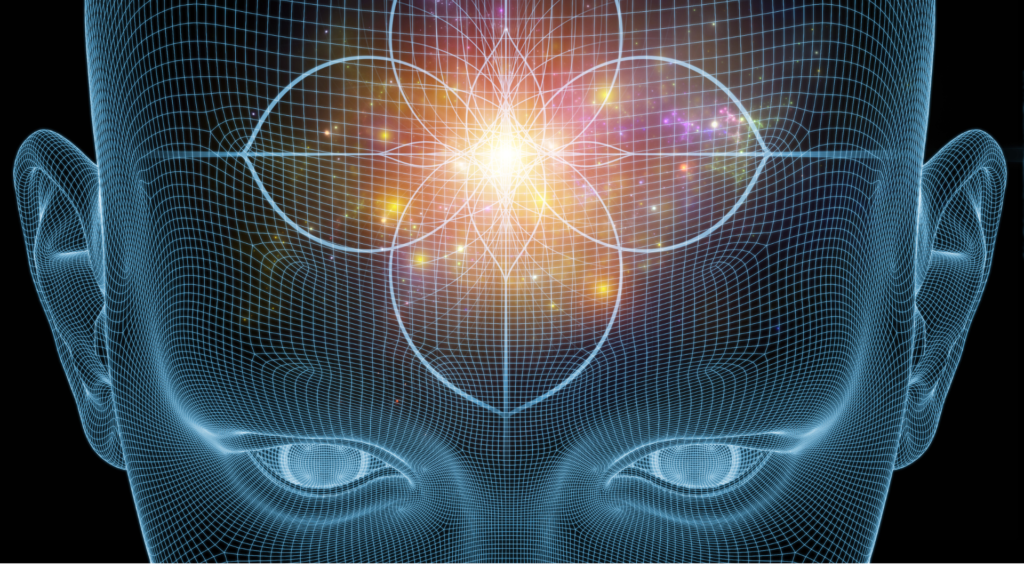
How does our atma or Soul imbibe change?
In any situation, when we receive stimulus, we either react or not-react. So, change occurs as an outcome of stimulus and response. When there is a stimulus, there is a response which causes change. Importantly, even lack of response is a response. Our Soul or atma is the observer, reactor and retainer of these situations.
How does our atma or Soul imbibe change.
- When we react to any stimulus, we enter into a transaction with the object and create a bond (bandhana).
- We either like or dislike the stimulus and as a result of this, we either push the object away (dvesha) or pull it closer (raga).
- This action of pulling or pushing causes relative displacement between both entities and is called karma (action).
- As a result of the transaction, we either give or take with each other.
- This transaction is always unequal because the awareness levels of the participants always differ. As a result, one always gives or takes more than the other.
- Consequently, one party ends up being the debtor and the other the creditor.
- This is called debt (rinn).
- We (our atma) know that all debts have to be repaid.
- In the case of karma, this spill-over goes beyond life, to more lives resulting in the concept of rebirth (samsara).
- This spill-over credit and debt is carried by the Soul (atma).
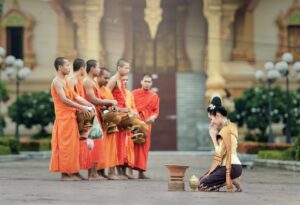
Shri Krishna explains how the atma is the center of work, dharma and duty.
In the above example, we said that karma (action) occurs when we like something and we pull it closer or when we dislike something and push it away.
What is the basis on which we like or dislike something? That is called dharma or our natural state. Dharma is a mix of birth and conditioning. Birth defines DNA in sentient entities and conditioning defines values and behaviour which we exhibit in any situation.
- Dharma defines our likes and dislikes, hence the instinctive/ primary response to any situation. Thus, it is the foundation of response which results in action (karma) and the resultant debt (rinn).
- Also, dharma defines the natural state of all creation. For example, we all know how humans, dogs, cats and other sentient beings act and react in their individual unique ways. Mango trees will yield mango fruit, never papaya. Hydrogen atoms will have an atomic weight of 1.008 and an atomic number of 1, this is its dharma and defines how hydrogen will behave in any bond.
The atma (Soul), duty and dharma.
We are born with a unique DNA and grow up in our own specific environment, this moulds our values and behaviour, which define our experiences. These experiences become predominant drivers of our self-esteem or state of being and in turn reorient our value system.
This state of equilibrium is our natural state or dharma.
This natural state can be extended to cover sentient, insentient states as well as professions, businesses, systems and activities which makes this universal or sanātana-dharma. Let us review how dharma intricately weaves work with personality, duty, system and environment;
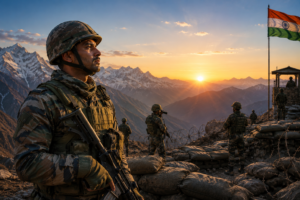
- A soldier needs to be able to maintain his awareness in battle, his dharma or duty is to fight and defend. If he runs away from the battlefield, then he compromises the integrity of whatever he protects and loses his dharma or state of equilibrium. To perform his dharma, he has to overcome fear of death.
- Similarly, a teacher’s dharma or duty is to teach and develop students into responsible citizens, if he or she were to be afraid of the opinion of others, then he would never be able to teach effectively and build good citizens.
- Next, the dharma or duty of a business man is to increase material value without lowering integrity. When integrity is lost or when the businessman is afraid of risk, dharma is lost.
- Finally, the dharma of a farmer is to grow food, he must not stop sowing because he is worried that there may be no rains. That fear would result in famine and destruction of society.
Conclusion: Shri Krishna’s advice of dharma and duty applies to every person, activity or section of society. Consequently, when people do not perform their designated duties, shirk performing them, or perform them without integrity, society suffers and chaos (adharma) results.
How does the Soul (atma) reconcile action with consequences.
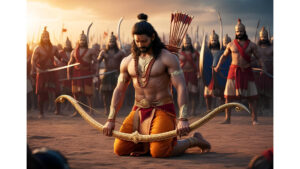
Shri Krishna says:
- Your right is to effort alone, not its outcome.
- Attachment to reward should not be your motivator for action.
- Also, fear of consequences or attachment to outcome should not stop you from making this effort.
- Perform action, abandon attachment to the action and also the outcome or rewards, be balanced in both success and failure.
- This even handedness of the Self and indifference in action is yoga.
What is the concept of guṇa (attributes).
Our ability to act comes from our situational awareness (prajna). When our awareness is beset by inertia, doubt, fear or self-pity it is called tamas. Next, when our awareness is driven by anger, greed or ambition, this is called rajas, a state of energy. Finally, when there is a balance and state of balance or harmony, this is called sattva. These three attributes or guna (attributes of cognition) are always together, never static and continuously changing in proportion;
- Tamas (obdurate/ delusion) – our actions are driven by lack of logic, understanding, in delusion or sometimes we refuse to act on account of laziness and fear.
- Rajas (passion) – our actions are driven by ambition, greed, anger, targets/ goals, power, arrogance, vanity etc.
- Sattva (balance) – our actions are driven by integrity, need for balance, harmony, consensus etc.
The Transliteration of Srimad Bhagavad Gita Chapter 2 on the atma (verses 26-53) follows:
The Sanskrit words are in red italics and meaning, before the words, are in black.
Śrī Kṛṣṇa said (26-28) Now, if you think that this is constantly being born or constantly dying, even then you must not grieve (atha cainaṃ nityajātaṃ nityaṃ vā manyase mṛtam । tathāpi tvaṃ mahābāho naivaṃ śocitumarhasi ॥ 2-26॥). For those that are born, death is certain, definitely there is birth for those that die, this is inevitable in matter, you should not grieve (jātasya hi dhruvo mṛtyurdhruvaṃ janma mṛtasya ca । tasmādaparihārye’rthe na tvaṃ śocitumarhasi ॥ 2-27॥). Unmanifested in the beginning are beings, manifested in the middle, unmanifested again in the end, so what is there to lament (avyaktādīni bhūtāni vyaktamadhyāni bhārata । avyaktanidhanānyeva tatra kā paridevanā ॥ 2-28॥).
(29-30) In wonder one sees this, in wonder one speaks of also, many wonders one hears of this, after hearing this is not known to anyone at all (āścaryavatpaśyati kaścidenamāścaryavadvadati tathaiva cānyaḥ । āścaryavaccainamanyaḥ śa ṛṇ oti śrutvāpyenaṃ veda na caiva kaścit ॥ 2-29॥). This in-dweller in the body is eternally indestructible in all creatures; therefore, you should not grieve for anyone (dehī nityamavadhyo’yaṃ dehe sarvasya bhārata । tasmātsarvāṇi bhūtāni na tvaṃ śocitumarhasi ॥ 2-30॥).
(31-33) Observing one’s own duty and not wavering at war should be higher than any other duty of a kṣatriya (svadharmamapi cāvekṣya na vikampitumarhasi । dharmyāddhi yuddhācchreyo’nyatkṣatriyasya na vidyate ॥ 2-31॥). Doors of heavens are laid open, happy kṣatriyas obtain battles that occur by themselves (yadṛcchayā copapannaṃ svargadvāramapāvṛtam । sukhinaḥ kṣatriyāḥ pārtha labhante yuddhamīdṛśam ॥ 2-32॥). However, if you do not act in this duty-bound warfare, then your honor will be stained as one who abandoned his self-duty (atha cettvamimaṃ dharmyaṃ saṅgrāmaṃ na kariṣyasi । tataḥ svadharmaṃ kīrtiṃ ca hitvā pāpamavāpsyasi ॥ 2-33॥).
(34-37) Beings will recount your story of dishonor forever, in their thought, dishonor outlives death (akīrtiṃ cāpi bhūtāni kathayiṣyanti te’vyayām । sambhāvitasya cākīrtirmaraṇādatiricyate ॥ 2-34॥). The great charioteers will think that you withdrew from the battlefield in fear (bhayādraṇāduparataṃ maṃsyante tvāṃ mahārathāḥ ।) those that thought highly of you will receive you as a lightweight (yeṣāṃ ca tvaṃ bahumato bhūtvā yāsyasi lāghavam ॥ 2-35॥). Your enemies will speak many inappropriate words, and many will defame your abilities, which will indeed be more painful than this (avācyavādāṃśca bahūnvadiṣyanti tavāhitāḥ । nindantastava sāmarthyaṃ tato duḥkhataraṃ nu kim ॥ 2-36॥). Slain, you will attain heaven, alive, you will enjoy victory on earth; therefore, stand up and resolve to fight (hato vā prāpsyasi svargaṃ jitvā vā bhokṣyase mahīm । tasmāduttiṣṭ ha kaunteya yuddhāya kṛtaniścayaḥ ॥ 2-37॥).
(38-40) Treat pain and pleasure, profit and loss, and victory and defeat in the same manner, then engage in battle and no staining will result (sukhaduḥkhe same kṛtvā lābhālābhau jayājayau । tato yuddhāya yujyasva naivaṃ pāpamavāpsyasi ॥ 2-38॥). I am telling you the philosophical wisdom in yoga; indeed, hear it with wisdom and follow it to cast off the bondage of karma (eṣā te’bhihitā sāṅkhye buddhiryoge tvimāṃ śa ṛṇ u । buddhyā yukto yayā pārtha karmabandhaṃ prahāsyasi ॥ 2-39॥). Contrary results do not come from unsuccessful effort, even little of this duty protects from great fear (nehābhikramanāśo’sti pratyavāyo na vidyate । svalpamapyasya dharmasya trāyate mahato bhayāt ॥ 2-40॥).
(41-43) Maintain a firm soul and a focused intellect; diverse, endless contemplation is of the irresolute (vyavasāyātmikā buddhirekeha kurunandana । bahuśākhā hyanantāśca buddhayo’vyavasāyinām ॥ 2-41॥). The ignorant get carried away by flowery speech quoting the Vedas, not these other words (yāmimāṃ puṣpitāṃ vācaṃ pravadantyavipaścitaḥ । vedavādaratāḥ pārtha nānyadastīti vādinaḥ ॥ 2-42॥). Those whose soul is full of desires, even with heaven as their highest goal, get birth as the fruit of action because their actions are focused on goals specific for attainment of pleasure and wealth (kāmātmānaḥ svargaparā janmakarmaphalapradām । kriyāviśeṣabahulāṃ bhogaiśvaryagatiṃ prati ॥ 2-43॥).
(44-46) Those that are attached to enjoyment and wealth are bereft of consciousness, firm soul, and intellect not focused in samadhi (bhogaiśvaryaprasaktānāṃ tayāpahṛtacetasām । vyavasāyātmikā buddhiḥ samādhau na vidhīyate ॥ 2-44॥). The Vedas would not exist without the aspect of the three guṇas (traiguṇyaviṣayā vedā nistraiguṇyo bhavārjuna ।) be without duality, constantly in sattva state with a Soul that is free from outcomes (nirdvandvo nityasattvastho niryogakṣema ātmavān ॥ 2-45॥). Just as a tank is as useful when there is flood everywhere (yāvānartha udapāne sarvataḥ samplutodake ।), similarly, all the Vedas are of use to a brāhmaṇa who knows (tāvānsarveṣu vedeṣu brāhmaṇasya vijānataḥ ॥ 2-46॥).
(47-49) Perform karma for itself alone, not for its fruits, anytime (karmaṇyevādhikāraste mā phaleṣu kadācana ।), do not be attached to the fruits of action, nor be attached to inaction (mā karmaphalaheturbhūrmā te saṅgo’stvakarmaṇi. Absorbed in yoga of action, abandoning attachment to action, being the same in perfection or out of perfection, retaining equilibrium is called yoga (yogasthaḥ kuru karmāṇi saṅgaṃ tyaktvā dhanañjaya । siddhyasiddhyoḥ samobhūtvā samatvaṃ yoga ucyate ॥ 2-48॥). By far, action is inferior to yoga of wisdom, in wisdom one seeks refuge, in action one seeks fruits (dūreṇa hyavaraṃ karma buddhiyogāddhanañjaya । buddhau śaraṇamanviccha kṛpaṇāḥ phalahetavaḥ ॥ 2-49॥).
(50-51) One who is merged with wisdom casts off in this life both pious and evil actions; therefore, dedicate yourself to yoga and become skilled in its ways (buddhiyukto jahātīha ubhe sukṛtaduṣkṛte । tasmādyogāya yujyasva yogaḥ karmasu kauśalam ॥ 2-50॥). Indeed, the wise, having abandoned fruits of action that is born due to motivation by intelligence, are freed from bonds of birth and go to a happy abode (karmajaṃ buddhiyuktā hi phalaṃ tyaktvā manīṣiṇaḥ । janmabandhavinirmuktāḥ padaṃ gacchantyanāmayam ॥ 2-51॥).
(52-53) When your intellect crosses the confusion of delusion, then you will experience indifference to what you hear and the subject of hearing (yadā te mohakalilaṃ buddhirvyatitariṣyati । tadā gantāsi nirvedaṃ śrotavyasya śrutasya ca ॥ 2-52॥). When you remain firm, unruffled with steady intellect in the midst of conflicts, then you will attain yoga (harmony), (śrutivipratipannā te yadā sthāsyati niścalā । samādhāvacalā buddhistadā yogamavāpsyasi ॥ 2-53॥).
For more on Chapter 2 – click here
The complete text is available in my book, A Seeker’s Śrīmad-Bhagavadgītā. Buy your copy today – Notion Press home / Flipkart / Amazon / Amazon India / Amazon UK / Amazon US / Amazon Australia
Acknowledgement.
School of Yoga is profoundly grateful to Saṃskṛta scholars and academics Pijus Kanti Pal (pal.pijuskanti@gmail.com) and Dolon Chanpa Mondal for their support in Saṃskṛta transliteration and quality control.