What is pavanamuktasana (air relieving pose)?
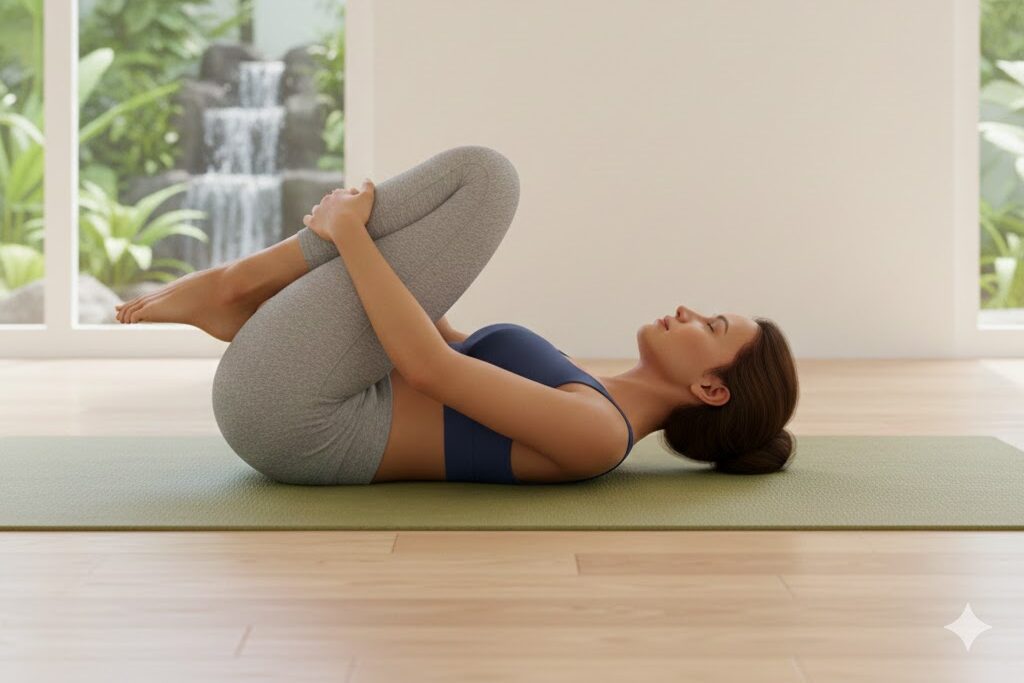
Pavanamuktasana or air relieving pose is an asana that presses the abdomen so that gas is expelled from the stomach as well as the lower abdomen.
How to do pavanamuktasana ?
Pavanamuktasana can be practiced in two ways:
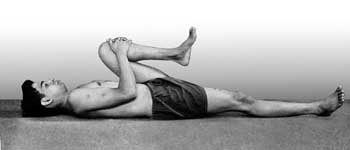
Technique 1: ardha-pavanamuktasana (Single leg pavanamuktasana)
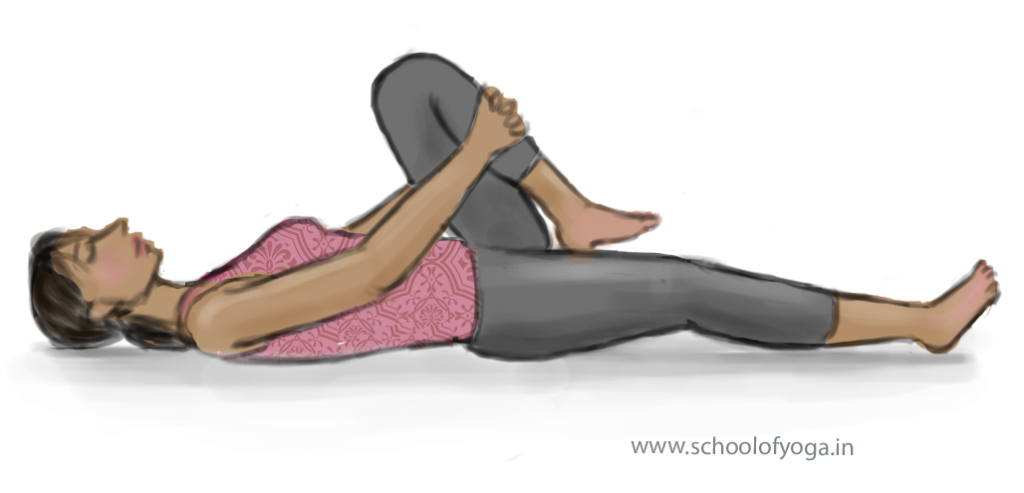
- Sthithi (starting) position: First, lie down on the back with hands to the sides.
- Second, breathing in, fold your left leg at the knee and bring it towards the torso.
- Next, breathing out, grasp the knee and press it downwards into the abdomen gently.
- Then, hold in place till exhalation has been completed and the top of the thigh is completely pressing the abdomen.
- Now, hold for 3-6 counts.
- Slowly, breathe-in, release knee, straighten and bring leg to normal position.
- Repeat the process on the right leg.
- Once is enough.
- The drishti (gaze) recommended is svadhishthana-chakra.
Technique 2: purna-pavanamuktasana (Both legs pavanamuktasana)
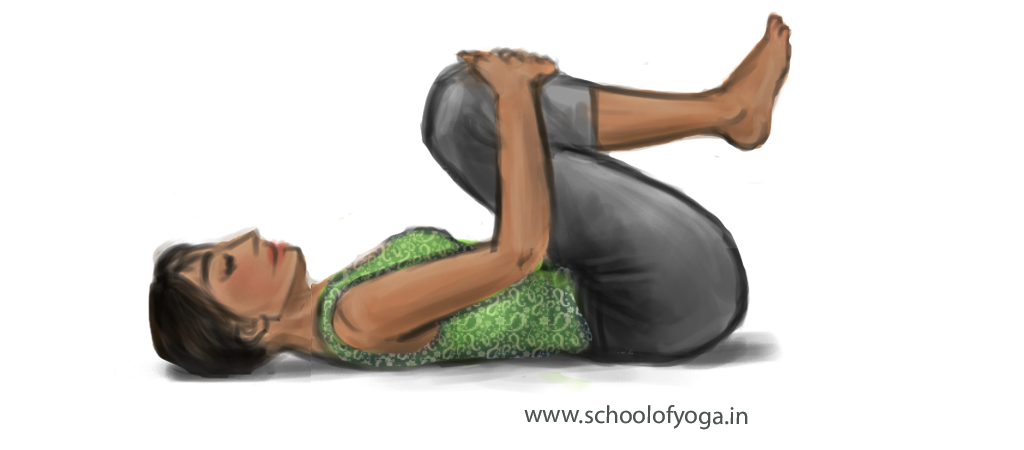
- Sthithi (starting) position: First, lie down on the back with hands to the sides.
- Second, breathing in, fold both legs at the knees and bring them towards the torso.
- Next, breathing out, grasp both the knees and press them gently downwards into the abdomen.
- Then, hold in place till exhalation has been completed and the upper thighs are completely pressing the abdomen.
- Now, hold for 3-6 counts.
- Slowly, breathe-in, release both knees, straighten and bring legs to normal position. Relax.
- Once is enough.
- Importantly, the drishti (gaze) recommended is svadhishthana-cakra.
What are the benefits of practicing the air relieving pose?
- This exercise is a very good starting point for people who are just beginning a yogasana exercise routine.
- Importantly, since the pressing down of the abdominal viscera is gradual and free from discomfort, this increases flexibility in the person.
- Also, this is very good for increasing capillary circulation in the lower abdomen, increasing balance of secretion and absorption in the intestines, and removing flatulence.
- Importantly, this asana is also good for rejuvenating female reproductive system.
- In fact, this asana can be used for treating PCOS, flatulence, hyper acidity, gastritis and diabetes and all digestive ailments.
- Lastly, the asana is good for increasing flexibility of the sacral and lumbar regions of the spine, and strengthening the muscles of the lower back.
What contraindications must one be aware of in practicing the air relieving pose?
- Initially, one may experience difficulty in achieving the complete pose. Go slow, and over time, you will be able to compress your legs into the abdomen completely.
- However, if you have any form of back ache, push yourself only to the point where there is no discomfort. When pain or discomfort starts, stop immediately. In fact, with practice, the lower back will begin to flex better.
- Importantly, since this exercise exerts pressure on the heart, people with cardiac concerns should perform this asana under supervision.
- Lastly, this asana should not be practiced during menstruation or pregnancy.
Some noteworthy points on pavanamuktasana :
Internal Links: Dharma (conditioning), Stress and Situational Awareness, Prana, Asana sequencing, Asana scheduling, Asana Focus or gazing, Pranayama, Hatha Yoga Pradeepika
External Links: Prana, Chakra, Pancha Tattva, Pancha Prana, Pancha Kosha, Nadi,
- One could use the upper arms to pull the knees into the abdomen; in this case, there is greater arching of the lumbar region and the hips leave the ground. Alternatively, one could use the forearms to press the knees into the abdomen; in this case the hips stay on the ground. Each impact a different area of the abdomen, but the use of the forearm to press the knee is a more effective pose.
- It is important to count when keeping the knees pressed into the abdomen. This facilitates the complete evacuation of the terminal portion of the small intestine into the large intestine.