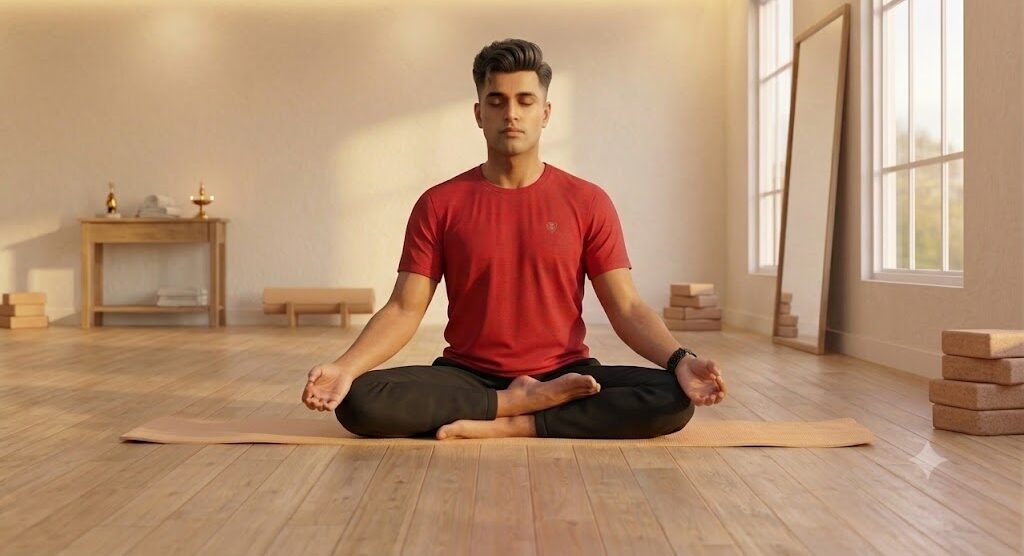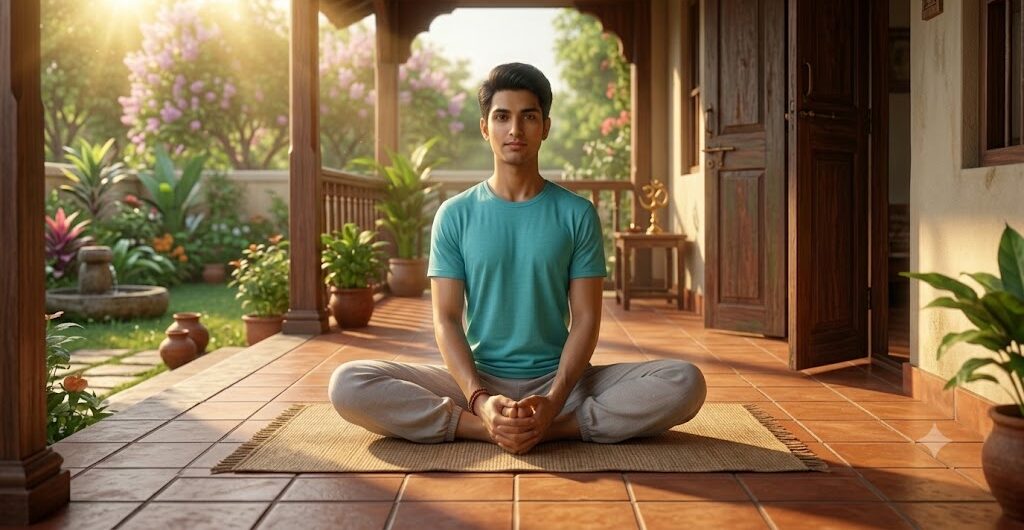
What is bhadrasana (throne pose)?
Bhadrasana (bhadra = gracious / auspicious, asana = pose) is a seated yoga pose that resembles the butterfly pose. This exercise increases flexibility and strengthens the spine.
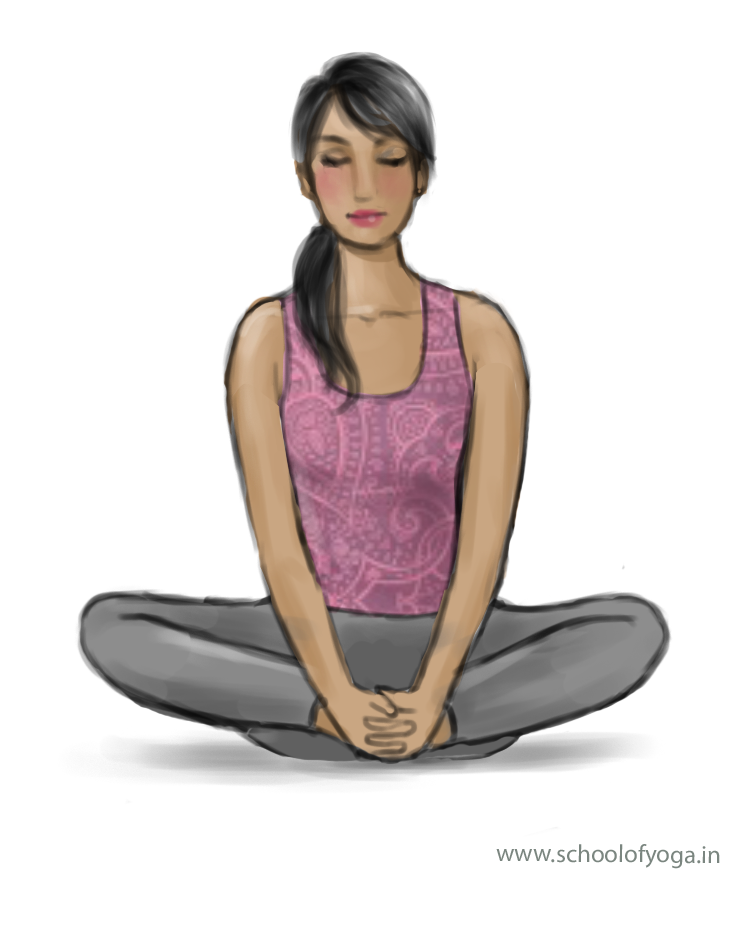
How to do bhadrasana?
- Sthithi (starting) position: Sit on a clean mat in an airy and quiet room. Stretch your legs forward.
- Folding one leg at the knee, hold the ankle, lift the genitals carefully out of the way and place it close to the perineum.
- Repeat the process with the other leg; fold the leg and bring the soles of the feet together as close as possible to the perineum.
- Hold both the legs together lightly.
- Keep your back erect but relaxed. Relax the legs.
- The classical pranayama of use is ujjayi pranayama.
- The following dristhis (gaze) are recommended – gaze at at the chakras (mooladhara or svadhisthana). But keep it steady for the period of asana.
- Breathe calmly, keeping the mind silent. Be conscious of your anchor within the self. Command your body to relax, moving from the top of the body to the extremities. Imagine stress leaving your body with each exhalation. Release your mind. Let it not grasp anything or any thought.
- Start with 5 minutes and gradually increase upto 15 minutes.
- Do not try to achieve perfection on day 1. Make sure your body is able to take the strain. Over time, the body will become supple and perfection will be achieved.
What are the benefits of bhadrasana yoga pose?
- This asana activates the mooladhara chakra.
- The asana stretches the glacis and magnus muscles of the thigh, increasing flexibility of the pelvic area.
- This posture stabilises the spine with hips and shoulders. It is very good for spinal curvature retention.
- Bhadrasana is a very good primer for practicing padmasana.
- It helps address disorders of the reproductive system and also gives relief from menstrual issues.
What are the contraindications for bhadrasana?
- If you are suffering from problems of the hip joints or arthritis, check with your physician first.
Some noteworthy points on bhadrasana:
Internal Links: Dharma (conditioning), Stress and Situational Awareness, Prana, Asana overview 1, Asana Overview 2, Asana Focus or gazing, Pranayama, Yama, Niyama, Padmasana
External Links: Prana, Chakra, Pancha Tattva, Pancha Prana, Pancha Kosha, Nadi,
- This asana is considered to be one of the 32 most important asanas by all ancient texts.
- Initially, the inner thigh will experience discomfort due to the stretching, but over time this should subside.