
Yoga for PCOS: What is PCOS – Polycystic ovarian syndrome or disease?
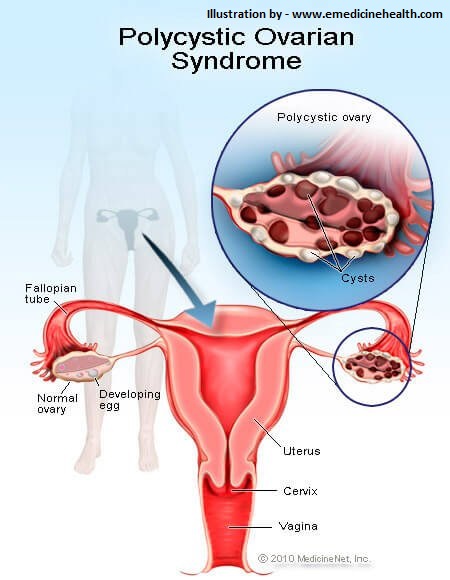
School of Yoga strongly recommends the practice of yoga for PCOS – one of the most common health issues faced by women. PCOS or Polycystic ovarian syndrome is a condition where a woman’s level of sex hormones are out of balance, resulting in the formation of ovarian cysts. In fact, this condition got its name because of the finding of enlarged ovaries containing multiple small cysts (polycystic ovaries).
Polycystic ovarian syndrome (PCOS) is a relatively common hormonal disorder that affects between 2 and 8% women of reproductive age. Overall, approximately 18% women have PCOS, but over 70% are able to live normal lives. So, this means that having ovarian cysts does not necessarily mean that the person will suffer from PCOS.
The exact cause of PCOS – polycystic ovarian syndrome is not clear, though the signs and symptoms of women with PCOS have been documented. Also, it is possible that PCOS is inherited, though this is not proven.
However, it is known that the ovaries of women with PCOS may produce excessive amounts of male hormones, or androgens, and this can lead to disruptions in the menstrual cycle and impaired fertility.
What happens in PCOS?
Symptoms common to all women with PCOS are:
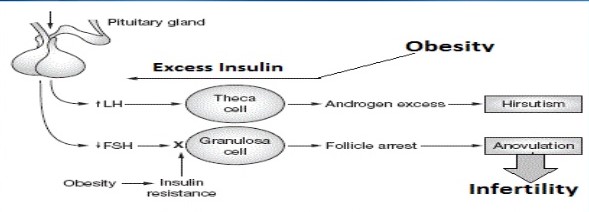
- Irregularity in the menstrual cycle coupled with lack of ovulation. So, women may experience infertility.
- Presence of excess male hormones (androgens): This may lead to presence of facial hair (hirsutism) in a male pattern. Also, the androgen can also lead to the presence of pigmented hair around the nipples and lower abdomen. Finally, excess androgen can lead to balding and acne.
- Absence of the hormone progesterone: As a result, there could be uterine bleeding at irregular intervals. Consequently, there is an increased risk of uterine cancer.
- Insulin resistance, weight gain and obesity are common occurrences for people with PCOS. Furthermore, this could lead to increased risk of Type 2 diabetes, elevated cholesterol and CPR, which increases the risk of hypertension and heart disease.
- Depression and anxiety due to loss of self-esteem.
Yoga for PCOS: What are the factors that impact PCOS?
Before we learn how and why one should practice yoga for PCOS, let us understand the lifestyle, stress, and diet factors that contribute to PCOS.
Women with PCOS are affected by the following parameters:
- Stress: The reasons for PCOS are obscure. Generally speaking, there is some evidence of heredity contributing to its incidence. However, it is seen that there is greater incidence today than 50 years ago. Consequently, this can be taken as evidence that lifestyle and stress play a major role in the control of PCOS.
- Weight: One of the side effects of PCOS is weight gain. Specifically, this could lead to Type 2 diabetes and heart ailments. So, this makes weight control important.
- Diet: Diet control impacts weight and stress. Hence, controlling this illness will require strict control over diet. Here, the main restrictions would be:
- Reduce or stop sweets, fried food and alcohol. Replace sugar with natural sweeteners like honey or jaggery.
- Try to replace red meat with white meat or fish. Additionally, try to boil or steam instead of fry. If possible, stop and switch to other forms of protein.
- Take multiple small meals. Likewise, try and replace one meal with fruit. Additionally, increase the green vegetable content. If possible, switch to whole wheat and avoid white flour (maida) products such as white bread, biscuits etc. Also, try and switch to brown or hand-pounded rice.
- Increase protein intake. Include soya, lentils, beans etc. in larger quantities.
- Increase the use of curd (curd has more probiotics than yogurt), depending on the ability to tolerate curds.
- Drink at least 2 litres of water.
- Exercise – Exercise is critical for leeching out the excess testosterone. In fact, exercise is the best way to reset the muscles to homeostasis and reduce stress, anxiety, increase blood supply to various organs, and enhance health.
- Sleep – Sleep habits largely affect stress levels, catabolic rebuilding of the body, and homeostasis.
Yoga for PCOS: How can Yoga Therapy and asana help find PCOS solutions?
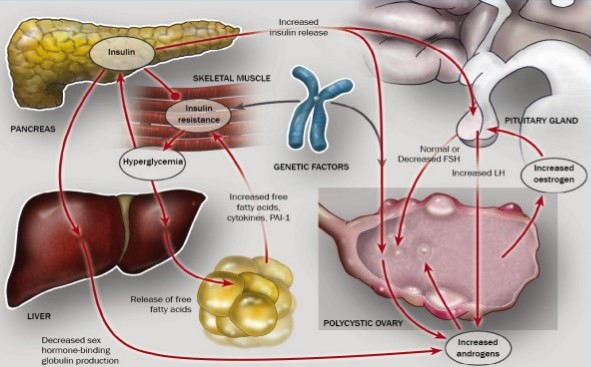
The benefits of practicing yoga for PCOS stems from the fact that yoga therapy helps address some of the key factors and causes of PCOS.
Yoga therapy for PCOS intervention and support may be divided into the following areas:
- Increased blood flow to the endocrine organs such as the pituitary and thyroid: To this end, sundara-viparitakarani, sarvangasana, matsyasana, shirshasana are very helpful.
- Improved functioning of pancreas, liver and kidneys: Here, dhanurasana, ardha matsyendrasana, sundara-viparitakarani, sarvangasana, and kapalabhati pranayama are critical.
- Increasing blood flow to ensure health of the genital region. Practice of sundara-viparitakarani, pavanamuktasana, paschimottanasana, naukasana, ardha halasana, ardha matsyendrasana, utkatasana, uddiyana bandha and kapalabhati pranayama are critical.
- Breathing is a psychosomatic process which affects the overall health of the body. Hence it is important to ensure that our breathing is deep, regular and rhythmic, such that stress is eliminated from the system. Thus, nadi shuddhi pranayama and dhyana are critical here.
Yoga for PCOS: A Yoga therapy plan that can help support managing PCOS:
Here is a recommended practice of yoga for PCOS relief. The below mentioned yoga asanas combined with pranayama breathing help in management of PCOS.
- Beginner – 3 months – All asana to be performed slowly and after OK from doctor.
- Intermediate – 3 months – All asana to be performed only after improvement is detected and after OK from doctor. Estimated time – 30 mins.
- Final – All asana to be performed only after substantial improvement is detected and after OK from doctor. Estimated time – 45 mins.
Yoga for PCOS: Recommended asana (click on the asana to get a detailed process) | Beginner | Intermediate | Final | |
| No | Time frame | 3 months | 3 months | thereafter |
| 1 | Padmasana | 3 minutes | 3 minutes | 3 minutes |
| 2 | Bhujangasana | 2 | 2 | 2 |
| 3 | Dhanurasana | 2 | 2 | 2 |
| 4 | Pavanamuktasana | 2 | 3 | 3 |
| 5 | Ardha halasana | 2 | 2 | 3 |
| 6 | Naukasana | 10 counts | 20 counts | 20 counts |
| 7 | Utkatasana | 10 counts | 20 counts | 20 counts |
| 8 | Sundara–viparitakarani (important) | 5 minutes | 10 minutes | 15 minutes |
| 9 | Sarvangasana (very important) | 5 minutes | 5 minutes | 5 minutes |
| 10 | Matsyasana (very important) | 10 counts | 10 counts | 10 counts |
| 11 | Shirshasana (very important) | 5 minutes | 5 minutes | 5 minutes |
| 12 | Ardha matsyendrasana (important) | 10 counts | 10 counts | 10 counts |
| 13 | Uddiyana | 1 x 5 counts | 2 x 5 counts | 2 x 10 counts |
| 14 | Nadi shuddhi pranayama (important) | 5 x 2 cycles | 5 x 2 cycles | 5 x 2 cycles |
| 15 | Kapalabhati (very important) | 20 x 1 cycles | 30 x 2 cycles | 50 x 2 cycles |
| 16 | Shavasana | 5 minutes | 5 minutes | 5 minutes |
| 17 | Meditation – dhyana (sit in silence and focus on the breath – very important) | 10 minutes | 15 minutes | 20 minutes |

Okay thanks
Very nice