Cave temples – an Introduction
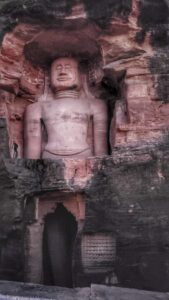
At the beginning of time, human beings sought shelter in caves. They were safe spaces that could be easily protected, provided families shelter from the elements and gave people a sense of stability. As people began to settle and build communities, caves slowly lost their importance, but then became a refuge for people seeking solitude.
In India, this meant the development of hermitages for Yogis and ascetics, and these locations slowly developed a unique arcchitecture, which often became the seedlings for other temple designs.
Cave Temples in India
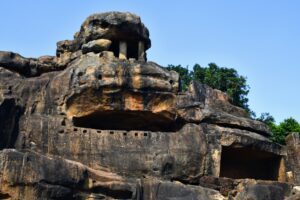
Cave temples in India can be found all over India. Some are natural reliefs in the rock, others are natural spaces that have been expanded to included living spaces for communities and in extreme cases, whole mountains that have been excavated to form temples and monasteries.
These cave temples conform to the Hindu, Jain or Buddhist philosophies that emphasise the liberation of the individual from the cycle of birth and death or samsara through sacrifice, introspection and austerity. Accordingly, cave temples are designed with the centrality of liberation or moksha, and consist of halls or mandapas, monastic cells or viharas and the inner sanctum or stupa where the deity is cut from the mother rock.
Intererstingly, many of these temples show evidence of royal patronage and support.
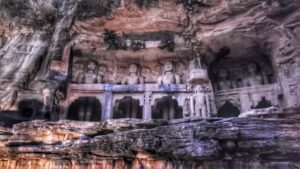
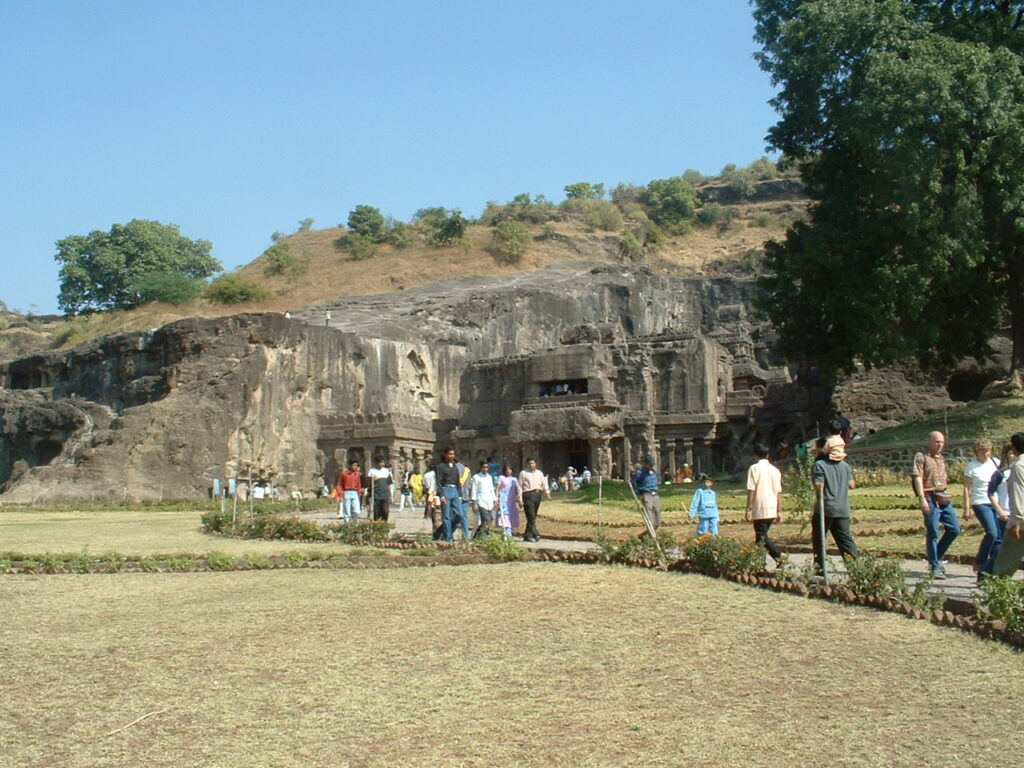
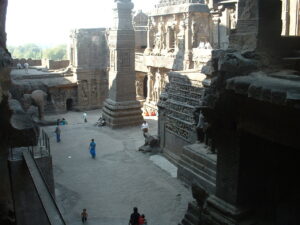
It is important to recognise that cave temples can be of two types. Firstly, many temples can be carved from a single piece of rock as a complete temple. Alternatively, other temples can be carved inside caves to make them look like the interior of a temple. For example, Ellora Temple is an example of a cave temple evolving from a single rock, while the Elephanta Caves are temples carved withing caves to look like a temple.
But, importantly, all excavations are from living rock and no rock blocks are used to build the temple.
Some of the most significant cave temples in India can be found at
Gwalior Jain temples – Gopachal rock-cut statues near Gopachal & Siddhachal areas in the Gwalior Fort region. The monolithic monuments date back to 7th-15th centuries. The photo on the right is of Rishabhnatha aka Adinatha tirthankara.
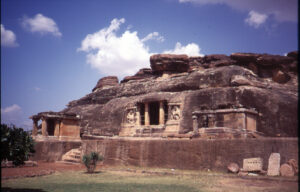
Badami cave temples – these are massive 6th century rock cut shrines featuring Hindu, Buddhist and Jain carvings overlooking the Agasthya Theertha lake. They are important examples of the 6th century Badami Chalukya architecture. Made from Badami sandstone, these temples also form the template upon which the Deccan Temple architecture evolved.
Ajanta Caves – These 2nd to 5th century temples are a collection of over 30 rock cut Buddhists temples and meditation cells of what looks like a monastery.
Ellora temples – Indian rock-cut architecture evolved in Maharashtran temple style in the 1st millennium AD. The 8th century Kailash temple at Ellora is the worlds largest monolithic structure carved entirely out of a single rock or hill.
Elephanta caves – This is a cave that has been developed into a temple for Shiva and is most famous for the three headed Trimurthi sculpture. In fact, Elephanta Caves consist of two groups of caves—the first being a large group of five Hindu caves and the second a smaller group of two Buddhist caves.
Varaha and Tiger cave temple – The varaha cave temples at Mahabalipuram near Chennai, India are supposed to have been visited by the Pandavas.
Photo credits – Kalpa Shah-Maniar