Introduction to temple architecture
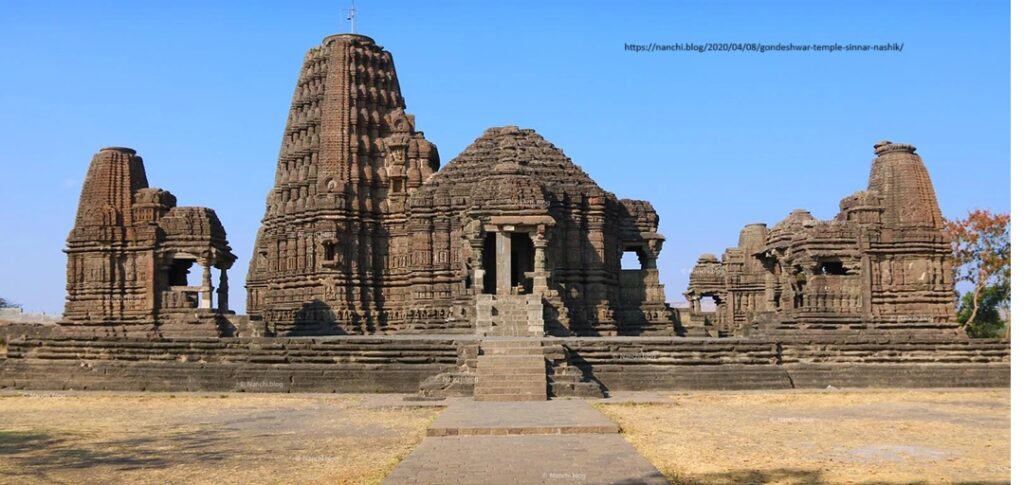
Hitherto, we have observed that a predominant number of Hindu temples exhibit the perfect square grid principles in their temple architecture. However, there are exceptions. For example, the Teli-ka-mandir in Gwalior, built in the 8th century AD is not a square but is a rectangle in 2:3 proportion. Other examples of non-square harmonic ratios are found at Naresar temple site of Madhya Pradesh and Nakti-Mata temple near Jaipur, Rajasthan.
Furthermore, there are other temples that that conform to 1:1, 1:2, 1:3, 2:5, 3:5 and 4:5 ratios in their temple architecture. However, once they are fixed, these ratios are exact for each Temple, suggesting that the design was based on use of harmonic ratios, and the rectangle pattern was neither a mistake, nor arbitrary in Hindu temple architecture principles.
Hence, one can conclude that the ancient Sanskrit temple architecture had rigid or hard and flexible or soft guidelines for their layout designs. The rigid or hard aspect of temple architecture was driven by the need to align the Individual or worshipper with the Universal consciousness or Brahman, and enable a merger or samadhi between the two. Everything else was meant to enable the worshipper to cognise this Universal principle. So, sufficient freedom and flexibility was given to the architects and sculptors to exercise expressive and aesthetic independence that created a natural environment of transcendence.

Rockfort temple, Trichy, India
The symbolism within Hindu temple architecture
A Hindu temple is a cognitive reconstruction of the universe as well as the principles that make everything function in our Universe. The temples reflect this Hindu philosophy and its synergistic approach to integrating the Cosmos along with its underlying Truth with the Individual.
Hinduism is neither a faith nor a religion. It has no traditional ecclesiastical order or dogma, no centralized religious authorities, no governing body, no prophet(s) nor any binding holy book; Hindus can choose to be polytheistic, pantheistic, monistic, or atheistic and yet be right. Within this asymmetrical and open structure, consciousness in Hindu philosophy is considered an individual experience or pratyaksha, one that cannot be replicated by another. Additionally, this individual experience is referred to as the awareness of the field of action (our existence or kṣhetrajña (क्षैत्रज्ञ)). Importantly, this awareness defines one’s personal journey towards liberation or moksha, the discovery of higher truths, true nature of reality, and a consciousness that is liberated and content.
How Hindu temple architecture enables liberation
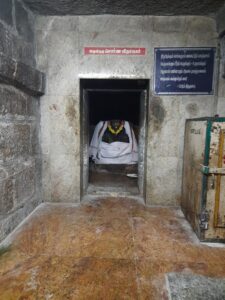
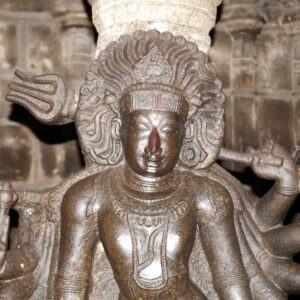
A Hindu temple reflects these core concepts. The central core of the Hindu temples is not a large communal space. In fact, it is a simple, small, airless room with one aperture that represents the Source and Primordial Truth or Brahman, which houses the deity or vigraha. Interestingly, there are two words associated with the deity. The first, pratibha means intuitive reflection, meaning the deity is a reflection of the worshippers identity and purpose of existence and the second is pratima, which means statue or likeness, meaning that the worshipper goes to the temple with an image or intent of worship. In pratibha, the deity is a reflection of the worshipper, while in pratima, the deity is worshipped by the worshipper for its own qualities.
When viewing the deity or vigraha, the worshipper experiences a personal viewing or darshana. Darshana is itself a symbolic word and is the name of six alternate viewpoints of understanding Truth: each of which are considered valid, alternate paths to understanding Truth and realizing Self in the Hindu way of life. Importantly, even though a person may be viewing the deity with his or her family, each person’s experience will be different and personal. This is why the Hindu way is unique for each individual.
Hindu temple architecture soft aspects encourage moksha
From names to forms, from images to stories carved into the walls of a temple, symbolism is everywhere and this drives the devotee’s experience in a Hindu temple. Importantly, life principles such as the pursuit of pleasure and joy (kama) are fused into mystical and architectural forms. Further, these motifs and principles of human life are synthesised and synergised with other Hindu cultural practices or sacred texts, such as Upanishads, Ramayana or Mahabharata. Hinde temples express these same principles in a different form, through art and spaces.
The Temple structure fuses daily life and divine concepts through a structure that is open, transitioning the worshipper from secular towards the sacred, inviting the visitor inwards towards the Brahma pada and temple’s central core, as well as lifting him upwards into a symbolic space marked by its shikhara or vimana.
Temple architecture integrates the temple to the locality

Many ancient temples had grand intricately carved entrances but no doors, and often lacked a boundary wall because the Temple was considered a person who inhabited the locality as not different from the people it lived amongst. Therefore, in the Temple, there is no separation of the sacred from the secular, but an understanding that life was a transition that flowed from secular or loukika to sacred or deivika.
The Hindu temple has structural walls, which were patterned usually within the 64 grid, or other geometric layouts. Yet the layout is often open on all sides, except for the core space which had just one opening for darsana. The temple space is laid out in a series of mandapas or halls. The outermost regions may incorporate the negative and suffering side of life with symbolism of evil, asuras and rakshashas. However, in small temples this layer could be absent owing to paucity of space. Then, this outer region diffuses into the next inner layer that bridges as human space, followed by another inner Deivika pada with space and symbolic arts incorporating the positive and joyful side of life about the good and the gods. Finally, this divine space then diffuses inwards and lifts the guest to the core of the temple, where resides the main idol as well as the space for the Purusa and ideas held to be most sacred principles in Hindu tradition.