Introduction – Temple culture
Hindu temple culture developed in ancient and medieval India with the temple as an anchor of society, and over time served as a nuclei of important social, economic, artistic and intellectual functions. In fact, South Indian temples also managed regional developmental activities, such as irrigation projects, land reclamation, post-disaster relief and recovery. Moreover, these activities were paid for by the donations they collected from devotees who came from a from a wide spectrum of the Indian society. Additionally, temples also managed lands endowed to it by its devotees.
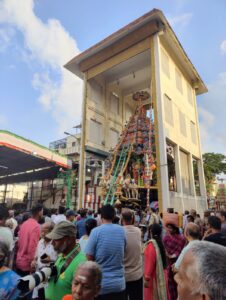
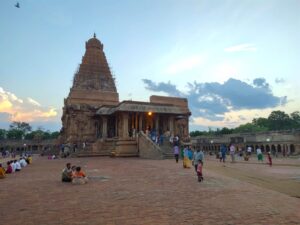
Hindu temple culture was driven by it’s centrality to society and over time, temples became wealthy from grants and donations from royal patrons as well as private individuals. Importantly, temples became major employers and patrons of economic activity. Additionally, they sponsored land reclamation and infrastructure improvements, including building facilities such as water tanks, irrigation canals and new roads. In fact, a detailed early record from 1101AD lists over 600 employees (excluding priests) of the Brihadeesvara Temple, Thanjavur, still one of the largest temples in Tamil Nadu.
Mostly, people worked part-time and received the use of temple farmland as reward. Sometimes, those employed by the temple were rewarded with some gratuitous service, such as dragging the temple chariots on festival occasions or helping when a large building project was undertaken. Further, temples also acted as refuge during times of political unrest, famines or floods.
Temple culture – protecting ancient manuscripts

Hindu temples served as centres of learning and knowledge dissemination where ancient manuscripts were routinely exchanged for learning and where texts were copied when they wore out. Further, many philosophical and conceptual discussions took place at temples. Also, temples were centers of art, dance, music and culture.
In South India, temples and associated mutts served custodial functions, and a large number of manuscripts on Hindu philosophy, poetry, grammar and other subjects were written, multiplied and preserved inside the temples. Archaeological and epigraphical evidence indicates existence of libraries called Sarasvati-bhandara, dated possibly to early 12th-century and employing librarians, attached to Hindu temples.
Temple culture ensured continuity in education
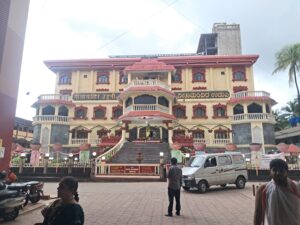
Inscriptions from the 4th century AD suggest the existence of schools or pathashalas around Hindu temples, called Ghatikas or Mathas, where the Vedas were taught. In fact, in South India, 9th century Vedic schools attached to Hindu temples were called Calai or Salai, and these provided free boarding and lodging to students and scholars. Also, temples assumed many educational functions, including the exposition, recitation and public discourses of Sanskrit and Vedic texts.
Furthermore, some temple schools offered wide range of studies, ranging from Hindu scriptures to Buddhist texts, grammar, philosophy, martial arts, music and painting. By the 8th century, Hindu temple culture included many co-curricular activities and also served as the social venue for tests, debates, team competition and Vedic recitals called Anyonyam.
Development of Temple culture to into hospitals, community kitchen, monasteries
Hindu mathas and temples had by the 10th-century attached medical care along with their religious and educational roles. This is evidenced by various inscriptions found in Bengal, Andhra Pradesh and elsewhere. An inscription dated to about AD 930 states the provision of a physician to two mathas to care for the sick and destitute. Further, another inscription dated to 1069 at a Vishnu temple in Tamil Nadu describes a hospital attached to the temple, listing the nurses, physicians, medicines and beds for patients.

Similarly, a stone inscription in Andhra Pradesh dated to about 1262 mentions the provision of a prasutishala (maternity house), vaidya (physician), an arogyashala (health house) and a viprasattra (hospice, kitchen) with the religious center where people from all social backgrounds could be fed and cared for. In fact, both Buddhist monasteries and Hindu religious centres provided facilities to care for the sick and needy in the 1st millennium, but with the destruction of Buddhist centres after the 12th century, Hindu religious institutions assumed these social responsibilities. Importantly, Hindu temples in South India were active charity centrres and they provided free meal for wayfarers, pilgrims and devotees, as well as boarding facilities for students and hospitals for the sick.
The 15th and 16th century Hindu temples at Hampi featured storage spaces (temple granary, kottara), water tanks and kitchens. Additionally many major pilgrimage sites have featured dharmashalas since early times. These were attached to Hindu temples, particularly in South India, providing a bed and meal to pilgrims. However, these temples relied on voluntary donations of the visitor and land grants from local rulers or chieftans. In fact, some temples operated their kitchens on daily basis to serve the visitor and the needy, while others during major community gatherings or festivals.
Temple culture – Conclusion:
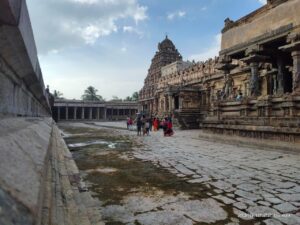
Bharat’s Temple culture went beyond temples being centers of prayer or worship. They are anchors of her culture, civilisation and Identity. Importantly, over the years, these temples have lost this central role as Bharat’s consciousness due to invasions, conversions, ignorance, cultural appropriation and government interference.
It is critical that Bharat’s Temple culture be understood and her temples be set free for Bharat to earn her pre-eminent place as the World beacon of Peace, Harmony and Stability.