Yoga for vertigo: What is vertigo?
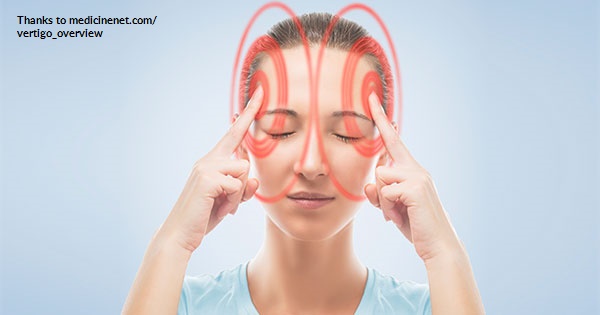
Vertigo is a condition where people feel that objects around them are moving, even when they are static. Often, it is experienced as a spinning or swaying movement, a feeling of being off-balance. Choosing yoga for vertigo issues helps in effective healing, if practiced in the right way.
Yoga for vertigo: What are the symptoms of vertigo?
Vertigo is often triggered by a change in the position of the head. Here, people with vertigo typically describe the experience as one of spinning, tilting, swaying, feeling imbalance, feeling a pull in one direction, etc.

Accompanying symptoms can include:
- Nausea and vomiting.
- Abnormal or jerking eye movements
- Headache
- Sweating
- A ringing in the ear or hearing loss
These symptoms can last for a few minutes or extend to a few hours. They may also occur intermittently.
Yoga for vertigo: What are the most comon causes of vertigo?
The most common causes of vertigo are:
- Deposition of small calcium particles in the canals of the inner ear: This is called BPPV, and the calcium deposits interfere with the sense of balance, which is controlled by the inner ear. BPPV can be associated with age.
- Meniere’s disease: This is a condition where there is a build up of inner ear pressure, resulting in imbalance and hearing loss.
- Vestibular neuritis: This is an infection of the inner ear.
- Vertigo can occur on account of brain injury, tumour, sciatica, stroke, etc., but to a lesser extent.
- Finally, exposure to toxins, alcohol, and some drugs and poisons can trigger vertigo.
Generally, vertigo is known to have receded naturally as the brain learns to compensate, but often, some assistance is required.
Yoga for vertigo: Understanding the physiology of vertigo
Vertigo is an illness that is most associated with the vestibular system, a sensory system most associated with sense of balance and space, for the purpose of co-ordinating movement with balance. Additionally, it consists of the following components:
- Vestibulospinal tract – This is a part of the vestibular system and central nervous system, which influences head-eye movement, posture-balance, and spatial-motion co-ordination. Here, stimulus comes from change in movement or balance, which in turn acts as an input to the spinal column for compensating the neck and other relevant muscles – or righting reflex.
- Migraine associated vertigo – This is most commonly associated with BPPV, i.e. dislocation of calcium carbonate crystals which are sensitive to head movements.
Yoga for vertigo: Choosing yoga therapy solutions for vertigo
The solution to vertigo depends a lot on lifestyle and age. Alcohol also impacts vertigo due to the variable viscosity of the blood and the endolymph during the consumption of alcohol. Here are a few important points to note before practicing yoga for vertigo treatment.
- Importantly, asana cannot replace medication; they can help in restoration and recovery. In fact, they cannot be used as an independent tool for therapy.
- However, asanas are an excellent tool to build resistance, such that over time, a near normalcy state is reached.
- Being in the ideal weight range for one’s specified height is mandatory for any asana to be effective.
- The asana plan will start with simpler asanas and pranayama to stabilise nasal pressure. Subsequently, more complex asanas can be added as the person becomes more competent.
Yoga for vertigo: The recommended asana plan
- Starters – 3 months – All asanas to be performed slowly. Pranayama should not be missed.
- Intermediate – 3 months – All asanas to be performed only after improvement is detected and after OK from doctor. Pranayama should not be missed. Estimated time – 30 mins.
- Final – All asanas to be performed only after substantial improvement is detected and after OK from doctor. Estimated time – 45 mins.
Yoga for vertigo: Recommended asana and pranayama (click on the asana for detailed process) | Beginner | Intermediate | Final | |
| S. No. | 3 months | 3 months | 3 months | |
| 1 | Padmasana | 3 mins | 3 mins | 3 mins |
| 2 | Tadasana | 2 | 2 | 2 |
| 3 | Utkatasana | 1 x 5 counts | 1 x 5 counts | 1 x 10 counts |
| 4 | Bhujangasana | 1 | 2 | 3 |
| 5 | Shalabhasana | 1 | 2 | 3 |
| 6 | Dhanurasana | 1 | 2 | 3 |
| 7 | Pavanamuktasana | 2 (one leg) | 2 | 2 |
| 8 | Ardha halasana | 2 (one leg) | 2 | 2 |
| 9 | Naukasana | 1 | 2 | 2 |
| 10 | Sundara-viparitakarani | 5 mins | 5 x 2 mins | 15 mins |
| 11 | Matsyasana | 1 x 5 counts | 1 x 5 counts | 1 x 10 counts |
| 12 | Setubandhasana | 1 x 10 counts | 1 x 20 counts | 1 x 50 counts |
| 13 | Mahamudra | – | 1 x 5 counts | 1 x 10 counts |
| 14 | Nadi-shuddhi pranayama | 5 x 1 cycles | 5 x 2 cycles | 10 x 2 cycles |
| 15 | Bhastrika | 1 x 3 cycles | 1 x 5 cycles | 1 x 5 cycles |
| 16 | Kapalabhati | 1 x 10 cycles | 1 x 25 cycles | 1 x 50 cycles |
| 17 | Shavasana | 5 mins | 5 mins | 5 mins |
| 18 | Meditation (dhyana) sit in silence and focus on the breath | 10 mins | 15 mins | 20 mins |