What is Agama?
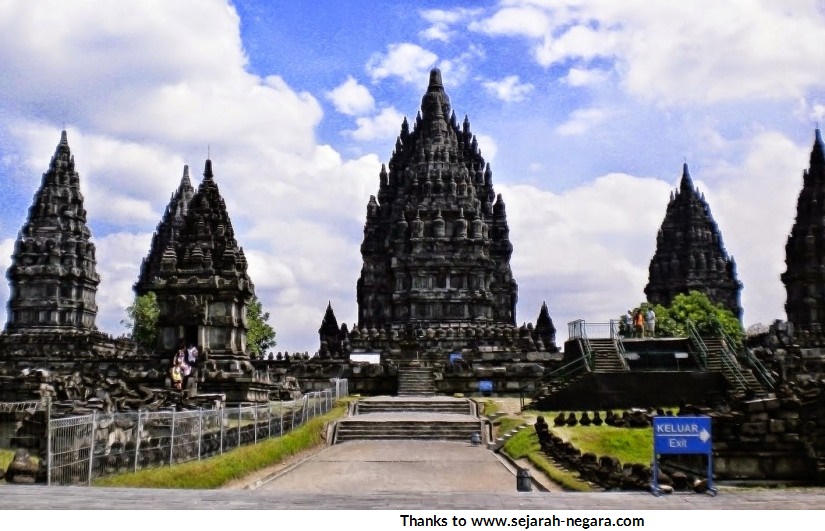
Agama in Sanskrit means “to come”. So, agama shastra can be interpreted in many ways. One interpretation could be “that which has been handed down over time” while another interpretation could be “actions which enable an individual or society to achieve perfection or the Truth” or “knowledge that has come directly from the presiding deity”. So, agama knowledge is often handed down from one generation to another and because of it’s structure, it is often associated with design, construction and maintenance of temples.
What is Tantra?
Tantra means “weave or technique”. Translated, it is the weave of Shiva with Shakti or our sense of Identity/ consciousness (Shiva) with our manifestation of our Identity (Shakti). So, tantra can be loosely translated as the technique or principles that enable the cognition of the weave of Shiva with Shakti.
What is the relationship of Agama with Veda?
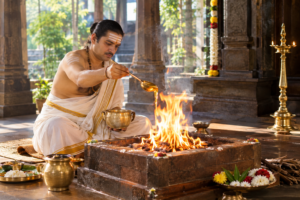
Both agama and veda align the seeker with the Truth (Brahman). The fundamental difference between agama and vedic (also called nigama) teachings is that while yajna or sacrifice in veda does not require any physical manifestation such as idols, agama-yajna requires pūja and idols as a means of worship for attainment of perfection. So, one could say that the vedas lean heavily on the cenceptual, agamas are more application oriented. Importantly, both vedas and agamas are considered to be apourusheya or not of a person, meaning that they were revealed to the ancient rishis when they were in a state of samadhi.
Guru Adi Shankara has classified six major schools of worship (shan-matha-bodham), these being shaivam (worship of Shiva), Shaktyam (worship of Shakti), vaishnavam (worship of Vishnu), Shauryam (worship of Soorya or Sun), Ganapatyam worship of Ganesha) and Kaumaram (worship of Kumara or Karthik).
How many agama shastra are there?
From the above six major schools of worship (shan-matha-bodham), the major agama schools that emerge are Shaivam (worship of Shiva), Shaktyam (worship of Shakti), Vaishnavam (worship of Vishnu). The other three schools, shaurya, kaumara and ganapatya exist as minor agamas.

1- Shaivagama which detail the worship of Shiva.
Shaivagama texts anchor Shiva as ultimate reality, and are considered to originate from the five faces of Shiva, called sadyojatha, vamadeva, aghora, tatpurursha, ishana. There are two major classifications, called Shivabhedagama and Rudrabhedagama depending on who the projenitor of the agama was. and these can be catalogied into 4 major and 28 minor schools. There are 10 Shivagamas and 18 Rudragamas. These 28 agamas have 204 upagamas or supporting texts.
What are the 4 major Shaivagama schools?
There are 4 major schools of Shaivagama. These schools all revere Shiva as the supreme being but differ on their relationship with the vedas, asceticism and temple rituals.
a- Kapala or Kapalika – is a a niche group of practitioners who worship Bhairava, a fierce form of Shiva and do not ascribe to the orthodoxy of vedic practices. In fact, as the name kapalika indicates, they use the skull as a begging bowl and also as a conceptual definition of the school. In fact, they adopt transgressive or unorthodox practices such as meditating in cremation grounds etc. Kapalika practitioners generally get their liturgy (rules, processes and standards) from bhairava-tantra texts, many of which are now lost.
b- Kalamukha – is an offshoot of the Pashupata school that was prominant in Karnataka and Deccan in the 14th century, but has since been absorbed by Lingayat schools in Karnataka and Aradya Shaiva in Telangana/ Andhra Pradesh. It is more or less extinct in it’s original form.
c- Pashupata – this is the oldest school on Shaivagama, going back to Lakulisha of the 2nd century CE. This path for renunciates accepts the authority of the Vedas alongside it’s own texts. Pashupata followers observe conventional and unconventional practices which are primarily focused on dukkhanta or ending of suffering and pain. Both, kalamukha and pashupatha schools rely on pashupatha-sutras.
d- Shaiva or Shaiva-siddhanta – this is a mainstream tradition, predominantly based in South India and active in her Temples. It is open to both, householders and ascetics, and treats the 28 Shaivagamas as supreme revelation. This school is based on elaborate temple and personal worship (puja), initiation (diksha) and a core philosophy that is centered around pati (lord), pashu (Soul) and pasha (bondage).
It is important to recognise the following sub-classification.
1- Atimarga or outer path is followed by those who practice severe austerities in order to reach moksha. The initiation is restricted and specific, mainly to people who followers of the kapala, kalamukha and pashupata school, thought this is not exclusive.
2- Mantramarga or path of mantras is more secular and householders can practice temple worship and other aspects of liberation (moksha).
Each agama consists of 4 paths or pada;
- Jnana-pada or vidya–pada – this covers pati, pashu and pasha which include metaphysics, cosmology, and knowledge of moksha.
- Yoga–pada – covers the 36 tattvas (truths), tattveshvara, yama, niyama, asana, and samadhi procedures and discipline required to reach moksha.
- Kriya–pada – covers mantra-uddharanam (elevation using mantra), sandhyavandanam (twilight salutation), puja, japa, homa (fire-sacrifice) processes, samaya-vishesha-nirvana-acharyabhishekha (path to moksha) etc.
- Charya–pada – covers the rules of conduct and discipline called pavithra-vidhi or purification rites, shivalinga-lakshanam (charateristics of a shivalingam), japamala-yogapatta-lakshanam (charateristics of a japa-mala which is used in meditation or dhyana), basic worship (puja), rituals and prayaschitta-vidhi (compensation techniques).
It is important to recognise that all the above padas cover both personal and public aspects of worship. For example, japa can be done individually and as a group. The core philosophy is about pati, pashu and pasha.
Unfortunately, many of the agamas texts have been lost, and some texts have only one or more padas available.
2- What are Shakta agama or Shaktyagama?
Shakta agama or shaktyagamas are also called shakta tantra. They center around Mother Shakti as the center and source of all creation and ultimate reality. This knowledge is called vidya and there are 10 mahavidyas in the worship of mother as the source of knowledge. These are Kali, Tara, Sodasi (Tripurasundari), Bhuvaneshvari, Bhairavi, Chinnamasta, Dhumavati, Bhagalamukhi, Matangi and Kamala. Each has a mantra, yantra, specific practices and lineages.
Shaktyagama or Shakta tantra worship covers philosophy, practice (kundalini yoga and other practices as defined by the various schools or gurus), rituals (homa and puja), conduct, mantra, yantra, yoga and liberation. There are approximately 64 texts that detail various Shakta paths. These are available @
The philosophy centers around Shakti as the manifestation of all creation or cit-shakti which means the consciousness which is essentially free, but is recognised by us as material) who creates and sustains, and finally dissolves into Shiva or universal consciousness, so the practice is in consonance with Shaivagama. Consequently, Shakta practices are often anchored around nyasa, which uses the individual’s body as the temple of worship. As a result, freeing the body from limitations of physical consciousness are accomplished by use of mantra, dhyana, bhijakshara, bhava (spirit, sentiment or emotion) and yoga.
Like other agamas, Shaktyagama has 4 four paths or padas – Jnana-pada (foundational philosophy), Kriya-pada (procedures, processes and standards), Charya-pada (rules of donduct and worship) and finally Yoga-pada (procedures and discipline to reach moksha).
Pratishalakshanasamuccaya of Vairocana divides Shakta-tantras into 4 major types,
These tantras embed practices that often center on the use of mantras, yantras, homas (sacrificial fires) and puja (worship without a fire).
1- Garuda-chara or Garuda Tantra is the worship of Garuda, the vehicle of Vishnu, by tantra upasana. The main practice is mantra-upasana which one must get through initiation (diksha) from a Guru.
2- Vama-chara or left-handed practice which translates to esoteric or unconventional practices, often under instruction because incorrect application can lead to destabilisation. This is often associated with the Kalika traditions of Eastern India where Mother is worshipped as Kali, who represents time, death, transformation, compassion, power and freedom in a more open formatted structure.
3- Dakshina-chara right-handed practices which is conventional practice. Often, this has been associated with the Srividya worship which centers around a structured worship of Mother as Tripurasundari with the yantra being Srichakra.
4- Bhuta-chara – In this path, Mother is worshipped as a spirit, external to the individual. This is particularly prevelant in South India where spirits governing localities and villages are worshipped. Bhuta-kola is central to Tulu community and worship is in alignment with Theyyam or Kaliattam of North Kerala.
Another segregation of schools of Shaktyagama are as follows,
1- Kaula-agama recommends rituals and practices that focus on liberation through personal experience. The conceptual underpinning is that one must integrate all aspect of life and transform normal actions into sacrifice. The practices include worship of Mother in the form of Kali, TripuraSundari, and Kamakhya encompasses yantra, mantra, mudras as well as certain practices that are frowned upon by genteels. Some practices are Kularnava Tantra, Yogini Tantra, Kaula-jnana-nirnaya.
2- Mishra (mixed)-agama centers around ritualistic and meditative practices that integrates temple worship with chanting, meditation, inner visualisation and cleansing. The woship is of Mother in the form of Kali, Bhairavi and Chandi. Some of the practices are Todala tantra, Rudra Yamala and Shakta pramoda.
3- Samaya-agama centers around the internal union of Shiva with Shakti through internal cleansing and reflection, mantra recitation and meditation. In this school, Mother is worshipped as the benign and calm Tripura Sundari or Lalita. Texts and practices are Lalita Sahasranamam, Tripura Rahasya and Shiva-sutras.
4- Yamala-agama – explains the cosmology of the Universe through the union of Shiva with Shakti as well as the union of the worshipper with the divine couple through rites, rituals, internal cleansing and reflection and meditation. Here, Mother is worshipped as Bhairavi, Kali and Chinnamasta. Example of practices are Rudra yamala, Brahma yamala and Vishnu Yamala.
5- Siddhanta-agama concerns with the conceptual basis of Shaktyam and deals with the nature of Shakti, principles and the relationship between the worshipper and Mother. It centers around conduct, internal development and awareness, and worship. Practices are sourced of the benevolent Mother from Siddha Siddhanta Paddhati, Kamika Tantra and Sarvollasa Tantra.
6- Shadamnaya tantra evolves from panchanmaya which means the 5 faces of Sadashiva with the addition of a subterranean or downward facing stream of energy called adhomnaya. Adhomnaya is found in Para Tantra as well as Varahi tantra schools of Vajrayana Buddhism.
The Shadamnaya are Purvamnaya (East face of Shiva/ Trika, Kalashankarshini worship), Dakshinamnaya (South face of Shiva / Srividya, Tripurasundari worship), Paschimamnaya (West face of Shiva / Kubjika, Kundalini worship), Uttaramnaya (North face of Shiva / Krama/ Kali worship), Urdhvamnaya (Upward face of Shiva / para worship) and Adhomnaya (downward face of Shiva / Vajrayoni/ Yogini/ Kaula/ Kapalika worship).
All Shakta-tantric practices have bhuta-shuddhi or internal spirit cleansing rituals. The conceptual basis is that all material manifestation comes from an underlying consciousness, which has a governing deity. Internal cleansing of all these elements is critical for any tantric practice that desires the merger of the Soul with the Supreme.
Most Shaktyagama worship comes through lineages and each of the schools, such as Srividya, Kali-kula or Kaula lineages have specifice sets of worshipping parameters. Conceptual foundational texts such as Kularnava, Tantraraja and Rudrayamala are supported by worshipping texts such as Soundarya Lahiri, Devi Mahatmyam and Lalitha Sahasranamam.
One of the most important yantras or symbols is Sri Chakra which is governed by Mother Tripurasundari. This worship is the basis of Sri Vidya and the yantra has deep conceptual alignment with the tantra oe weave of Shiva with Shakti, the creation and sustenance of the Universe, and the relationship between the Identity or Shiva (sometimes also called consciousness) and it’s manifestation or Shakti.
There are puranas which support Shakta-tantric worship also. These are (not limited to) – Devi Bhagavata Purana, Kalika Purana (associated with Kali and Kamakhya), Markandeya Purana (contains the sacred Duraga saptashati and Devi Mahatmyam), Brahmanda Purana (contains Lalita Sahasranamam and details Sri Chakra as well as Sri Vidya) and Skanda Purana (describes Shakti Peethas and yantra worship).
2- Vaishnavagamas which detail the worship of Vishnu.
108 agama texts detailing the worship of Vishnu as ultimate reality and grouped into four categories – Vaikhanasa, Pancharatra, Pratishthasara and Vijnanalalita of which Pancharatra is considered most important.
What you should know after reading this blog.
- What is āgama as opposed to yajñá?
- How many types of āgamas are there?
- What are the sections or pāda of each āgama?
- Detail each āgama.
- What are purāṇas?
- How many purāṇas exist?
- What are the elements/ sections of the purāṇas?
- Which are the most important purāṇa?