
What are the Vedas?
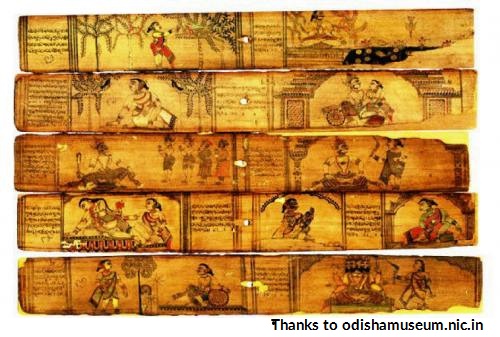
The Vedas are a large body of texts composed in Vedic Sanskrit originating in Bharat (Indian Subcontinent). In fact, the Vedic texts are the oldest body of literature and scriptures emanating from this region and practiced around the world.
What is the meaning of Vedas?
Vedas have their root in the Sanskrit word “vid” which means to know.
Introduction to Vedas
Indic thought can be divided into two schools, आस्तिक (āstika – believers) or those who accept that the Vedas are the primary source of knowledge, as well as अपौरुषेय (apaurusheya – not of a person), and नास्तिक (nasthika – non-acceptors of Vedas being the sole source of knowledge and apaurusheya).
Those who accept the आस्तिक (āstika – believers) school are Hindus and Sikhs while those who oppose this are Jains and Buddhists.
Further, it is important to recognise that apaurusheya or “not of a person” is a state of existence where the rishis or seers composed the Vedas in a state of merger with the Source (Brahman).
Abrahamic schools are called mlechha or barbarian because they do not accept/ are intolerant of the existence of any school other than their own.
Who wrote the Vedas?
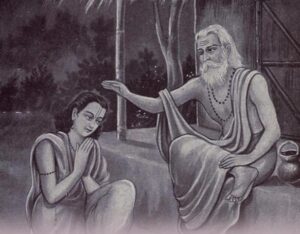
The Vedas were not written by a single person. They were composed before 4000 BCE, well before the formulation of Sanskrit grammar, syntax and rules by Panini around 400 BCE when all transmission of knowledge was by ear and by rote.
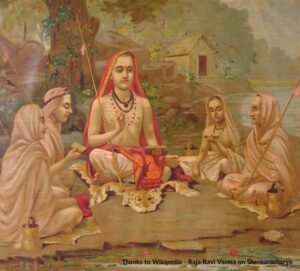
The Vedas were composed by rishees or sages who cognised these verses when they were in intense meditation, and in complete merger with the source. At this point, they had no physical, psychological, cognitive or conscious filters and were able to understand the way of the Universe directly. Once they experienced this Truth, they composed these experiences in Vedic Sanskrit which they taught to their students as Shruti or “that which is heard”. The verses were structured and sung in a manner that made change impossible and this aspect what called Smrithi or that which is remembered.
Around 3000 BCE, Sage Vyasa compiled the various verses into four Veda schools – Rig, Yajur, Sama and Atharva Veda. Of these, Rig is considered to be the oldes and the others are considered to have evolved from it.
It is important to remember that much of the Vedas that were composed by various Rishees has been lost. What is left tells a story of a civilisation that reached the highest states of consciousness known to Man.
How are the Veda-s classified?
There are four major Vedic schools or śākhā – Rig, Yajur, Sāma and Atharva.
Importantly, they are called trayi because they are classified in three kinds of mantras – as Rik or verses, Yajus or prose and finally Saman or chants.
Each Veda is subdivided into,
- Mantra or saṃhita (संहिता) – these are a
 collection of hymns used in yajña or sacrifice.
 - Brāhmaṇā (ब्राह्मण) – this is the part where the procedures, meanings and commentaries of the mantra are detailed.
- Upaniṣad (उपनिषद्) – these are philosophical portions which deal with the gross and subtle nature of the Brahman. However, Upaniṣad are also called Vedānta.
- Upaveda or Tantra (तन्त्र) – this portion forms the bedrock of the scientific explanation of Brahman and techniques of transcending material state. Yoga comes under this aspect. However, books in tankrika are not generally regarded as part of Vedas anymore.
What are the different Vedas?
There are four Vedas – Rig, Yajur, Sāma and Atharva.
What is the Rig Veda?
Rig Veda is the oldest of all extant vedic text. Additionally, it is a collection of 1028 suktams or songs and 10600 verses organised into 10 mandalas or books/ chapters.
The samhita or text of rig veda comprises 10 mandalas which are further organised into 85 sections called anuvakas. These anuvakas comprise many collection of verses or mantras called suktas. There are 1028 songs or suktams and each is assigned a rishee or seer who is said to heve composed it. Further, each suktam deals with a specific subject. Finally, each suktam verses called riks.
Some of the important suktams that are resident in Rig Veda are – Purusha-suktam, Hiranyagarbha-suktam, Nasadiya-suktam, and others.
Concluding, one can say that this Veda deals primarily with the origins of the universe, various deities and ancient rituals and practices.
What is Yajur Veda?
Yajur Veda was composed much later than Rig Veda and has around 1875 shokas or verses. Importantly, it deals with conducting of sacrifices or yajña. It is also worth nothing that both, Yajus and Yajna share the same Sanskrit root – yaj. Also, Yajur veda shares approximately common mantras or mantra derivations with Rig Veda.
Furthermore, the Yajur Veda priest who conducts the yajna is called Adhvaryu and the Yajur Veda contains detailed instructions on sacrifice, from selection of land, to purification, mantras, processes, offerings and other aspects of the sacrifice or yajna.
For general direction, the texts can be divided into 3 section – darshapurnamasa, somayajna and agnichayana.
Some major sacrifices covered by Yajur Veda are darshapurnamasa, agnihotra, brahmayajna, chaturmasya, ashvamedha and others.
What are the tw branches of Yajur Veda?
Yajur Veda is split into two major subgroups;
- Krishna (black/dark) Yajur Veda – where samhita (mantras) are interspersed with Brahmana (commentary). 4 samhitas survive today.
- Tattriya Samhita
- Kathaka Samhita
- Kapishthala Samhita
- Maitrayani Samhita
- Shukla (white/ pure) Yajur Veda – here the samhita (mantras) are kept discrete from the corresponding Brahmana (commentary). 2 samhitas survive today.
- Madhyandina Samhita
- Kanva Samhita
The basic difference between Shukla Yajur Veda, which is related to the Aditya school, and Krishna Yajur Veda which is related to the Brahma school is the the way the samhita is mixed with the brahmana. In Krishna, it is mixed with the brahmana, while in Shukla, it is kept separate from the samhita.
What is Sama Veda?
Sama Veda, which derives it’s name from the Sanskrit word Saman or melody, is the shortest of all Vedas. It comprises consists of 1549 samhitas, almost all but 75 samhitas are taken from Rig Veda (mostly 8th and 9th mandala of Rig Veda). Sama Veda basically arranges Rig Veda mantras into musical adaptations, and these adaptations form the basis of Indian Classical Music.
According to Patanjali, there were 1000 shakhas or schools, but only three survive today – Kauthuma, Jaiminiya and Ranayaniya.
Furthermore, the Sama Veda priest who conducts the yajna is called Udgatar and the Sama Veda contains detailed procedures on soma sacrifices and these are chanted in a specific singing manner called gana.
Additionally, Sāma Veda consists of;
- Gana (गान) – a set of 4 melody collections and is split into Prakriti gana and Uha gana.
- Archika (आर्चिक) – a set of 3 books containing verses sung to the melody of the gana and separated into purvachita (650 verses) and uttarachika (1225 verses).
Purvachika consists of,
-
- Agneya – 114 verses for Agni
- Aindra – 352 verses for Indra
- Pavamana – 119 verses for Soma Pavamana
- Aranya – 55 verses for various deities
What is Atharva Veda?
The Veda of the Atharvan or priest is Atharva Veda. Atharva Veda is attributed to Rishee Atharva. According to Patanjali, Atharva Veda originally comprised of 9 shakas or schools, but only 2 shakas of Paippalada and Shounaka survive today.
Atharva Veda consis of 730 shlokas or hymns containing 5987 mantras which are divided into 20 kandas or chapters. Out of which 160 are common with the Rig Veda. Composed primarily by Āngiras and Atharvān, it is a later Veda, composed between 900 BC and 1000 BC.
Importantly, Atharva Veda can be split into 3 major sections. The first, deals with life, life principles, relationships, peace, health, wealth, friendship (mainly marriage and cremation) etc. The second deals with disease, medicine and medical procedures, as well as cures for snake bites, and this Veda is considered the base of Ayurveda or the Indian system of Medicine and practices of the period. Lastly, Atharva Veda coversthe supreme reality, death, immortality and is often considered a must read for anyone interested in pursuing deeper spiritual integration with the Truth (Brahman).
What you should know after reading this blog.
- What are the Vedas? Why are they important?
- How many Vedas exist? Name the 4 Vedas?
- What are the elements of each Veda?
- Explain the design of each Veda?
- What is the difference between each of the Vedas?
Introduction to vedas presented in a simple way so that common man can understand.
It is amazing to know that vedic times is much earlier to origin of other religions. If the communication was as good as present sanatana dharma would have been followed all over the world.
Very sorry for the delayed response, it got lost in the clutter,
Thank you for your feedback. We are continuously updating the site and would be grateful for any input that can make yoga relevant to modern day living,