What is vajrasana?
Vajrasana (vajra = thunderbolt, asana = pose), is a kneeling yoga posture. This is one of the few yoga poses that can be practiced right after meals.
What is the technique to practice vajrasana?
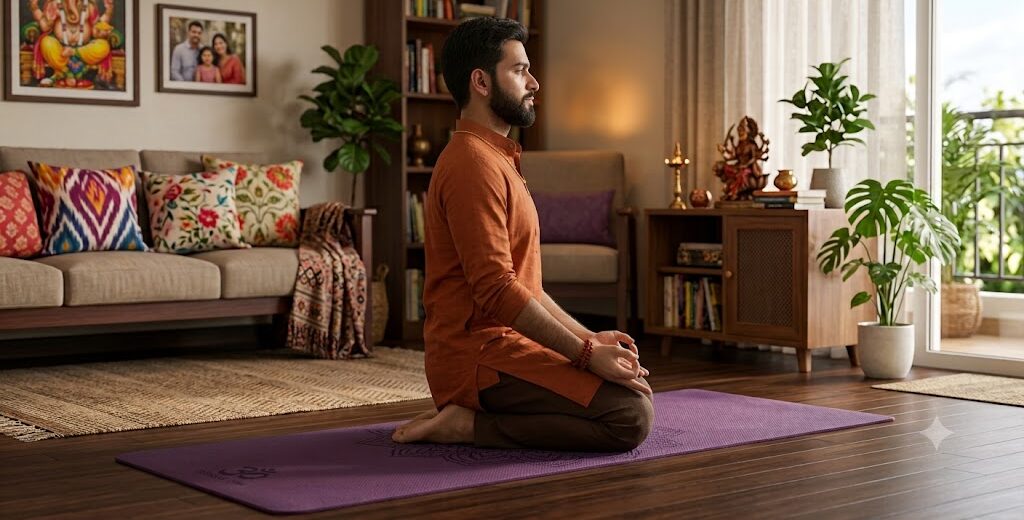
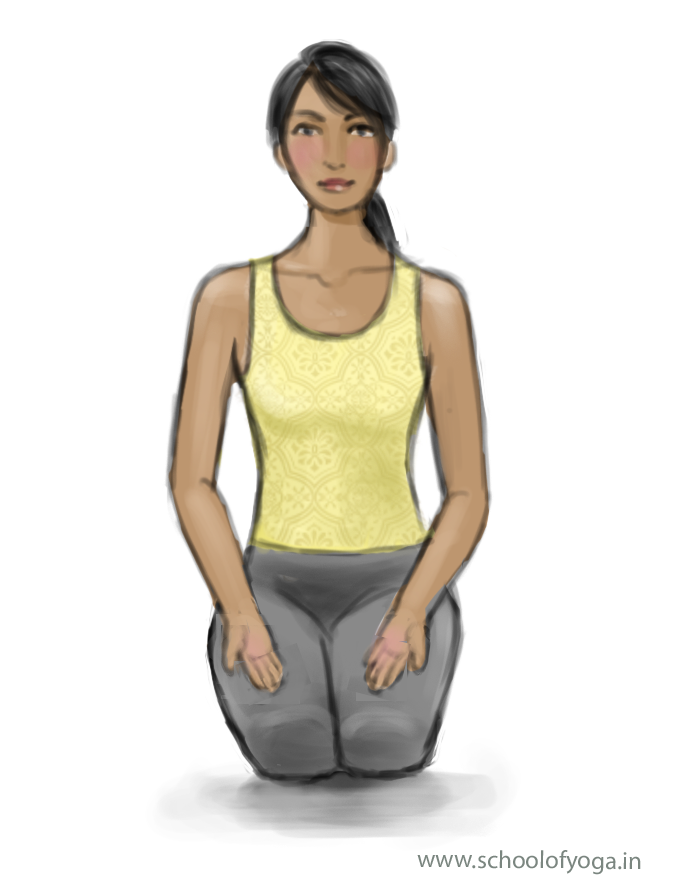
- Sthithi (starting) position: Kneel on a clean mat in an airy and quiet room. Keep your knees together.
- Slowly rest the buttocks on the heels.
- Slowly increase the weight on the ankles and allow the ankles to stretch. Keep the ankles together as far as possible.
- Slowly rest the complete weight of the body on the ankles with the heels in the buttocks.
- Let the hands rest on your thighs, open your palms upwards or keep them in chin mudra.
- The classical pranayama to use is ujjayi pranayama.
- The following dristhis (gaze) are recommended – nasikagra (tip of the nose), bhrumadhye (between the eyebrows) or at the chakras (ajna, vishuddhi or anahata), but keep it steady for the period of asana.
- Breathe calmly, keeping the mind silent. Be conscious of your anchor within the self. Command your body to relax, moving from the top of the body to the extremities. Imagine stress leaving your body with each exhalation. Release your mind. Let it not grasp anything or any thought.
- Start with 5 minutes and gradually increase upto 15 minutes.
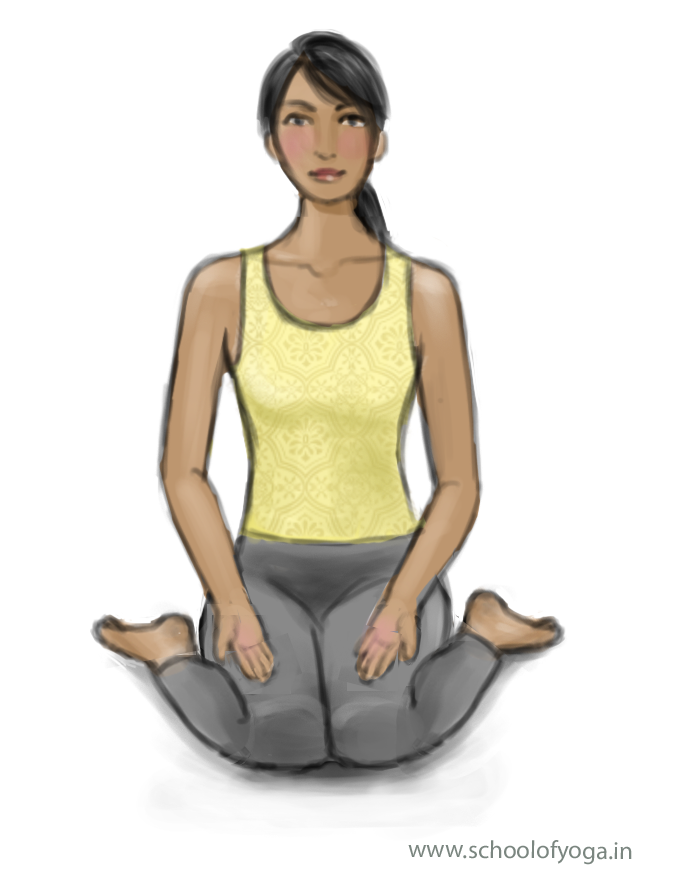
A variation of vajrasana:
Sometimes it is difficult to hold the stretched ankle pose. In such situations, one could splay the feet slightly to reduce the pressure on the longus tendons of the feet.
What are the benefits of vajrasana?
Compressing the knees results in pinching of the femoral artery and vein, along with the saphenous vein and iliac artery and vein, resulting in flushing of the thigh, buttocks and lower back muscles.
What are the contraindications of vajrasana?
- It is difficult to stay in this posture for extended periods. The body weight settles on the ankles and this can result in painful ankles.
- Also, the knees get completely bent, resulting in pinching of the genular arteries at the knee. This can lead to stiffness, numbing and cramps in the area.
Some noteworthy points on vajrasana:
Internal Links: Dharma (conditioning), Stress and Situational Awareness, Prana, Asana overview 1, Asana Overview 2, Asana Focus or gazing, Pranayama, Yama, Niyama, Padmasana
External Links: Prana, Chakra, Pancha Tattva, Pancha Prana, Pancha Kosha, Nadi,
- Why chin mudra? Vajrasana is about collecting the disparate energies or prana into the person. Prana flows within and outside the body. An open palm would mean that the prana which moves to the extremities is unable to return which makes the flow unidirectional. With chin mudra, this loop is closed, like any good electrical circuit, resulting in uninterrupted flow of prana around the person, increasing retention and charge of prana within the system.
- This asana is considered to be one of the 32 most important asanas by all ancient texts.
- This posture stabilises the spine with hips and shoulders. This asana is very good for spinal curvature retention.