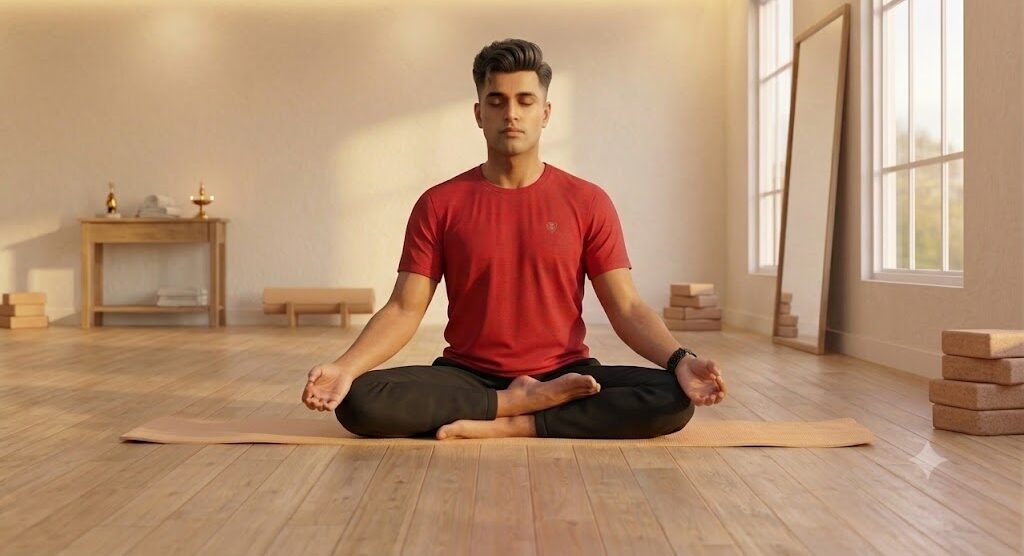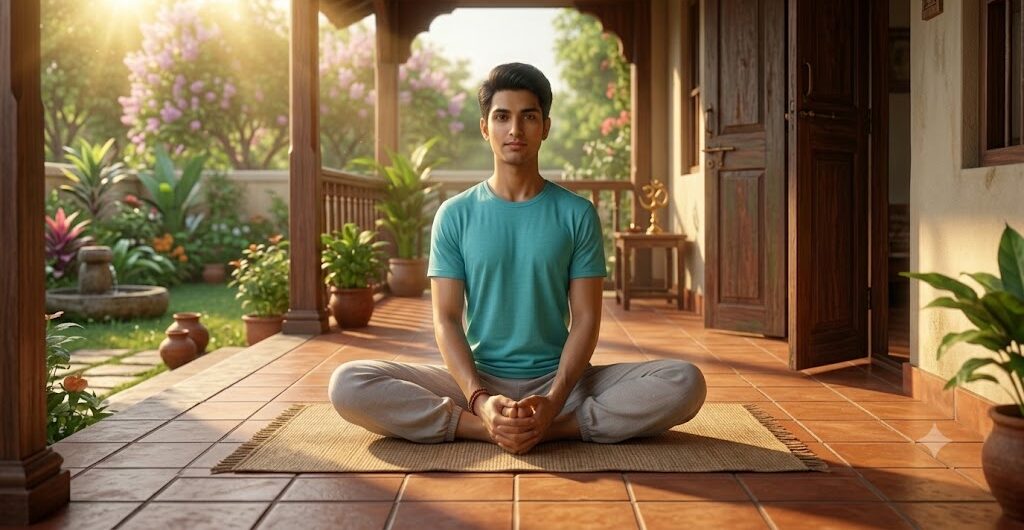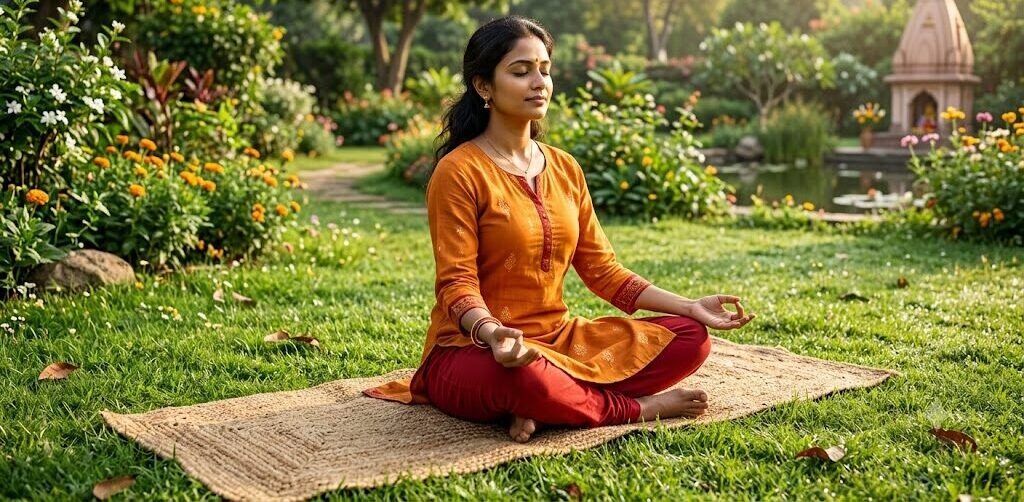
What is sukhasana?
Sukhasana (sukha = ease/comfort/joy, asana = pose) is a basic and comfortable cross-legged seated yoga pose, that is popularly used for meditation and relaxation.
What is the technique to practice sukhasana?
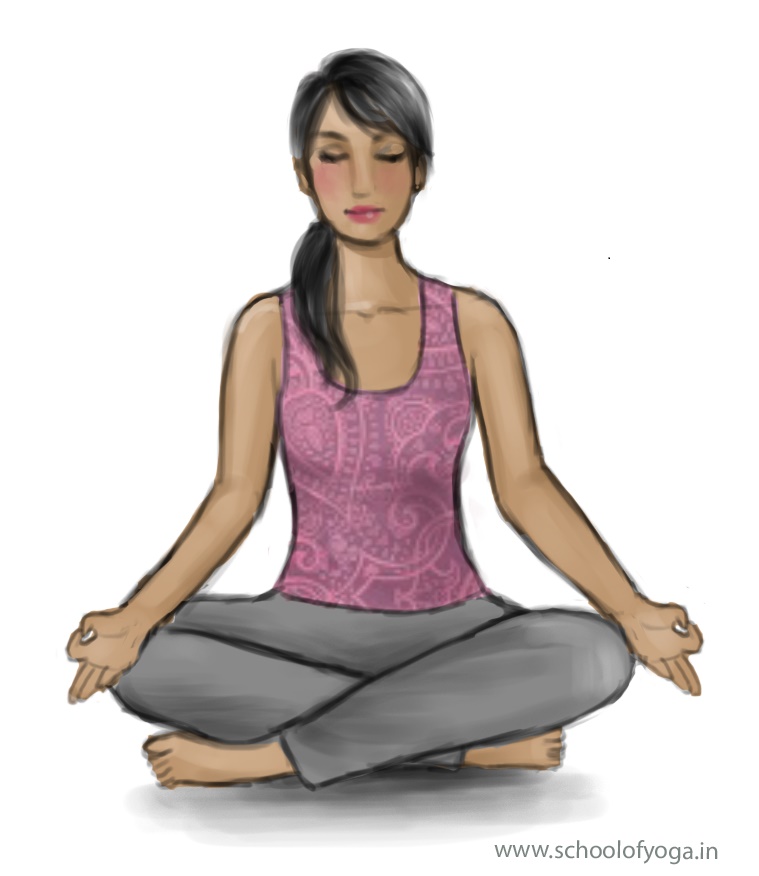
- Sit on a clean mat in an airy and quiet room. Stretch both legs forward.
- Fold one leg at the knee and place it under the opposite thigh, with the knee above the foot.
- Repeat the process with the other leg; cross the ankle and bring the other foot under the folded knee of the opposite leg so that both the legs are comfortably placed.
- Keep your back erect but relaxed. Relax the legs. Generally, there should be no slippage of the feet.
- Join the forefinger with the thumb to form a circle. This is called chin mudra.
- The classical pranayama of use is nadi shuddhi or anulom-vilom pranayama.
- The following yoga dristhis (gaze) are recommended – nasikagra (tip of the nose), bhrumadhye (between the eyebrows) or at the chakras (ajna, vishuddhi or anahata). But keep it steady for the period of asana.
- Breathe calmly, keeping the mind silent. Be conscious of your anchor within the self.
- Command your body to relax, moving from the top of the body to the extremities. Imagine stress leaving your body with each exhalation. Release your mind. Let it not grasp anything or any thought.
- Start with 5 minutes and increase up to 15 minutes.
What are the benefits of sukhasana?
- This is a basic sitting asana and a keeps the body in a natural sitting position.
- As this asana requires the practitioner to keep the back erect, it encourages good sitting posture.
- This yoga pose helps calm the mind as it is paired with pranayama breathing.
What are the contraindications for sukhasana?
- People suffering from arthritis, hernia and back problems must perform this asana only under supervision of a physician.
Some noteworthy points on sukhasana:
Internal Links: Dharma (conditioning), Stress and Situational Awareness, Prana, Asana overview 1, Asana Overview 2, Asana Focus or gazing, Pranayama, Yama, Niyama, Padmasana
External Links: Prana, Chakra, Pancha Tattva, Pancha Prana, Pancha Kosha, Nadi,
- Why chin mudra? Sukhasana is about collecting the disparate energies or prana into the person. Prana flows within and outside the body. An open palm would mean that the prana which moves to the extremities is unable to return, which makes the flow unidirectional. With chin mudra, this loop is closed, like any good electrical circuit, resulting in uninterrupted flow of prana around the person, increasing retention and charge of prana within the system.