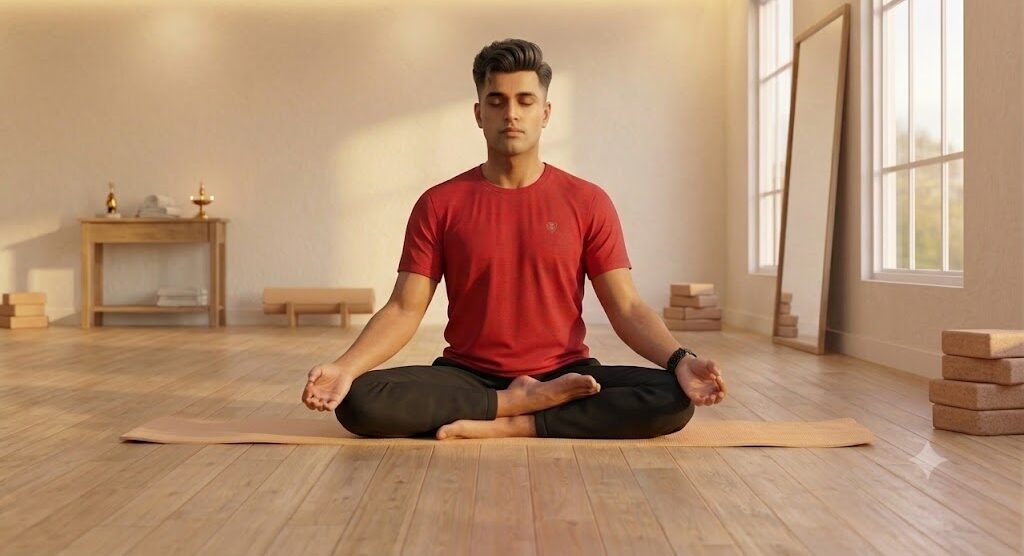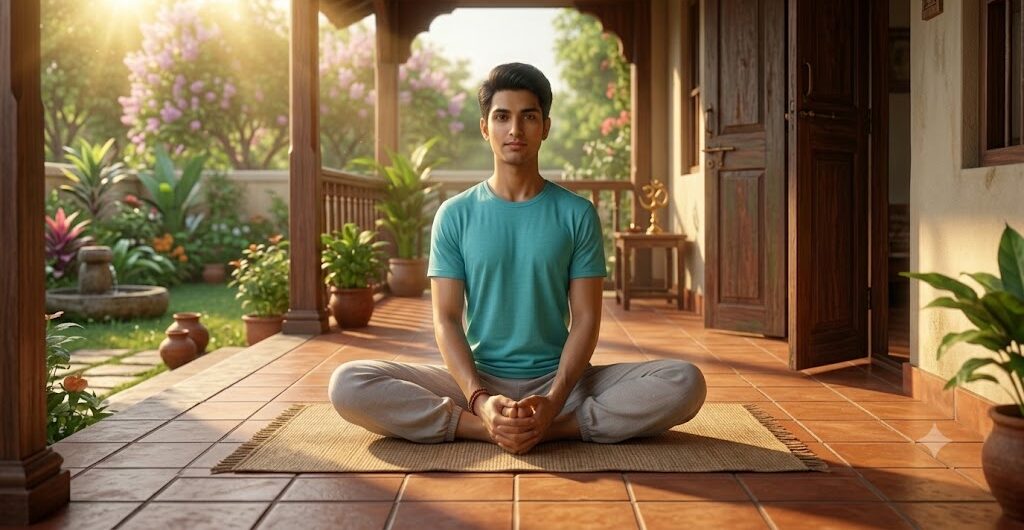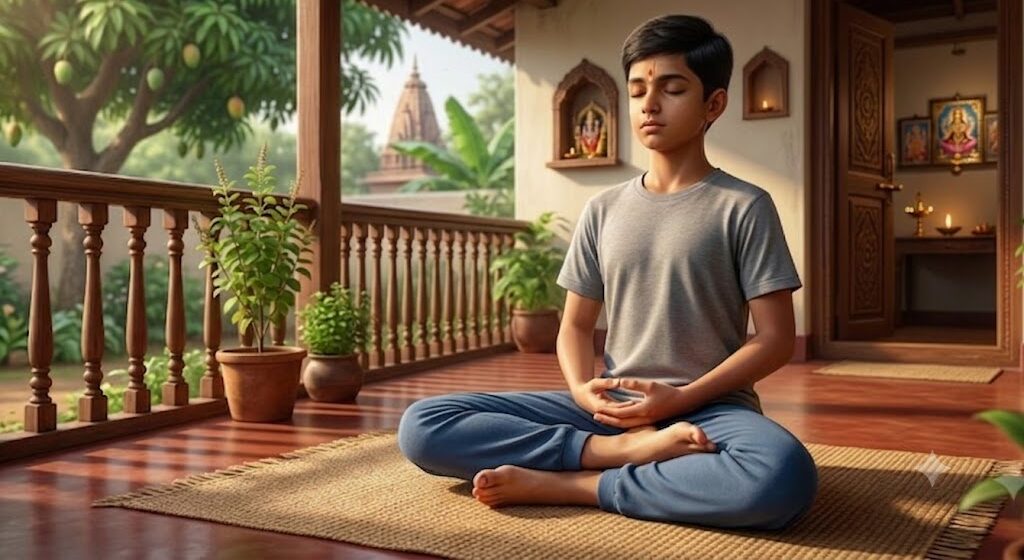
What is muktasana?
Muktasana (mukta = liberation / emancipation, asana = pose) is a simple seated pose that is ideal for meditation and mental stillness, along with liberation.
What is the technique to practice muktasana?
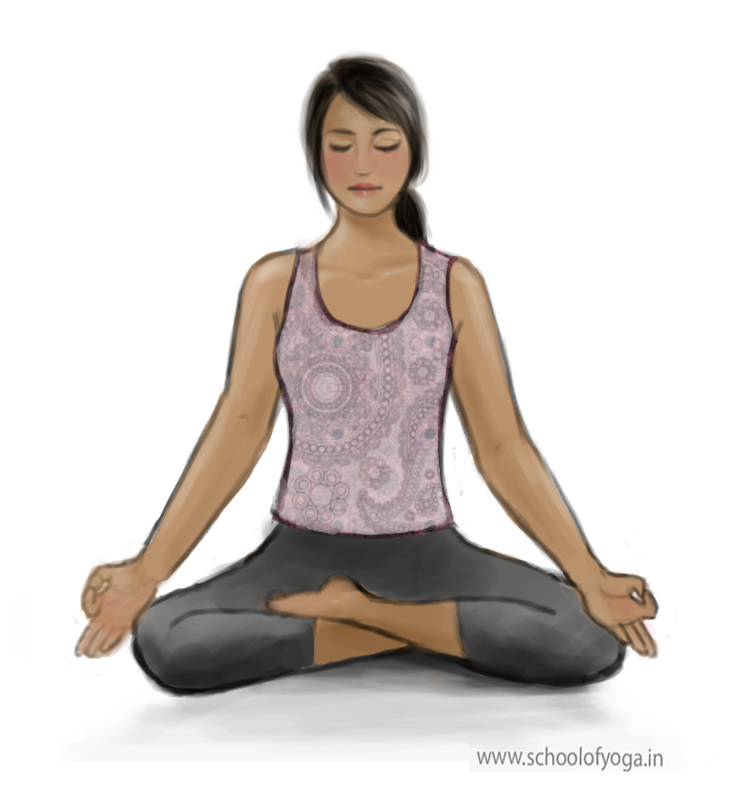
- Sthithi (starting) position: Sit on a clean mat in an airy and quiet room. Then, stretch legs forward.
- Folding one leg at the knee, hold the ankle, lift and place it near the perineum, while carefully lifting the genitals out of harm’s way. Thus, the heel fits into the junction of the genital and thigh.
- Repeat the process with the other leg; folding the left leg at the knee, carefully place the side of the heel over the right heel near the perineum.
- Use the hands to support the foot so that the unsupported left knee is not unduly stressed.
- Slowly release the hands so that the leg is comfortably placed. However, keep your back erect but relaxed.
- Relax the legs. You will feel them slipping slightly and then becoming stable.
- Use dhyana mudra – place one hand over the other on the lap and let the thumbs touch.
- The classical pranayama of use is ujjayi pranayama.
- The following dristhis (gaze) are recommended – gaze at the chakras (mooladhara or svadishtaana). However, keep it steady for the period of asana.
- Breathe calmly, keeping the mind silent. Also, be conscious of the silence within yourself.
- Finally, command your body to relax, moving from the top of the body to the extremities. Imagine stress leaving your body with each exhalation.
- Release your mind. Let it not grasp anything or any thought.
- Start with 5 minutes and increase up to 15 minutes.
- Do not try to achieve perfection on day 1. Make sure your body is able to take the strain. Over time, the body will become supple and perfection will be achieved.
What are the benefits of muktasana yoga pose?
- This asana has the benefit of increasing brahmacharyam or sexual continence.
- Continuous practice will allow easy movement of the kundalini from the mooladhara.
What are the contraindications of muktasana ?
- There are no known contraindications of this yoga pose.
Some noteworthy points on muktasana:
Internal Links: Dharma (conditioning), Stress and Situational Awareness, Prana, Asana overview 1, Asana Overview 2, Asana Focus or gazing, Pranayama, Yama, Niyama, Padmasana
External Links: Prana, Chakra, Pancha Tattva, Pancha Prana, Pancha Kosha, Nadi,
- Why Mudra? Muktasana is about collecting the disparate energies or prana into the person. Prana flows within and outside the body. An open palm would mean that the prana which moves to the extremities is unable to return, which makes the flow unidirectional. However, with a mudra, this loop is closed, like any good electrical circuit, resulting in uninterrupted flow of prana around the person, increasing retention and charge of prana within the system.
- This asana is considered to be one of the 32 most important asanas by all ancient texts.