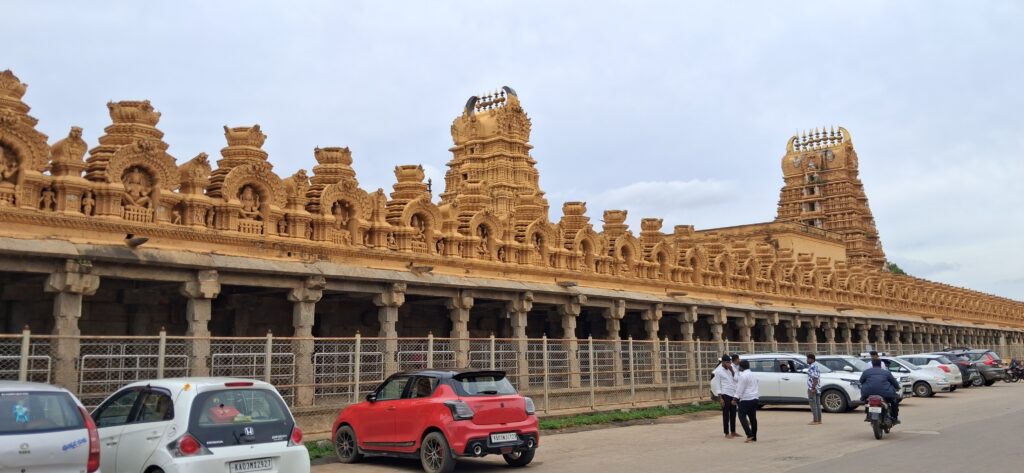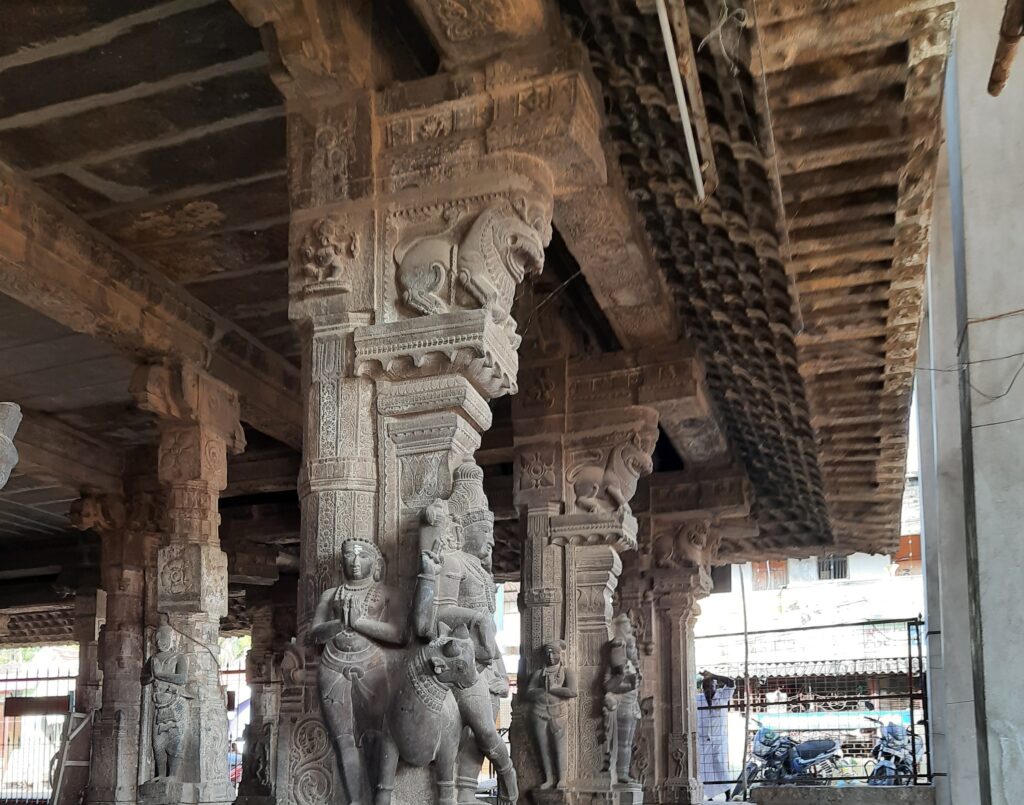

The background of Temple condition
In the last few blogs, we examined the design, architecture and civilisational basis of our temples. These included various aspects – architectural planning and construction as per Vedic principles, Vasthu shastra and agamas, selection of qualified shilpins, selection of appropriate materials and consecration of the completed temple with prescribed mandatory rituals.
We also know that temples served as nuclei of the locations cultural, social, economic, artistic and intellectual functions. In fact, many temples even managed irrigation projects, land reclamation, post-disaster relief and recovery. Additionally, temple ecosystem also included libraries, schools, hospitals, community kitchens, water tanks, irrigation canals, new roads and other social welfare activities. Importantly, all these were paid for by the donations and grants from royal patrons, private individuals and devotees from a wide spectrum of society.
Temple condition today – A point for reflection
What is the contemporary temple condition situation? Are we making use of the temples for what they were meant for? Are we able to protect, preserve, promote, and perpetuate Vedic Dharma through these temples? Should we not now impart universal spiritual truths as found in our Sanatana-dharma in the temples and attempt to spread a much needed cultural and spiritual revolution?
Temple condition today – The problem
All of us know the answers to these questions. So, if we are serious enough to regenerate and revitalize our Hindu society, we should reposition temples as epi-centres of our community life and the main preservers and disseminators of our traditions and spiritual heritage. Furthermore, they should be considered as a spiritual foundation strengthened and maintained by rituals, service, mantras, and the presence of the devotees and deities.

Viewing our temples against this background, we have to accept that most of our temples are not as effective as they should be in fulfilling the needs of the devotees. So what can we do about this? Moreover, is course-correction possible now and can we utilize the temples effectively to preserve and share our Vedic culture for the benefit of all?
Sanathana Dharma is not a religion, it’s a way of life. Therefore, one of the basic purposes of temples should be to provide meaningful instruction and information on our Vedic culture and philosophy in a user-friendly format that can be understood by everyone. Importantly, this has to be the focus of at all age groups – from five year olds to senior citizens.
Temple condition today – The possible solution
First, we should ensure that everyone understands the basics, what is a temple, why it is the anchor of our civilisation and how it protects our civilisational consciousness. Next, we should realise its importance and be able to apply it in our lives and benefit from the knowledge. One of the important functions of a temple has always been to create mass awareness of Sanatana Dharma. Therefore, an important step should be to organise regular classes for Hindus of all ages.
This is because most of the Hindus do not truly know what Hinduism means and a majority of those who do know something have at best a shallow idea. Undoubtedly, we should recruit qualified educated teachers for this important job and pay them well. It is their teaching and nurturing that is going to re-energise the society and nation.
Temple condition today – Why have we landed in this pathetic situation today?

The main reason is because since independence, we have not been taught about who we are or our dharma / way of life either in school or at home. Ofcourse, a few have managed to have some knowledge because of their own interest and opportunity for learning from other sources. Unfortunately, the Indian version of ‘secularism” has ensured that Hinduism cannot be part of the educational curricula, and his has been the norm for more than seven decades, which means today’s parents and grandparents have no exposure to the tenets of our dharma. How can today’s children and GenNext be taught when none in the family has any knowledge?
How do we teach from the temples in the existing conditions?
Those who visit the temples for darshan, puja, or rituals, do so at different times as per their conveniences. Further, these visits are not regular or mandatory as in other faiths : hence it would be difficult to organise and conduct regular group classes for the whole congregation at the temples. However, weekends or other public holidays when most people are free from work would be appropriate for the conduct of instructional classes. Importantly, this should include interactive question – answer sessions wherein learned teachers can guide and mentor knowledge seekers.
Additionally, there could be exclusive classes for home makers at times appropriate and convenient for them. They could be attracted with information on themes that are interesting and useful to women, children and family management. Children need to be addressed separately and given high priority, because educating them on our Dharma is a necessary investment for the future of society and our country.
Temple conditions – seeking a revival of the civilisation
For all the classes discussed above, proper planning of a basic content and tool kit has to be undertaken by scholars through extensive discussions. Once that evolves, it could be circulated to all temples for implementation. Each temple could use a Suggested Minimum Syllabus (SMS) with additions and modifications depending on locally important issues and priorities. For instance, a Vaishnavite temple could emphasize on philosophy suiting its leanings – teachings of Ramanujacharya or Madhavacharya ;there could be other temples focussing on advaitha and teachings of Adi Shankara. The idea is to make every Hindu aware of our core values and help everyone have a platform to build upon it to achieve higher goals of learning.