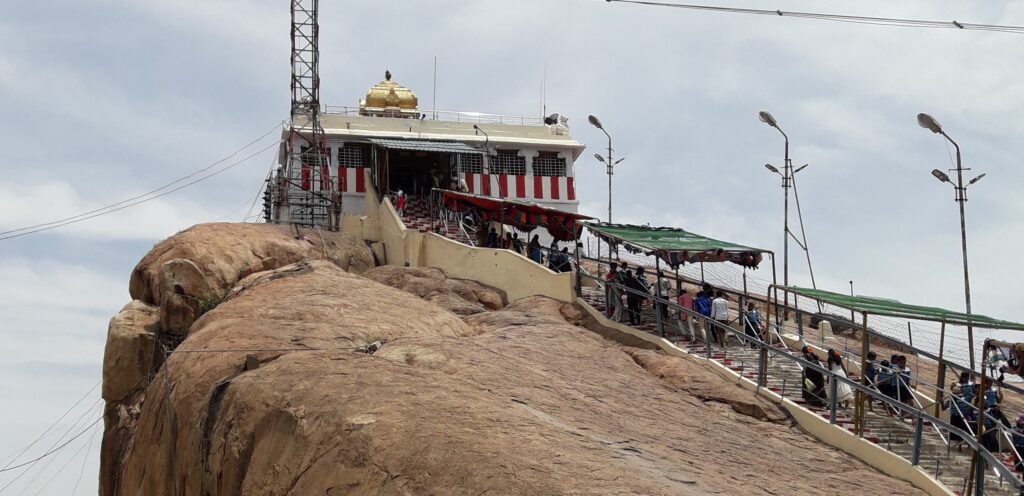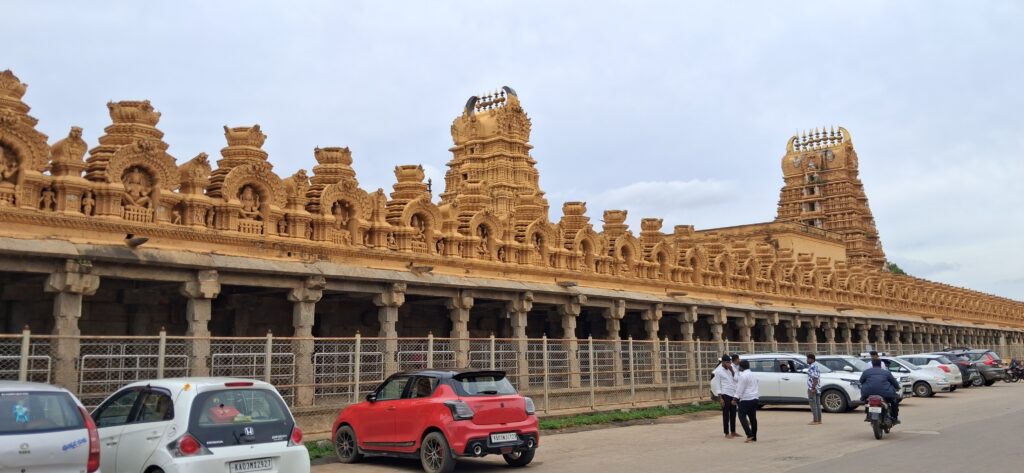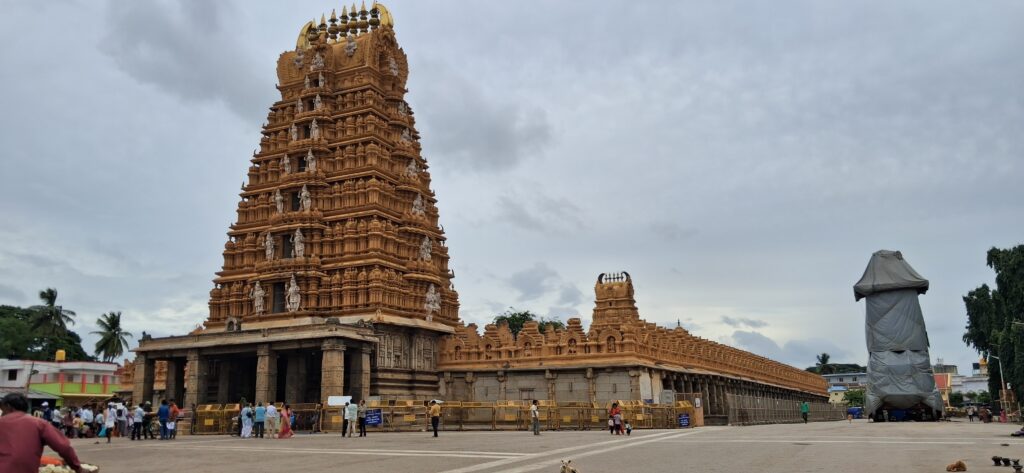
Temple History – How it began…
Temple history and their detailed studies show that from the 1st century BC through 3rd Century AD, evidence and details about ancient temples increases. In fact, ancient literature refers to these temples as Pasada (or Prasada), sthana, mahasthana, devalaya, devagriha, devakula or devakulika. Also, the entrance of the temple is referred to as dvarakosthaka, the temple hall is described as sabha or ayagasabha and pillars are called kumbhaka, while vedika is referred to the structures at the boundary of a temple.
Importantly, with the start of Gupta dynasty in the 4th century, Hindu temples flourished in innovation, design, scope, form, use of stone and new materials as well as symbolic synthesis of culture and dharmic principles with artistic expression. Also, this period that is credited with the development of concepts such as garbhagriha for Purusa, mandapa for sheltering the devotees and rituals in progress, as well as symbolic motifs relating to dharma, karma, kama, artha and moksha.
Temple History – evolving into a center for development of the consciousness
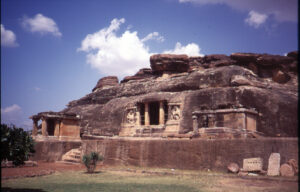
Further, temple superstructures were built from stone, brick and wide range of materials to increase their size and make them imposing anchors of their locality. Also, entrance ways, walls and pillars were intricately carved, while parts of temple were decorated with gold, silver and jewels. Lastly, deities such as Vishnu, Siva and other deities found places within Hindu temples, while Buddhists and Jains built their own temples, often alongside with Hindus.
The period from 4th to 6th century marked the flowering of Vidharbha style, whose accomplishments survive in central India as Ajanta caves, Pavnar, Mandhal and Mahesvar. Additionally, the Malaprabha river basin in South India is credited with some of the earliest stone temples of the region during this period.
For example, the Badami Chalukya temples are dated to the 5th and 6th century. Later, over the 6th and 7th centuries, temple designs were further refined during Maurya dynasty, evidence of which survives today at Ellora and in the Elephanta cave temples.
Temple History – Evolution of designs
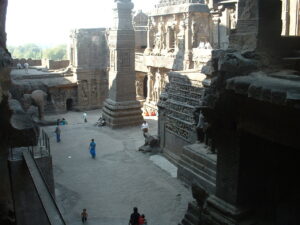
It is between the 5th and 7th century AD that outer design and appearances of Hindu temples in north India and south India began to diverge. However, the forms, theme, symbolism and central ideas in the grid design remained same, even though innovations were adopted to give distinctly different visual expressions.
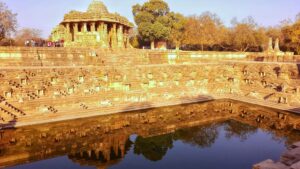
The Western Chalukya architecture of the 11th & 12th-century Tungabhadra region of modern central Karnataka includes many temples. Also, step-wells, which consisted of a series of steps descending to the water began to get converted to temple. While some were decorated as temples, or served as a temple tank.
During the 5th to 11th century, Hindu temples flourished outside the South Asian subcontinent, extending to places such as Cambodia, Viet Nam, Malaysia and Indonesia. In Cambodia, Khmer architecture favoured the Temple mountain style famously used in Angkor Wat, with a prang spire over the sanctum cell. In what is modern south and central Viet Nam, Champa architecture built brick temples.
Temple History – Destruction, conversion, and rebuilding
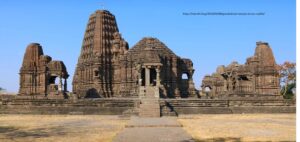
Many Hindu temples have been destroyed, some, after rebuilding, several times, by barbaric invaders. In fact these acts of deliberate temple destruction were usually driven by religious bigotry. At least 80 campaigns of Hindu temple site destruction stretching over centuries, particularly from the 12th through the 18th century have been listed. Others temples have served as non-Hindu places of worship, either after conversion or simultaneously with Hindu use.
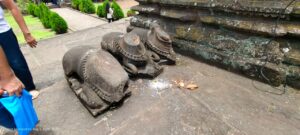
In the 12th-16th century, during Muslim conquests in the Indian subcontinent and South Asia, Hindu temples, along with the temples of Buddhists and Jains, intermittently became targets of armies from Persian, Central Asian, and Indian sultanates. Idols were broken up and damaged, spires and pillars were torn down, and temples were looted of their treasury. Some temples were converted into mosques, or parts used to build mosques. Muslim rulers led campaigns of temple destruction and forbade repairs to damaged temples, following the Muslim traditions. The Delhi Sultanate destroyed a large number of temples.
Temple History – Watch the histoy of Goa’s Shanteri Kamakshi temple

The 16th- and 19th-century Goa Inquisition destroyed hundreds of Hindu temples. All Hindu temples in Portuguese colonies in India were destroyed. Religious conflict and desecrations of places of worship continued during the British colonial era. Historians list over 2000 sites where temples have been destroyed and mosques have been built over them. Some historians suggest that around 60,000 temples were destroyed by Islamic rulers between 1200 and 1800 AD. Some western historians claim that only 80 temples were destroyed as there was no proof of destruction elsewhere!
Destruction of Hindu temple sites was comparatively less in the southern parts of India, such as in Tamil Nadu. Cave-style Hindu temples that were carved inside a rock, hidden and rediscovered centuries later, such as the Kailasha Temple, have also preferentially survived. Many are now UNESCO world heritage sites.