Temple protection can start by teaching dharma in temples
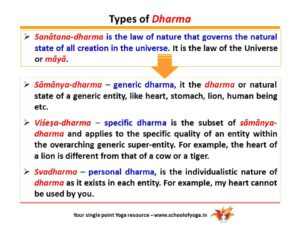
Temple protection can be accomplished by establishing tool kits for religious instruction at all levels for all categories of worshippers.
Importantly, one could establish classes at 10 levels corresponding to the ten years of schooling. Likewise, several grades of classes for adults could be planned. Additionally, all material for these could be made available for instruction in the local languages and English to the teachers.
The organisation of this mammoth exercise could be done by the several Hindu organisations by debates and discussions. Also, finance can be found and made available from rich temples. Additionally, comparatively wealthy temples belonging to large trusts or individuals can take a lead in the matter.
To begin, temple classes can begin from the largest temples initially and then expand to smaller ones in towns and villages. In fact, the thousands of temples that are struggling to carry on its daily services and activities can be adopted or sponsored by the larger ones.
Temple protection can be achieved through use of social media
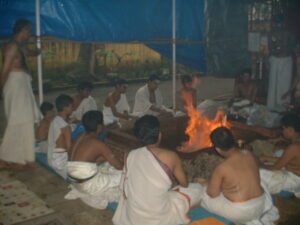
Temple protection can be achieved by ecouraging Hindus to enrols for classes and be involved in learning for at least two hours in a week. Additionally, online classes and social media platforms can be employed as supplemental channels for instruction. Further, incentives could be given for persons to attend the classes regularly.
Similarly, quizzes and tests can also be planned with prizes. Incentives and prizes could be in the form of cash or coupons which could be redeemed from temples towards poojas/ sevas/prasadams.
In addition, temples could arrange workshops, talks and group discussions on religious matters. Importantly, the idea is to remind the people that the Vedic tradition is as relevant today as it was thousands of years ago. I know that the question that arises is whether our people would respond positively to these ideas. Yes, we have to package these ideas in a way it attracts young and old alike.
The first step in temple protection is making everyone come to the temples.
We come back to where we began – make the temples the epicentres of Hindu living. In fact, temple must be buzzing with activities on a daily basis apart from the routine of mandatory rituals and services as per Vedic diktat.
Also, Temples could arrange bhajans sessions, meditation classes, Yoga, Ayurveda, Jyotish, Vastu, traditional music and dance classes.
Once the crowds start coming in, they can be channelized to religious instruction as well. In fact, the various subjects can themselves be the media of teaching.
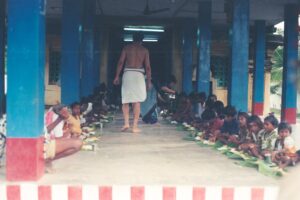
All these can be basically free of cost or have a token guru dakshina component. Japa and meditation can be a small component of each class. If possible, a small group prayer can end each session, followed by distribution of prasadam. Additionally, cultural programmes by participants can be organised at regular intervals.
In fact, temples should support classes that teach all traditional art forms.
Temple protection can be achieved by temples engaging in Social services
Another essential component of temples should be social service. Importantly, temples which can afford should necessarily serve society. For instance, medical facilities could be provided by running regular medical clinics in the temples. Similarly, free food (annadaanam) for the needy can be organised. Additionally, scholarships for students can also be arranged.
By carrying out these social, educational, cultural and religious programmes, temples will become the main stream activity centre of all Hindus and help bring about a renaissance. Only then, we can claim that temples are doing what they were originally meant for – the upliftment of Hindus and the protection and preservation of Sanathana Dharma.
Temple protection must include activism – “Leave temples alone”

It is to be realised that none of the measures discussed above can succeed in the present arrangement where all the major temples are controlled by the State Governments and if those administered by Hindu organisations or individuals are comparatively much smaller and monetarily weaker.
Importantly, temples run by politicians, bureaucrats and employees without passion and devotion can never become the right vehicles for bringing about positive transformatory changes in society.
Adding insult to injury, many of the State Devaswom Boards are headed and administered by persons of other religions and atheists.
Temple administration should be handed over to Hindus who believe in temple worship. Importantly, the present practice of Government controlling the temple administration is against the spirit of secularism enshrined in the constitution.
What is immediately required is the removal of the state governments’ powers to appoint trustees to temple boards. We need to insist that we are eminently capable of managing our places of worship without Govt interference.
If necessary, a body comprising all Hindu organizations may be formed , to nominate trustees to temple boards. Furthermore, we want all the Hindu religious endowments to be managed by Hindu trustees – the government may be entitled to review annual budgets of the temples as well as audited accounts, but should be out of administration.
Importantly, the longer the government continues with its interference in Hindu religious affairs, the greater will be the damage done to our Dharma, and consequentially the nation. The Governments should leave the temples to the religious minded and the faithful and move on to more important challenges facing the nation.
What needs to be done for temple protection?

Firstly, the need of the hour is to unite and work together in a cohesive group under one identity, irrespective of caste and class and become a force to reckon with. It appears that the next 20 years will determine the future of Sanathana Dharma in India. Importantly, we should work for the freedom to continue to construct and manage our own temples without interference from the government.
The spiritual leaders and acharyas should reach out to the commoners especially in towns and villages and people of castes, so that they feel cared and integrated. In face, they should feel that they belong to the dharmic tradition and are welcome in the temples.
It is critical that everyone well informed and educated in our own culture, philosophy, and tradition to explain it to our children and others. Also, everyone should engage in the promotion of the true understanding of our Dharma.
Another by-product of such an education would be that the community would be automatically inclined to support leaders and politicians who are most likely to uphold dharmic principles.
Such changes can only take place if we unite, stand strong and work together. We have to drop the apathy, discard our ego, forget our caste and class distinctions and join together for a common cause. We have no choice. The time to act is now.
Dharmo Rakshati Rakshitah. If we don’t protect it, how can it* *protect us?