What is sacrifice or yajna?
How does Shri Krishna describe sacrifice?
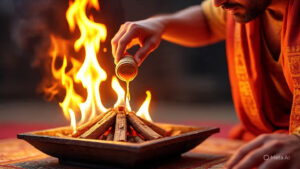
Brahman sacrifices to Brahman, the offering is to the fire of the Brahman, the offering is made only by Brahman, the end result is achieved by effort of one who is absorbed in meditation of Brahman. Some sacrifice to their deities, yogis worship the fire of Brahman, others offer sacrifice as a sacrifice. Organ of hearing and other senses in the fire of self-restraint are sacrificed, sources of sound and others are sacrificed in the fire of the senses.
Yet others sacrifice all functions of the senses and movements of vital air (prana), and others sacrifice restraint of the Self in the fire of yoga. People also sacrifice materials, self-restraint, yoga as a sacrifice, yet others sacrifice knowledge gained by self-study, as do ascetics and people who practice great vows.
In the outgoing breath people sacrifice incoming breath, yet others sacrifice incoming breath in the outgoing breath controlling the speed of incoming and outgoing breath, restraining it becomes the principal focus. Others regulate food intake or sacrifice vital air in the incoming breath also all these that know sacrifice get their impurities destroyed by sacrifice.
There are many forms of sacrifice spread across the spectrum of Brahman which are produced by action. Superior to sacrifice of materials is sacrifice of knowledge, all action culminates in knowledge (jnana).
This subtle knowledge can be achieved by prostration, by questioning and by service. Then wise people will teach you the knowledge of reaching the Truth. Not knowing this one will commit to delusion repeatedly, but by this, all beings see me in their Self also.
Just as a blazing fire reduces fuel to ashes, the fire of knowledge reduces all actions to ashes. Verily, nothing is as pure as wisdom in this world and this has been discovered over time by yogīs who have achieved total perfection.
Those that are sincere and dedicated obtain wisdom when they are totally, eagerly engaged subduing the senses have obtained wisdom, they obtain supreme peace quickly.
The sacrifice (yajna) process.
What is yajna? Sacrifice is the willingness to give a part of oneself for a purpose without expectation of return.
From first principles,

- All sacrifice comes from Brahman.
- First, from Brahman, purusha (primordial Identity or Self) and prakriti (primordial manifestation or energy) emerge.
- Next, purusha tries to project its own Identity or self-worth (asmita). Additionally, this projection is in the form of an awareness called citta (consciousness).
- Furthermore, citta (consciousness) is a medium, a carrier of experience. It is inert and is the carrier of motility (prāṇa) as well as sentiment (bhava). Sentiment is an expression of purusha.
- Lastly, the motility (prana) and sentiment (bhava) element are provided by prakrti in the form of guna (attributes). So, purusha (experiencer) is the static element and prakrti is the dynamic element.
- Purusha and prakrti weave with each other, this weave is called tantra and the outcome is called karma.
- All actions (karma) result in imbalance between the entities (atman) and this results in debt (rinn) which needs to be reconciled.
- Since the Self (atman) is holding the debt, the only way to escape rebirth (samsara) is to remove the Self from the action and this is done by sacrifice (yajna).
- It is important to realise the sacrifice is also an action (karma), except that it is a regression action on the Self, as sacrifice results in the Self becoming less dependent on the environment for supporting its self-worth (asmita).
- But, to what extent is sacrifice possible? What is the span and extent of our free-will? To what extent do we control the process of acting and sacrifice, considering the impact of dharma?
Free-will – what is it, does it exist and to what extent does it impact us?
- If everything is dictated by prior debt that has come for reconciliation (prarabdha-karma), then do we control the outcome of anything?
- Also, Shri Krishna says that even if we do not act, prakriti will force action to preserve itself. So, do we have control over creation of karma and debt (rinn)?
- Firstly, this means that any action which is driven by conscious or unconscious impact of dharma is not free-will or ability to act on self-will.
- Importantly, this includes most of our daily activities such as…
- Natural actions, which includes breathing, eating, sleeping etc.
- Major relationships, such as with parents, siblings, offspring, friends, colleagues and situations that occur on account of prarabdha-karma and occur due to the need for reconciliation of debt (rinn).
- Our own reactions to stimuli that are driven by DNA, familial and societal conditioning.
- This can also be extended to include actions of societies, nations and the earth.
So, does this mean that our normal actions are not governed by free-will? This is because we do not act, but react. So, does free-will exist? If it does, what is free-will?
- First, let us hypothesise free-will to be any action where a person responds to stimulus solely on the strength of his or her own individuality (svatantra) and that there is no influence of any kind on the person during the act.
- Importantly, if free-will does not exist, then how are we to implement anything that Shri Krishna recommends in the Srimad Bhagavad Gita?
- Going by Shri Krishna’s assertion, let us assume that free-will exists somewhere, that we need to find it and understand its power in order to be able to initiate the sacrifice process.
Let us go back to first principles.
- The creation of anything comes from nothing. This is the Brahman.
- Next, the only logical starting point of anything is nothing because even if we were to consider an argument of “God” having started the process, “God” is also something, we then need to figure out where “God” came from and how that “God” got the ability to generate materiality.
- This state where something can come from can only be nothing. Next, nothing can exist in two forms – as null or as infinity, both states are the same, only the experience is different.
- Then Brahman experiences an atemporal vibration called spandana and becomes aware of its own existence (prajna). This is not free-will because if free will existed, Brahman could have stopped spandana from manifesting.
- Brahman cannot stop atemporal vibration (spandana) from occurring, because it occurs without stimulus, from a primordial need for self-expression. We know that self-expression (bhava) occurs spontaneously, without stimulus. The entity that emerges is purusha (Identity).
- Manifestation results in awareness of three experiences by purusha –
- excitement at the awareness of its own existence
- anxiety as to what this awareness is and
- anxiety also because it does not want to lose this new awareness.
- This insecurity forces purusha to manifest in order to experience its awareness of itself and confirm its existence.
- From Brahman, emerges prakriti (manifestation in the form of guna or attributes) and it weaves with purusha (Primordial Identity or experiencer). This leads to the formation of materiality, Universe etc. This is not free-will, but a result of the weave of purusha and prakriti which is tantra.
For example, a body will remain in a state of rest unless acted upon by an external force. The state of rest is tamas, the external force is rajas and the point when the ball achieves a balance between tamas and rajas is sattva or harmony. The state of inertia or tamas is a state of no-action, passion (rajas) is action propelled by desire and harmonic (sattva) is the state of approved action. None of these states are free-will.
Free-will also conforms to quantum mechanics.
When a ball is in a state of rest, the interatomic/ intermolecular bonds are in a particular state, acted upon only by gravity, which slowly alters the state of the ball itself. This change in state is not within the control of the ball, but the inter and intra-atomic/ molecular bonds refuse to release their relationships and resist. This resistance to change in current state is free-will because the entities experience a primordial fear of loss of Identity.
- However, it is important to note that Brahman, while providing the base for motility is intrinsically inert. Brahman does not participate in the weave of purusha and prakriti, the creation of matter and energy, which is maya (illusion).
- So, the fundamental foundation of nothingness (state of peace) which is Brahman and an awareness of that state (prajna) does not change.
Consequently, we can establish that free-will state exists only in the pure state of Brahman because everything else is derived or comes from fear of loss of Identity.
-
So, why is there no free-will outside of Brahman?
- We have seen that purusha, prakriti and karma come out of a fear of loss of existence or relevance.
- From karma comes conditioning (dharma).
- So, whenever we act, it is generally in conformance to conditioning (dharma).
- Also, when we move out of conditioning (dharma), we experience anxiety of loss of sense of existence or anxiety to self-worth (asmita).
- This generally forces us back into our zone of comfort (dharma).
To what extent can we control actions and affect outcome?
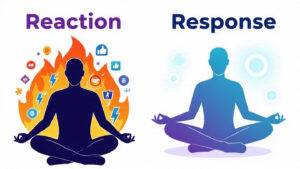
- The starting point is a realisation comes that free-will is a mirage and control over outcome and self are difficult. So, the scope of free-will is confined to reducing impact on self-worth when performing action (karma).
- When response is in the form of sacrifice (yajna) or action without expectation of return, then awareness of self-worth (jnana) increases. This reduces fear of loss of identity (asmita) and increases tranquillity (Brahman).
- How should one be able to activate free will? It won’t be easy because the scope is so limited…
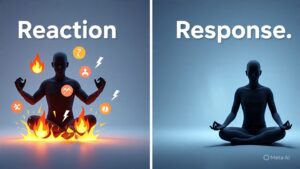
- Start by not reacting, let go the moment and be selective in the responses.
- Then, start sacrificing things that don’t matter much and slowly,
- Try to implement all the sacrifices that Shri Krishna recommends.
How to increase free-will through sacrifice (yajna).
- Shri Krishna says that all sacrifice (yajna) comes from Brahman.
- Since the source of sacrifice is Brahman, any and everything can be sacrificed. So, there are infinite opportunity for sacrifice.
- This also means that all action (karma) can also be sacrificed.
- The only question that remains, do we have the ability to sacrifice and to what extent do we control the process?
- Obviously, each of us has some ability to give up material and other aspects, and this might be a good starting point. Start by sacrificing anything that generates least anxiety. Sacrifice that baggage.
- Importantly, once the easy ones are sacrificed, be alert that the ones that were sacrificed don’t creep back on you.
- The interesting thing about sacrificing low hanging fruit, relationship and power related entities is that it prepares one psychosomatically for more sacrifices.
- But, sacrificing also gets harder as one begins pushing the limits of conditioning (dharma).
- Sacrifice of things that we are attached to impact our self-esteem (asmita), this fear of loss of self-esteem brings out severe reactions of anxiety and passion. This makes jettisoning of baggage harder.
- Sacrifice is also required for acquisition of knowledge, because from knowledge comes discrimination (viveka) and dispassion (vairagya), which helps in subduing one’s self-worth (asmita).
- This is also possible at the feet of gurus who have the knowledge, experience and expertise to help the practitioner in understanding sacrifice (yajna).
- With sacrifice, all action becoming non-personal resulting in,
- Destruction of the self (atman) and consequently debt (prarabdha-karma or previous debt), because debt is attached to the Self and if the Self is destroyed, there is no place where debt may be accrued.
- Consequently, there is disruption of cycle of rebirth.
- Increased dispassion (vairagya) makes the person become less afraid of consequences of action, less judgemental of outcome,
- The person also accepts change with less resistance and consequently becomes more tranquil.
So, do we have free will?
This is the intrinsic question that this chapter raises. We would like to think that we have the ability to make a choice, but is that a reality?
The answer to this vexing question is probably “Yes, we have free-will. When we exercise it for selfish purposes, we create karma and debt. If we wish to avoid karma and debt, then we must exercise free will only as a sacrifice, and not react to stimulus”.
Lessons from Srimad-bhagavad-gita, chapter 4, jnana-karma-sannyasa-yoga.
The business of material life is all about understanding action (karma). Also, the practice of sustainable and responsible living is woven into the Indian ethos.
School of Yoga explains yajna and Bharat’s culture.
Yajña in deeply woven into the psyche of Bhārat or India – one of the yajñas performed ritually in Bhārat is called pañca-mahā-yajñas (five major sacrifices) which a person is supposed to follow every day. These comprise deva-yajña (sacrifice to one’s deity), ṛṣi-yajña (sacrifice to the seers, those that gave Bhārat her civilisation), pitṛ-yajña (sacrifice to one’s ancestors), bhūta-yajña (sacrifice to all beings), manuṣya-yajña (sacrifice to other humans).
What is manuṣya-yajña or sacrifice to other humans? It is participating in their welfare and this includes their journey through life, such as marriage, birth, celebrations, reversals, deaths etc. in a manner that gives them pleasure, peace and happiness but without expectation of return. This participation, since it is a sacrifice must be centred on the other person and include respecting their privacy. Manuṣya-yajña generally follows various rites as given below.
- The rites and rituals practiced in India are called ṣoḍaśa-saṃskāras (sixteen rites). Read more @ https://www.worldhindunews.com/16-sanskar-in-hinduism/ (link enclosed).
- One can also perform ritual sacrifice and this has been excellently enunciated @ http://www.hindupedia.com/en/Yajna (link enclosed).
The transliteration and translation of Srimad-bhagavad-gita, chapter 4, jnana-karma-sannyasa-yoga follows.
The Sanskrit words are in red italics.
(24-26) Brahman sacrifices to the Brahman, the offering is to the fire of the Brahman, the offering is made only by the Brahman the end result is achieved by effort of one who is absorbed in meditation of the Brahman (brahmārpaṇaṃ brahma havirbrahmāgnau brahmaṇā hutam । brahmaiva tena gantavyaṃ brahmakarmasamādhinā ॥ 4-24॥). Some sacrifice only to the deities, yogis worship the fire of Brahman, others sacrifice, sacrifice as a sacrifice (daivamevāpare yajñaṃ yoginaḥ paryupāsate । brahmāgnāvapare yajñaṃ yajñenaivopajuhvati ॥ 4-25॥). Organ of hearing and other senses in the fire of self-restraint are sacrificed, sources of sound and others are sacrificed in the fire of the senses (śrotrādīnīndriyāṇyanye saṃyamāgniṣu juhvati । śabdādīnviṣayānanya indriyāgniṣu juhvati ॥ 4-26॥).
(27-28) Yet others sacrifice all functions of the senses and movements of vital air and others, when restrained together within the Self in the fire of yoga that has been kindled by the light knowledge (sarvāṇīndriyakarmāṇi prāṇakarmāṇi cāpare । ātmasaṃyamayogāgnau juhvati jñānadīpite ॥ 4-27॥). People also sacrifice materials, self-restraint, Yoga as a sacrifice, yet others sacrifice knowledge gained by self-study as do ascetics and people who practice great vows (dravyayajñāstapoyajñā yogayajñāstathāpare । svādhyāyajñānayajñāśca yatayaḥ saṃśitavratāḥ ॥ 4-28॥).
(29-30) In the outgoing breath people sacrifice incoming breath, yet others sacrifice incoming breath in the outgoing breath (apāne juhvati prāṇaṃ prāṇe’pānaṃ tathāpare ।) controlling the speed of incoming and outgoing breath and restraining it becomes the principal focus (prāṇāpānagatī ruddhvā prāṇāyāmaparāyaṇāḥ ॥ 4-29॥). Others regulate food intake or sacrifice vital air in the incoming breath (apare niyatāhārāḥ prāṇānprāṇeṣu juhvati ।), also all these that know sacrifice get their impurities destroyed by sacrifice (sarve’pyete yajñavido yajñakṣapitakalmaṣāḥ ॥ 4-30॥).
(31-33) Those that consume the nectar of sacrifice go to eternal Brahman (yajñaśiṣṭāmṛtabhujo yānti brahma sanātanam ।), There is no place in the world for the non-sacrificer, how can he find a place in any other (nāyaṃ loko’styayajñasya kuto’nyaḥ kurusattama ॥ 4-31॥). Thus, there are many forms of sacrifice spread across the spectrum of Brahman which are produced by action, know them all, thus having known them one can find liberation (evaṃ bahuvidhā yajñā vitatā brahmaṇo mukhe । karmajānviddhi tānsarvānevaṃ jñātvā vimokṣyase ॥ 4-32॥). Superior to sacrifice of materials is sacrifice of knowledge, all action culminates in knowledge (śreyāndravyamayādyajñājjñānayajñaḥ parantapa । sarvaṃ karmākhilaṃ pārtha jñāne parisamāpyate ॥ 4-33॥).
(34 – 36) This subtle knowledge can be achieved by prostration, by questioning and by service (tadviddhi praṇipātena paripraśnena sevayā ।), then wise people will teach you the knowledge of reaching the Truth (upadekṣyanti te jñānaṃ jñāninastattvadarśinaḥ ॥ 4-34॥). Not knowing this one will commit to delusion repeatedly, by this all beings see in their Self me also (yajjñātvā na punarmohamevaṃ yāsyasi pāṇḍava । yena bhūtānyaśeṣeṇa drakṣyasyātmanyatho mayi ॥ 4-35॥). Even if you are more wretched than the all-other wretched people, you will be saved from wickedness by floating on this knowledge (api cedasi pāpebhyaḥ sarvebhyaḥ pāpakṛttamaḥ । sarvaṃ jñānaplavenaiva vṛjinaṃ santariṣyasi ॥ 4-36॥).
(37-38) Just as a blazing fire reduces fuel to ashes, the fire of knowledge reduces all actions to ashes (yathaidhāṃsi samiddho’gnirbhasmasātkurute’rjuna । jñānāgniḥ sarvakarmāṇi bhasmasātkurute tathā ॥ 4-37॥). Verily, nothing is as pure as wisdom in this world and this has been discovered over time by yogīs who have achieved total perfection (na hi jñānena sadṛśaṃ pavitramiha vidyate । tatsvayaṃ yogasaṃsiddhaḥ kālenātmani vindati ॥ 4-38॥).
(39-40) Those that are sincere and dedicated obtain wisdom when they are totally and eagerly engaged subduing the senses (śraddhāvā~llabhate jñānaṃ tatparaḥ saṃyatendriyaḥ ।) have obtained wisdom they obtain supreme peace quickly (jñānaṃ labdhvā parāṃ śāntimacireṇādhigacchati ॥ 4-39॥). Ignorant people and those without sincerity and dedication doubting souls will destroy themselves (ajñaścāśraddadhānaśca saṃśayātmā vinaśyati ।), in fact, doubting souls find happiness eluding them in this world and next (nāyaṃ loko’sti na paro na sukhaṃ saṃśayātmanaḥ ॥ 4-40॥).
(41-42) However, when a person practices yoga where action is renounced, doubts are removed (yogasaṃnyastakarmāṇaṃ jñānasañchinnasaṃśayam ।), the Self becomes steadied without the binding of karma (ātmavantaṃ na karmāṇi nibadhnanti dhanañjaya ॥ 4-41॥). Therefore, cut this doubt that is born out of ignorance and residing in the heart by the Self that has the sword of knowledge (tasmādajñānasambhūtaṃ hṛtsthaṃ jñānāsinātmanaḥ ।), discard your doubts, take refuge in Yoga and rise (chittvainaṃ saṃśayaṃ yogamātiṣṭhottiṣṭha bhārata ॥ 4-42॥).
The complete text is available in my book, A Seeker’s Śrīmad-Bhagavadgītā. Buy your copy today – Notion Press home / Flipkart / Amazon / Amazon India / Amazon UK / Amazon US / Amazon Australia
Acknowledgement.
School of Yoga is profoundly grateful to Saṃskṛta scholars and academics Pijus Kanti Pal (pal.pijuskanti@gmail.com) and Dolon Chanpa Mondal for their support in Saṃskṛta transliteration and quality control.