School of Yoga explains Srimad-bhagavad-gita, chapter 6, what is meditation?
How to practice meditation?

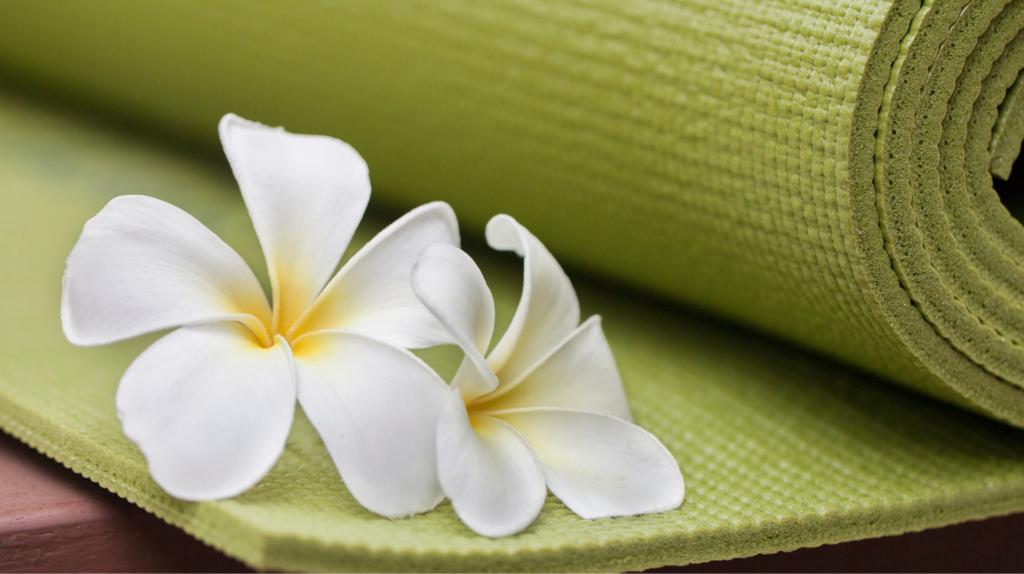
In verses 11 to 47 of Chapter 6, Shri Krishna imparts some of the most valuable lessons in meditaton. He says, in a well administered and clean country; sit at a comfortable height on a mat of cloth, antelope skin, kusha grass, one over the other. This is to insulate the chakras from the Earth.
Then, be seated in an āsana, such as Padmasana or Sukhasana. Hold the body, head, and neck relaxed and still. Gaze at the tip of the nose, and don’t look around. With a single pointed awareness, bring the consciousness and senses under control. Practice yoga for purification of the Soul.
Importantly, before starting this practice, you must have cleansed your Soul as has been recommended in verses 1 to 10. Once you do that, then you can be united with Shri Krishna or any other ishtadeva.
Importantly, habits matter. The yogī neither overeats nor fasts, does not dream too much, and does not excessively engage in activity. He must be balanced in diet, sleep and entertainment.
Slowly, when he is able to restrain the consciousness only by himself, then freedom from passion and grief is established.
Once the Soul has quietened, an infinite peace that cannot be grasped by reason and one which is beyond the senses is established in all its subtlety. After this cognition has been obtained, there is nothing further to be gained, and thereafter, the yogī remains unmoved even by sorrow.
This yoga must be practiced with determination and one must not be downcast by failure and reversals.
Then Arjuna asks – “but the cognition is fickle, and agitation and upheavals are strong. I find it difficult to control my thinking”, to which Śrī Kṛṣṇa says, practice and dispassion is key. This is where Chapter 6, verses 1 to 10 become relevant.
Lastly, Arjuna asks, “what happens if I am unable to reach perfection in yoga”, to which Śrī Kṛṣṇa says, the effort is never wasted. If you are unsuccessful in this life, then you will find another life where you will succeed. But, it’s our duty to try.
School of Yoga explains Srimad-bhagavad-gita, chapter 6, meditation or dhyana-yoga (verse 18-20).
How to quiet the mind in yoga meditation practice?
- Slowly, the practitioner is able to slow down the speed with which the consciousness (citta) reaches out to objects for affirmation of existence, increasing free-will.
- When this happens, the consciousness becomes steady like a lamp in a windless room. In fact, one may compare the breeze in a room to external disturbances and the lamp to the reaction of the consciousness to those disturbances.
- When the consciousness (citta) is quietened, it stops seeking outside and looks at its own Self or Soul (atman) for sustenance. Then, the consciousness slowly merges (yoga) with its own Self (atman). When this happens and the consciousness is no longer agitating or looking for sustenance, it ceases to operate the sensory organs (indriyas) and cognitive apparatus (manas).
- Finally, this results in what is called nirvikalpa-samadhi or changeless merger, the final state of yoga.
School of Yoga explains Srimad-bhagavad-gita, chapter 6, meditation or dhyana-yoga (verse 21-25).
Why do we experience grief in meditation?
- When the yogi begins to slow down the movement of the consciousness, it turns inwards towards the Soul (atman) for sustenance. When this happens, a lot of the suppressed and repressed emotions, desires and memories are released.
- Consequently, there is a great experience of loss, pain and grief because the memory remembers negative stimuli more starkly than positive one as they have been the source of lessons in self-preservation and sustenance.
- How does this happen? Importantly, let’s look at how maya (illusion or farce) works!
- We are born with a particular configuration or DNA.
- Next, our parents load our operating systems. Later, we get various other programmes loaded onto us by school, our teachers and friends.
- Finally, we get hooked onto a system called society.
- This process of conformance management gives us a conditioning called dharma.
- Dharma is that natural state where we are at peace with ourselves and our surrounding. Also, dharma is the basis on which we decide like-dislike, good-bad, right-wrong etc.
- Consequently, we apply dharma to all our transactions and relationships.
- As a result, often there are conflict between our dharma and the dharma of others, and this results in conflicts that often result in damaged or ruptured relationships.
- This causes grief and pain which needs to be reconciled and healed.
- Unfortunately, when we are actively engaged with our environment, the consciousness (citta) is outward looking and busy, so the impact of this damage is not pronounced.
- But, when the citta (consciousness) slows down and looks at the Self (ātman), all the suppressed experiences find a space for self-expression and resolution.
- So, the asmita generates grief and pain based on blurred images, repressed desires and unfulfilled expectations.
- Also, depending on the importance of the object, there is an additional weightage of sentiment (bhaava) which either amplifies or reduces the experience of grief and pain. With effort, there is reconciliation.
For example, a misunderstanding with our parents or children, if it has severe consequences, is likely to generate more grief than a disagreement with a boss, friend or neighbour. So, the degree depends on proximity, bond, relationship and outcome.
-
- However, overcoming this stage is critical because a turbulent or distracted consciousness (citta) will not become steady unless the source of stimuli is reconciled.
School of Yoga explains Srimad-bhagavad-gita, chapter 6, meditation or dhyana-yoga.
What are the benefits of meditation?

- Competence in meditation comes with psychosomatic balance. The starting point is ensuring good health because, agitation occurs when the homeostatic balance is disturbed.
Homeostasis is that aspect of the body whereby the operating conditions of the body are within established parameters, such as temperature, blood pressure, haemoglobin etc. along with other chemical parameters such as potassium, iron, calcium etc. and also hormonal balance. When these parameters are in balance, the person feels comfortable and at peace.
- Next, imbalance occurs when the person experiences the need to change. Since change requires readjustment, it creates disruption and insecurity and the person gets stressed. Thus, there is pressure on the person’s self-esteem (asmita) as the psyche seeks to establish understanding and control over the situation.
- Consequently, the consciousness continuously seeks confirmation of existence from an external entity, especially one that it trusts.
- Additionally, during meditation, homeostasis balance is disturbed when the consciousness (citta), after turning inwards begins to experience old suppressed and repressed baggage that come out and seek expression in the form of loss, pain and grief. Obviously, this will disturb any meditation practice.
- Lastly, there is the material nature of consciousness (citta) itself that hampers meditation.
- By nature, consciousness (citta) seeks expression and establishes bonds. For a yogi, this becomes a major impediment because the cognitive apparatus keeps moving from one entity to another and does not allow steady focus (ekagrata).
- Hence, constant cleaning and calming of the soul (atmashuddhaye) is very important. Particularly, old baggage needs to be discarded, pain and grief reconciled, disturbances and stains on the soul (atman) need to be continuously cleaned.
- Finally, the yogi should try to live in solitude to subdue internal agitations until he begins to achieve steady and constant awareness of the Self (sthithaprajna).
School of Yoga explains Srimad-bhagavad-gita, chapter 6, meditation or dhyana-yoga.
How to deepen your in meditation?
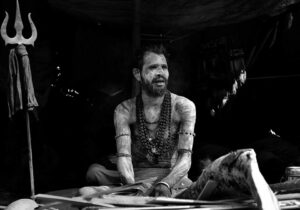
- Firstly, the yoga of equanimity is difficult because the cognitive apparatus (manas) keeps shifting (cancala), it is like the wind – turbulent (pramathi), strong (balavat) and unyielding to control (drdha). Additionally, it is restless (cancalatvat) and this acts as an impediment to achieving the state of steadiness (sthiti-sthira) (verse 26-40).
- Doubtlessly, the cognitive apparatus is difficult to control on account of the nature of consciousness and the fact that it continuously seeks external and internal verification of its own existence. However, with practice and dispassion (vairagya) this control can be exerted.
Arjuna asks – what happens to one who is dedicated but whose cognitive apparatus wanders? Does he face destruction, the yogī who has not achieved perfection? (verse 37-39)
Shri Krishna says – Firstly, no destruction can come to him that acts in good faith. In fact, what happens is that such a person is reborn into a pure and prosperous surrounding or into a family of enlightened yogis where he can continue where he can continue where he left off.
Thereafter, when intent and effort are employed in a dedicated manner, the practitioner will reach liberation over time (verse 41 onwards).
In fact, the yogi is superior to ascetics, philosophers, intellectuals and, men of action. So, one must aspire to be a yogi, one that is completely anchored in the source (Brahman).
School of Yoga explains Srimad-bhagavad-gita, chapter 6, mediation or dhyana-yoga.
How to start daily meditation routine?
-

Yogacharya Sundaram demonstrating Padmasana First, sit in a secluded place. Ensure that the place is one where you can go to regularly and has a pleasant atmosphere. Also, the temperature in the room should be conducive for long practice (sadhana)
- Next, sit on a chair or on the floor. Floor postures hold the body more firmly, this is preferred.
- Lastly, sit in a comfortable pose. padmāsana, sukhāsana or vajrāsana are preferred, but it is possible that there is discomfort initially. If this happens, start with one of the above āsanas and re-seat to a comfortable posture for the remainder of the meditation period. Over time, one pose will become the preferred pose and the body will fall naturally into it. But the important point to remember is that the spinal curvature must be naturally erect and the coccyx, which is the seat of the mūlādhāra-cakra must be stable.
- Next, relax the body using auto-suggestion (suggestive commands given by the person to himself or herself). Start from the top of the head and slowly relax each part. Also, try to break the command into specific locations. For example; instead of saying “relax the brain”, say “relax the front of the brain, relax the left side, relax the right side, relax the back… etc…” Consequently, this will lead to quicker and more effective relaxation.
- Relax completely. Remember that relaxation becomes deeper with practice.
- In fact, when the body has relaxed completely, it will be noticed that breathing becomes shallow and even. Observe the breathing. Importantly, watch the interval between puraka (inhalation) and recaka (exhalation) and vice-versa. This is kumbhaka. Here, there is a minuscule period of stillness where the breath crosses over from inhalation to exhalation and vice-versa. Focus on this emptiness. Try to extend the stillness even when breathing restarts. Also, try to keep the breathing even and without ripples or agitation.
- Stay in this position for around 10-20 minutes. Also, do not practice more than once or twice a day or for longer periods unless you are interested in deeper spiritual investigation.
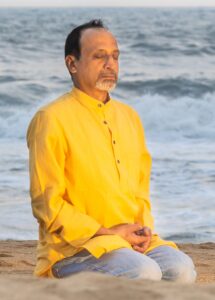
Vishwanath Iyer demonstrating Vajrasana
How to reduce distraction in meditation?
- First, to avoid distraction, reduce interaction with people. Additionally, this includes social media. So, if you are active in groups, slowly reduce your activity. As a result, you will have less disturbances, because you will think less about how you wish to interact.
- Second, reduce watching TV. If you are addicted to serial binging, slowly reduce the frequency and finally stop. Rightfully, the TV is called an “idiot box”, it makes an idiot out of the viewer.
- Next, reduce your exposure to news. Most of the news is sensationalised and you have no control over the outcome anyway.
- Lastly, reduce speaking. In fact, speak only when you know that you can add value or make a difference. Try to increase the silence in speech to silence within and peace all-around.
School of Yoga explains Srimad-bhagavad-gita, chapter 6, meditation or dhyana-yoga.
What are the steps in mindful meditation?
In chapter 6, Shri Krishna teaches a person how to increase free-will, a state where action (karma) does not result in creation of debt (rinn).
- Ability to control free-will is limited because our response (karma) is controlled by conditioning (dharma).
- Increase of free-will is only possible when control over movement of consciousness (citta) Then, both primary and secondary responses are controlled and hijack by the amygdala of responses is reduced.
- However, all efforts to control consciousness will be opposed by the sense of Self/ identity (purusha or Shiva) because of fear of loss of Identity. This results in increased internal conflict, pain and a sense of dissociation from society as one tried to increase the strength of free-will over instinct.
- However, effort to increase free-will also increases awareness of the Self (jnana), discrimination between permanent and impermanent (viveka) and dispassion (vairagya).
- As awareness (prajna) increases, understanding understand one’s own natural state or conditioning (dharma) allows one to cognise the difference between sanctioned actions or actions without losing equilibrium.
- So, one is able to avoid those prohibited actions that are performed due to selfish interests or result in chaos or loss of peace (adharma).
- But, when performing sanctioned action, one must understand correct process, use correct tools and resources and also communicate to all concerned in the right manner if the sanctioned action is to deliver the desired result.
- Lastly, one should learn to control expectations, accept the outcome with equanimity and avoid duality, so that internal state of peace is retained.
- In order to increase free will and increase awareness (prajna), one must practice “union by meditation” (dhyana-yoga). This will bring greater response control as fear, anxiety, desire or expectation can be calibrated or controlled more easily.
- Meditation is an exercise of increasing free-will by control of the consciousness (citta).
In fact, Sage Patanjali defines yoga as “citta-vṛtti-nirodha” in Patanjali Yoga Sutra, which roughly translates to “stopping the consciousness from functioning”. Though the above state is clearly samadhi or final merger state, there are multiple intermediate states that the consciousness has to transcend.
These are;
- Mediation or dhyāna-yoga is easier said than done. It requires steady effort, sacrificing of desire, and ability to endure pain, grief and failure. The stages that a yogi moves in are,
- Kshipta – scattered, where the consciousness is multi-tasking and distracted. There is poor control of the individual over free-will.
- Moodha – idiotic, where the consciousness engages activity inappropriate to the situation and moment. Here too, there is poor control over free will.
- Vikshipta – inattention, where the consciousness does not adhere to any object. Here too, there is poor control over free will.
- Ekagra – single point focus, the consciousness is focussed at particular point. There is considerable free-will depending on the level of sustained focus.
- Niruddha – stopped, the consciousness does not respond. Free-will is one of complete awareness (prajñā). The final state of this state is sthita-prajñā or steady awareness.
The transliteration and translation of Śrīmad-bhagavad-gītā, chapter 6, meditation or dhyana-yoga follows.
The Saṃskṛtaṃ words are in red italics.
श्रीभगवानुवाच ।
Śrī Kṛṣṇa said:
(18-20) When he is able to restrain the consciousness solely on the Soul, then freedom from all passion is established, it is said (yadā viniyataṃ cittamātmanyevāvatiṣṭhate । niḥspṛhaḥ sarvakāmebhyo yukta ityucyate tadā ॥ 6-18॥). Just like a lamp placed in an airless place does not flicker that consciousness of yogī harmonises the soul (yathā dīpo nivātastho neṅgate sopamā smṛtā । yogino yatacittasya yuñjato yogamātmanaḥ ॥ 6-19॥). Where consciousness has been quietened, restrained by dedication to yoga and where the soul is satiated by the soul (yatroparamate cittaṃ niruddhaṃ yogasevayā । yatra caivātmanātmānaṃ paśyannātmani tuṣyati ॥ 6-20॥).
(21-23) An infinite peace that cannot be grasped by reason and beyond the senses this changeless knowledge becomes established in all its subtlety (sukhamātyantikaṃ yattad buddhigrāhyamatīndriyam । vetti yatra na caivāyaṃ sthitaścalati tattvataḥ ॥ 6-21॥). Once the cognition has obtained that, no other gain is adequate thereafter it is unmoved even by heavy sorrow (yaṃ labdhvā cāparaṃ lābhaṃ manyate nādhikaṃ tataḥ । yasminsthito na duḥkhena guruṇāpi vicālyate ॥ 6-22॥). The knowledge of pain merger and separation is the knowledge of yoga that union must be practiced with determination with a consciousness that is not downcast (taṃ vidyād duḥkhasaṃyogaviyogaṃ yogasaṃjñitam । sa niścayena yoktavyo yogo’nirviṇṇacetasā ॥ 6-23॥).
(24-25) Having abandoned all vows born out of desires, completely restrict cognition and also all of the senses in totality (saṅkalpaprabhavānkāmāṃstyaktvā sarvānaśeṣataḥ । manasaivendriyagrāmaṃ viniyamya samantataḥ ॥ 6-24॥). Slowly, slowly stop the intellect, hold it firmly in the Self, make the cognition nothing and reflect (śanaiḥ śanairuparamed buddhyā dhṛtigṛhītayā । ātmasaṃsthaṃ manaḥ kṛtvā na kiñcidapi cintayet ॥ 6-25॥).
(26-28) Whenever there is appearance of disturbance and unsteadiness in the cognition then onward, using self-control, bring the Soul under control (yato yato niścarati manaścañcalamasthiram । tatastato niyamyaitadātmanyeva vaśaṃ nayet ॥ 6-26॥). Truly, the serene soul yields supreme peace, developing peace creates Brahman in one that is unstained (praśāntamanasaṃ hyenaṃ yoginaṃ sukhamuttamam । upaiti śāntarajasaṃ brahmabhūtamakalmaṣam ॥ 6-27॥). Thus, the Soul of the practicing yogī is always unstained the peaceful merger with Brahman gives infinite happiness (yuñjannevaṃ sadātmānaṃ yogī vigatakalmaṣaḥ । sukhena brahmasaṃsparśamatyantaṃ sukhamaśnute ॥ 6-28॥).
(29-32) Souls exist in all creation, all creation has a Soul, so the yogī sees all Souls to be one and views all with an equal gaze (sarvabhūtasthamātmānaṃ sarvabhūtāni cātmani । īkṣate yogayuktātmā sarvatra samadarśanaḥ ॥ 6-29॥). He sees me everywhere and in me sees he is not lost to me and I am not lost to him (yo māṃ paśyati sarvatra sarvaṃ ca mayi paśyati । tasyāhaṃ na praṇaśyāmi sa ca me na praṇaśyati ॥ 6-30॥). Whoever worships me in the same manner across all creation in every way the yogī remains in me wherever he proceeds (sarvabhūtasthitaṃ yo māṃ bhajatyekatvamāsthitaḥ । sarvathā vartamāno’pi sa yogī mayi vartate ॥ 6-31॥). He that views all souls as the same everywhere, he who is the same in happiness and grief, he is regarded as the highest yogī (ātmaupamyena sarvatra samaṃ paśyati yo’rjuna । sukhaṃ vā yadi vā duḥkhaṃ sa yogī paramo mataḥ ॥ 6-32॥).
Arjuna asked (33-34) – This yoga of equality that you are propounding, I am unable to relate due to unsteadiness and abiding steadiness (yo’yaṃ yogastvayā proktaḥ sāmyena madhusūdana । etasyāhaṃ na paśyāmi cañcalatvātsthitiṃ sthirām ॥ 6-33॥). The cognition is fickle, agitation is strong and unyielding I find controlling the cognition which is like the wind difficult to do (cañcalaṃ hi manaḥ kṛṣṇa pramāthi balavad dṛḍham । tasyāhaṃ nigrahaṃ manye vāyoriva suduṣkaram ॥ 6-34॥).
śrī Kṛṣṇa replied – (35-36) Without doubt, cognition is difficult to control and restless by practice and dispassion it is controlled (asaṃśayaṃ mahābāho mano durnigrahaṃ calam । abhyāsena tu kaunteya vairāgyeṇa ca gṛhyate ॥ 6-35॥). A Soul without controlled cognition finds it hard to attain harmony, in my opinion but it is possible to acquire an obedient Soul by implementing proper methodology (asaṃyatātmanā yogo duṣprāpa iti me matiḥ । vaśyātmanā tu yatatā śakyo’vāptumupāyataḥ ॥ 6-36॥).
Arjuna asked – (37-39) what is the fate of one who does not possess dedication in yoga and has a disturbed cognition, what happens to him who is unable to reach perfection in yoga? (ayatiḥ śraddhayopeto yogāccalitamānasaḥ । aprāpya yogasaṃsiddhiṃ kāṃ gatiṃ kṛṣṇa gacchati ॥ 6-37॥). Is it not that without steadfastness one is separated from both sides and destroyed without steadfast or confused effort on the path of the Brahman (kaccinnobhayavibhraṣṭaśchinnābhramiva naśyati । apratiṣṭho mahābāho vimūḍho brahmaṇaḥ pathi ॥ 6-38॥)? This is my confusion Krishna, please remove it completely, other than you, none is capable of dispelling it completely (etanme saṃśayaṃ kṛṣṇa chettumarhasyaśeṣataḥ । tvadanyaḥ saṃśayasyāsya chettā na hyupapadyate ॥ 6-39॥).
(40-41) Partha – truly, not here nor in the next world is there destruction of him, nor does reversal of fate come to performers of beneficial deeds, my son (pārtha naiveha nāmutra vināśastasya vidyate । na hi kalyāṇakṛtkaścid durgatiṃ tāta gacchati ॥ 6-40॥). Having acquired meritorious outcomes through everlasting equilibrium when on earth the one fallen from yoga is reborn at a home where there is purity and prosperity (prāpya puṇyakṛtāṃ lokānuṣitvā śāśvatīḥ samāḥ । śucīnāṃ śrīmatāṃ gehe yogabhraṣṭo’bhijāyate ॥ 6-41॥).
(42-43) Or, within yogī or even clans of the wise, for truly, getting a human birth like this is difficult (athavā yogināmeva kule bhavati dhīmatām । etaddhi durlabhataraṃ loke janma yadīdṛśam ॥ 6-42॥). There his wisdom is harmonised with that obtained during prior existence, then with more effort there can be complete perfection, son of Kurus (tatra taṃ buddhisaṃyogaṃ labhate paurvadehikam । yatate ca tato bhūyaḥ saṃsiddhau kurunandana ॥ 6-43॥).
(44-45) Truly, from previous learnings is born a helplessness to carry forward in spite of himself, to go beyond the word of Brahman and obtain the wisdom of yoga (pūrvābhyāsena tenaiva hriyate hyavaśo’pi saḥ । jijñāsurapi yogasya śabdabrahmātivartate ॥ 6-44॥). With effort and self-control, the yogī gets purified from faults of many births and attains the goal of supreme perfection (prayatnādyatamānastu yogī saṃśuddhakilbiṣaḥ । anekajanmasaṃsiddhastato yāti parāṃ gatim ॥ 6-45॥).
(46-47) Superior to ascetics are yogīs, even superior to those who have achieved great wisdom (tapasvibhyo’dhiko yogī jñānibhyo’pi mato’dhikaḥ ।), even superior to people of action is the yogī, therefore become a yogī, Arjuna (karmibhyaścādhiko yogī tasmādyogī bhavārjuna ॥ 6-46॥). Of all the yogīs, those that place me in their inner Soul (yogināmapi sarveṣāṃ madgatenāntarātmanā ।), worships with dedication, that I consider most integrated Soul (śraddhāvānbhajate yo māṃ sa me yuktatamo mataḥ ॥ 6-47॥).
Acknowledgement –

School of Yoga is profoundly grateful to Saṃskṛta scholars and academics Pijus Kanti Pal (pal.pijuskanti@gmail.com) and Dolon Chanpa Mondal for their support in Saṃskṛta transliteration and quality control.