What is padmasana (lotus pose)?
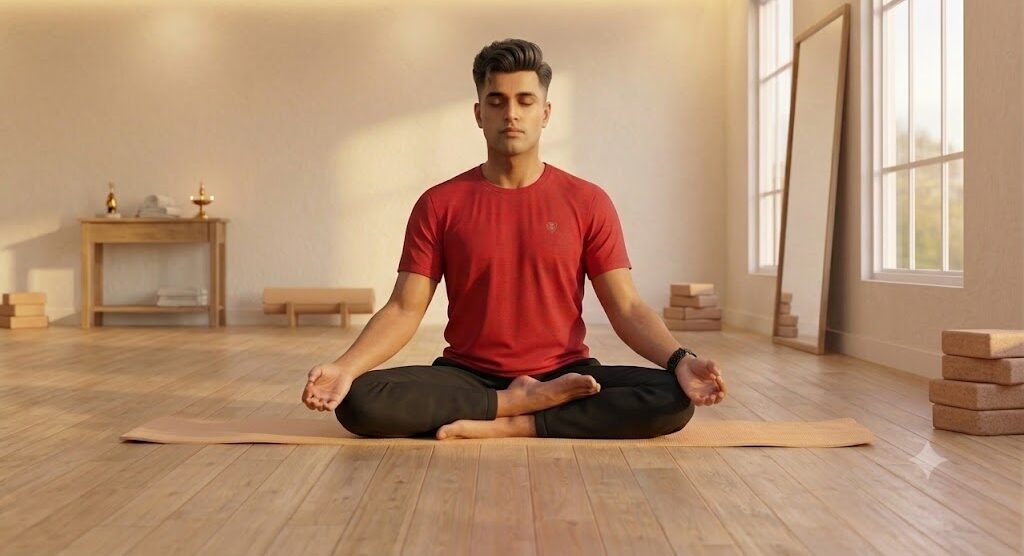
Padmasana or lotus pose is the most important of all meditation poses (asana). The reason is that, by design it forces the body to be stable and balances the left and right halves of both, the body and the brain. This balances all functions, allowing for greater efficacy in meditation.
How does one perform padmasana ?

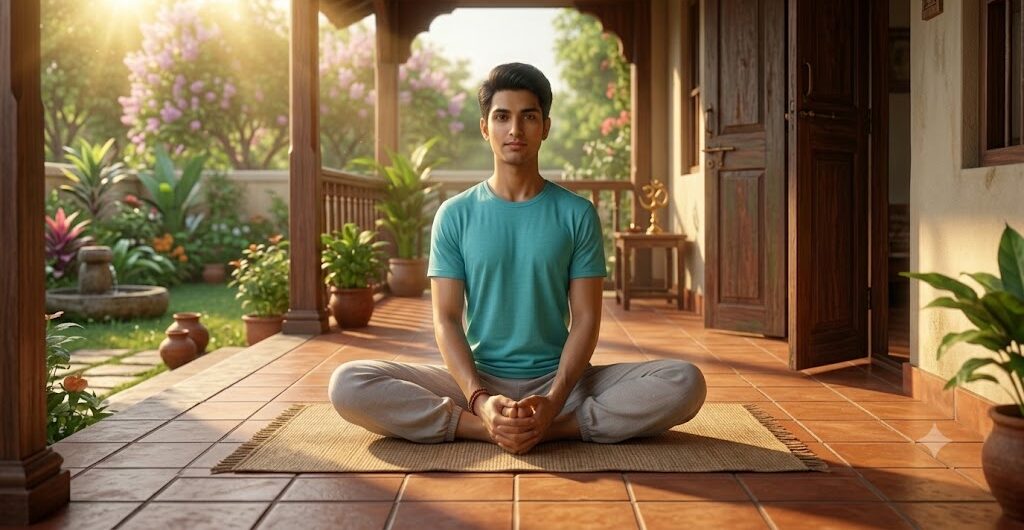
- Sthithi (starting) position: First, sit on a clean mat in an airy and quiet room. Stretch your legs forward.
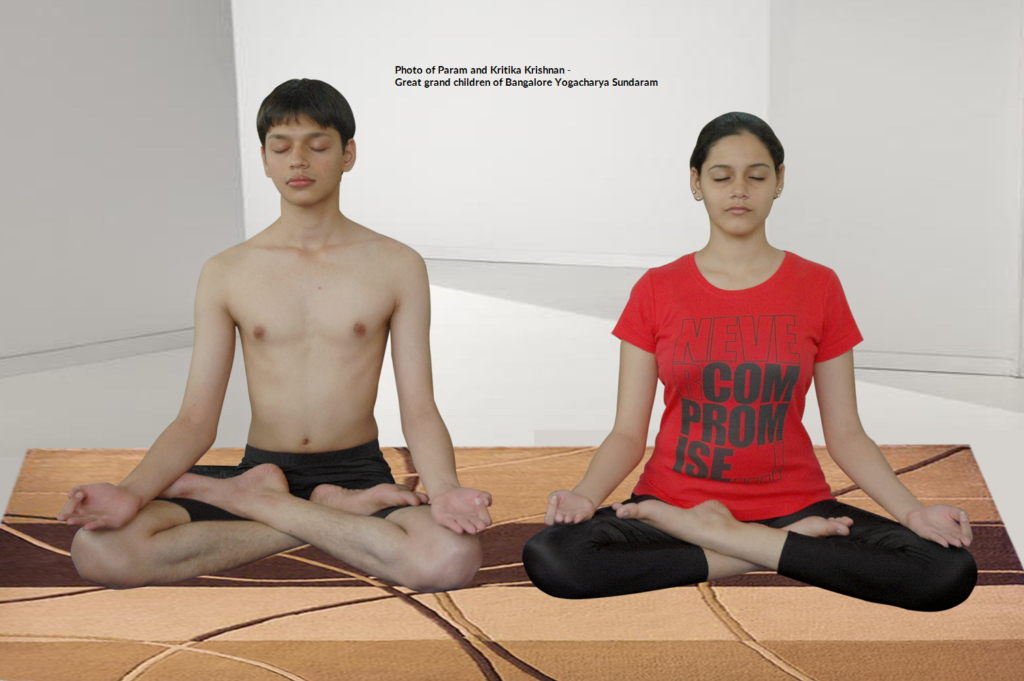
- Next, fold one leg at the knee, hold the ankle, lift and place it over the opposite thigh, such that the heel fits into the junction of the torso and thigh.
- Now, repeat the process with the other leg; folding the leg over the previously folded leg so the ankle fits at the junction of the hip and thigh of the opposite leg.
- Importantly, keep your back erect but relaxed. Also, relax the legs. However, you may feel them slipping slightly and then becoming stable. Don’t worry, that’s normal!
- Now, join the forefinger with the thumb to form a circle. This is the “chin-mudra”.
- Alternately, you could also use dhyana-mudra – place one palm over the other, let the thumbs touch, relax.
- In fact, this is the classical asana of choice for the practice of nadi-shuddhi or anulom-vilom pranayama.
- The following drishtis (gaze) are recommended – nasagre – नासाग्रे (tip of the nose), bhrumadhye – भ्रूमध्ये (between the eyebrows) or at the cakra (anahata, visuddhi, ajna). But, keep it steady for the period of prana.
- Breathe calmly, let the breathing occur without effort.
- Finally, try to keep the mind silent. Keep your awareness centred within the self. Command your body to relax, moving from the top of the body to the extremities. Imagine stress leaving your body with each exhalation.
- Start with 5 minutes and increase up to 15 minutes.
- Above all, do not try to achieve perfection on day#1. Make sure your body is able to take the strain. Over time, the body will become supple and perfection will be achieved.
What does Hatha Yoga Pradeepika say about padmasana?
(Ch1, v44) padmasana– Place the right foot on the left thigh and the left foot on the right thigh. Cross the hands behind the back and grab the right toe with the right hand and the left toe with the left hand. Rest the chin on the chest and gaze at the tip of the nose. This is called padmasana, the destroyer of disease.
(Ch1, v45, 46) Another opinion – Place one foot on the opposite thigh with soles facing up. Similarly, place the other foot on the opposite thigh. Place the hands on the thighs with palms outwards. Direct the gaze to the tip of the nose, place the tongue at the root of the front teeth, and placing the chin on the chest, slowly raise the prana (by performing the mula-bandha)
(Ch1, v47) This is called padmasana and cannot be perfected by all, only the intelligent can accomplish it.
What are the benefits of padmasana?
- Firstly, pressing of the femoral artery by the foot ensures extra blood is redirected to the genital and anal areas.
- As a result, all lower body organs reap the benefits, especially the lower back muscles.
- Importantly, the benefit is exponential because meditation in the lotus pose relaxes the muscles. Consequently, there is an increased blood supply to every tissue, which rejuvenates the complete body.
- Also, the process of relaxation results in increased beta waves within the brain.
- The feet press on the inguinal nodes, thereby boosting their efficiency and increasing the capability of the immune system.
- Finally, this yoga posture stabilises the spine with hips and shoulders. Very good for spinal curvature retention.
What are the contraindications for padmasana ?
- Avoid this asana if you have sustained ankle or knee injury. Perform with only one leg and as you get confidence, try to bring both legs into the final position.
- For practitioners suffering from lower back problems, stop at the first indication of pain. Increase the duration gradually.
Some noteworthy points on the lotus pose:
Internal Links: Dharma (conditioning), Stress and Situational Awareness, Prana, Asana overview 1, Asana Overview 2, Asana Focus or gazing, Pranayama, Hatha Yoga Pradeepika
External Links: Prana, Chakra, Pancha Tattva, Pancha Prana, Pancha Kosha, Nadi.
- This asana is considered to be one of the 32 most important asanas by all ancient texts.
- Why should we use a mudra ? Padmasana is about collecting the disparate energies or prana into the person. We know that prana flows within and outside the body. An open palm would mean that the prana which moves to the extremities is unable to return which makes the flow unidirectional. However, when a mudra is used, this loop is closed, like any good electrical circuit, resulting in uninterrupted flow of prana around the person, increasing retention and charge of prana within the system.