What is point of focus or drishti in yoga or gazing in asana practice?

Drishti in yoga is that aspect of asana which ensures increased awareness of the practitioner, by making him focus on a single point when performing any asana.
Background: Our desires start from gaze. We look, register, judge and decide. Unfortunately, decision-making comes with bias, so we end up liking or disliking the object. Consequently, this agitates us and we end up losing our peace of mind.
Can we look without de-stabilising our peace of mind? Yes, with practice, and this is why gazing or drishti (point of focus in yoga) is very important in asana practice.
What is gazing or drishti in yoga ?
In Yoga, drishti is as important as breathing (pranayama) or correctness of pose (sthiram = firmness and sukham = comfort) for multiple reasons;
- First, drishti is a precursor to bringing control to the consciousness (citta). This is because, when we practice steady gazing, the consciousness (citta) begins to lose its fluctuations, agitations and unsteadiness. Slowly, it becomes steady and serene. As a result, this allows the practitioner to be more effective at meditation practice (dhyana).
- Secondly, the point of focus increases the power of concentration. This results in increased single-pointed focus (ekagrath) which helps during meditation (dhyana).
- However, it is vital that the gazing be tranquil and steady, not intense or stressed; otherwise it will tire the practitioner and also cause stress to the brain.
There are eight types of drishti or points of focus when performing asanas :
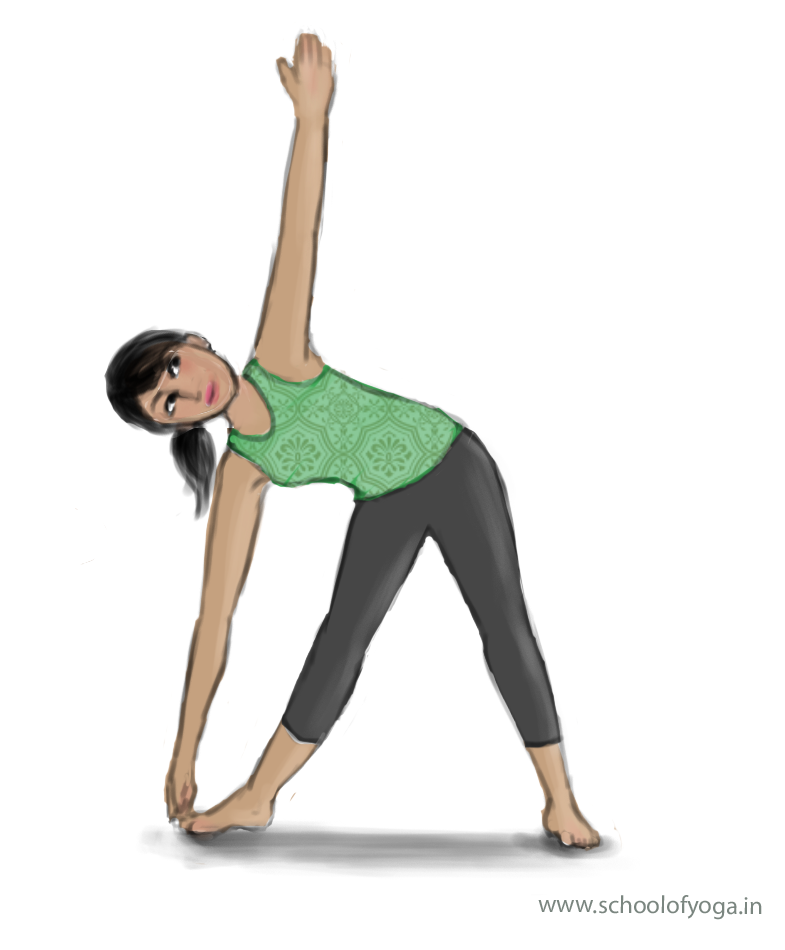
- Angushtamadhye – अङ्गूष्ठमध्ये – gazing at center of the thumb.
Asanas which use angushtamadhye are virabhadrasana and trikonasana.
- Bhrumadhye – भ्रूमध्ये – meaning center of the eyebrows.
The ajna-cakra controls the amygdala, a critical component of the limbic system which controls breathing, emotions, behaviour, memory and motivation. So, focus at the center of the brows is considered to ensure control over the ajna-cakra and the endocrine organs.
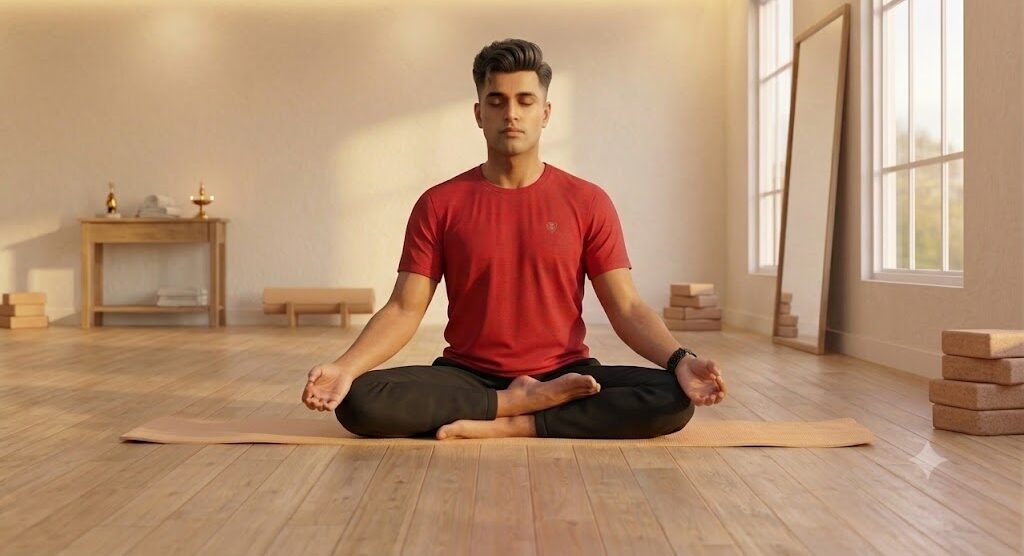
Asanas which use bhrumadhye-drishti are padmasana, sukhasana and siddhasana.
- Nasagre – नासाग्रे – meaning tip of the nose.
The movement of the diaphragm determines the speed with which the air crosses the septum during inhalation. Additionally, the septum is a venturi-like part of the nasal system. In fact, the entering air is moving through the septum, a venture and this determines the operating temperature and pressure of air in the nasal passage. Therefore, this type of drishti in yoga focusing on the tip of the nose is important for regulating speed and quality of air flow (ensuring non-agitated, steady and peaceful breathing) into the body.
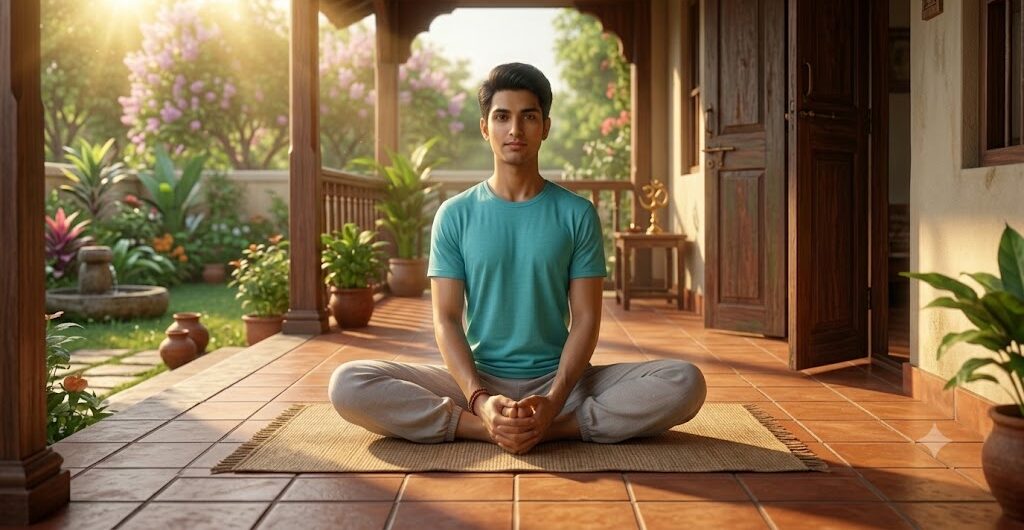
Asanas using nasagre-drishti are all seated asanas which lead up to meditation (dhyana) such as padmasana, sukhasana and siddhasana. Generally, it is not advisable to use this gaze (drishti) in any asana, kriya (action) or bandha (holding) pose, because of difficulty in applying focus.
- Hastagrahe – हसतग्रहे – means taking the hand as in marriage.
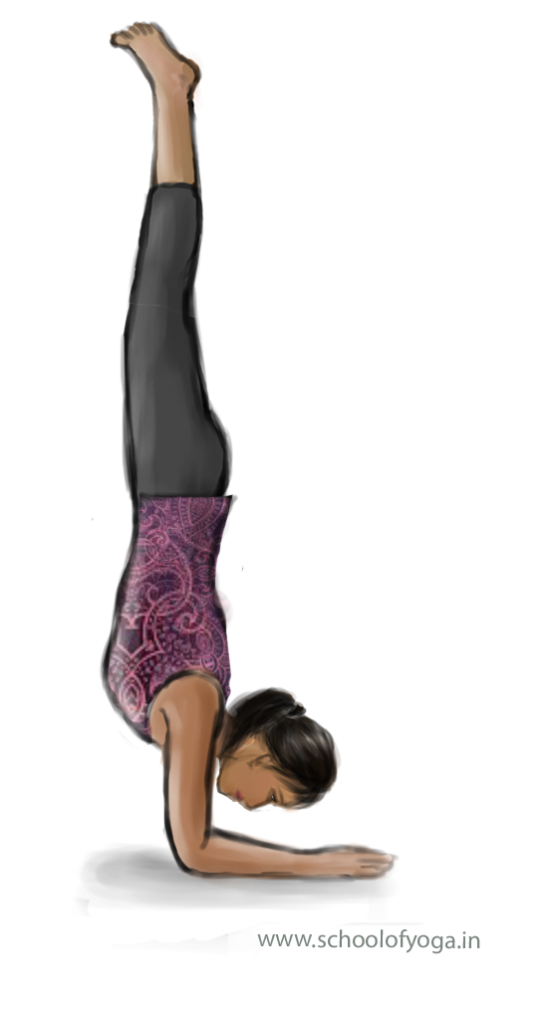
Here, the practitioner gazes at the palm or tips of the hand which seek or reach out.
Asanas using hastagrahe is pincha-mayurasana.
- Parshva – पार्श्व – means the side.
This is an asana by itself, requiring the practitioner to look to the corner of the eyes on either side. Generally, the head should be in straight-ahead position and only the eyeballs must move. Also, this type of drishti in yoga is very good for energising the ajna-chakra.
This drishti is used in a variation of trikonasana.
- Urdhva – ऊर्घ्व – means above, aloft or upwards.
This drishti in yoga is used in bhujangasana, dhanurasana etc.
- Nabhicakre – नाभिचक्रे – center of the navel
This drishti is used in padahastasana and paschimotanasana.
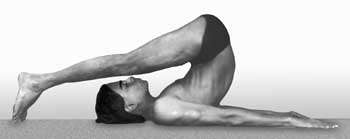
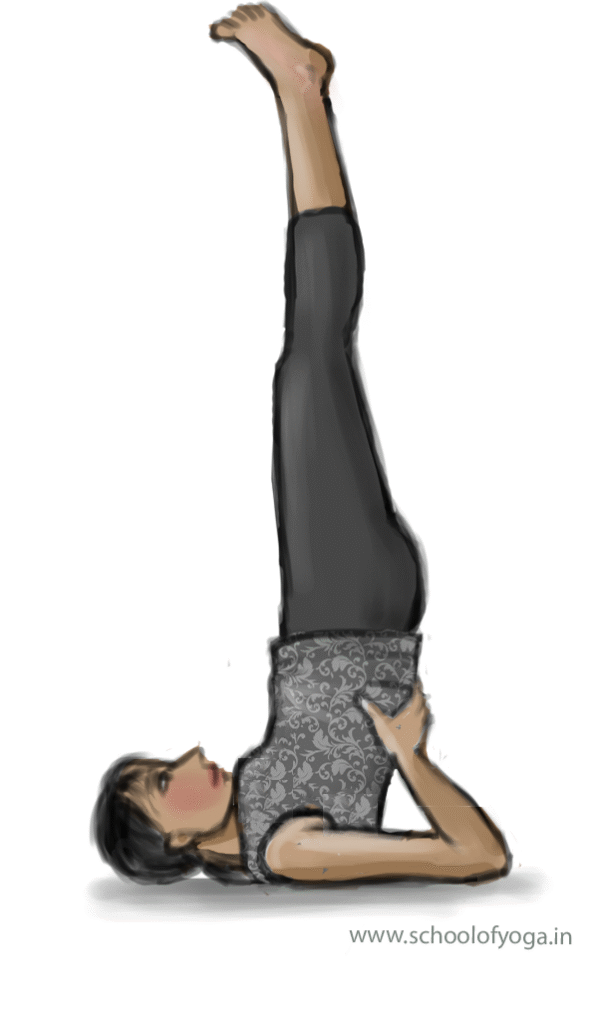
- Padayoragre – पाडयोरग्रे – Gazing at the tip of the toes.
This drishti is used in sarvangasana and vipareeta-karani
Internal Links: Dharma (conditioning), Stress and Situational Awareness, Prana, Asana Overview 2, Pranayama, Hatha Yoga Pradeepika,
External Links: Pancha Tattva, Pancha Prana, Pancha Kosha