
What is hamsasana?
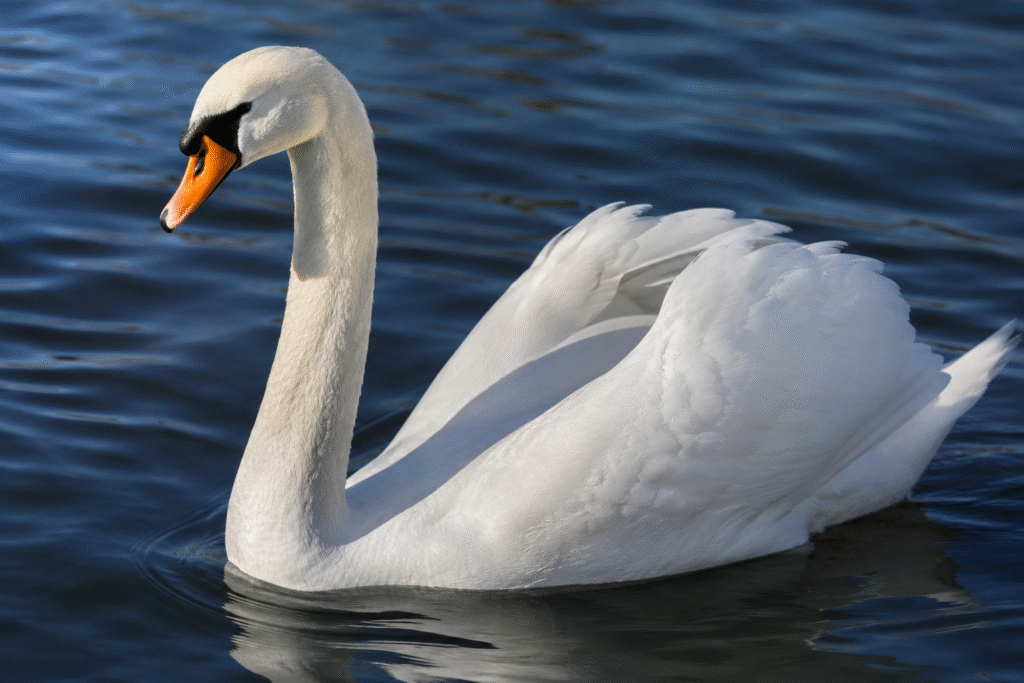
The hamsasana (hamsa = swan) is an āsana that helps build core strength and tones the upper body muscles. The body posture resembles that of a resting swan.
What is the technique to practice hamsasana (hamsāsana)?
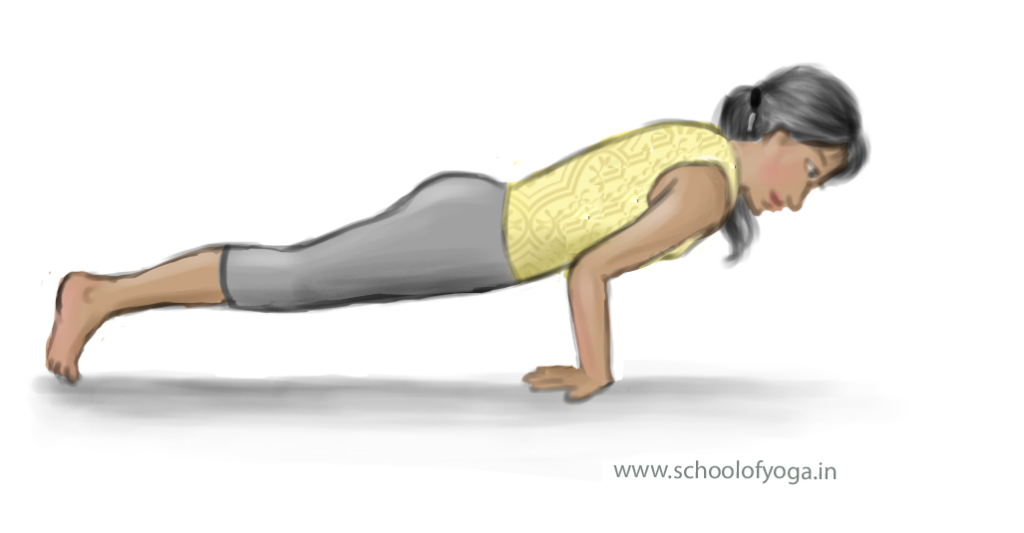
- Sthithi (starting) pose: First, squat in veerāsana.
- Then sit erect on the “V” of the heels and knees.
- Next, bend forward to kneel on the ground.
- Bring your forearms together such that the little fingers of both hands are touching.
- Plant both your palms firmly on the ground near your knees, such that your fingers are facing the knees and the inside of the forearm is facing out.
- Inhale partially, let the abdomen fall gently on the back of the joined elbows, such that the elbows are in the region of the navel, and on either side of the rectus abdominis muscles (abs).
- Stretch your legs back, one at a time, and stiffen them. Stand on your toes.
- Retaining the breath, bend forward on the hands such that the legs are balanced on the toes, and the weight of torso is on the hands. Keep your legs straight and stretched, and your buttocks contracted.
- Retain for 5 counts. Once is enough!
- The dṛṣṭi (gaze) recommended is maṇipūra–cakra.
What are the benefits of practicing the swan pose?
- This exercise puts pressure on the organs within the abdominal cavity. Consequently, this increases intra-abdominal pressure and induces peristalsis. As a result, there is very good evacuation of the bowels.
- The intra-abdominal massage also improves blood supply to all the muscles within the abdomen, thus ensuring optimum functioning.
- This exercise helps give relief from constipation and piles.
- Hamsasana is very good for improving the functioning of the liver, pancreas, and kidneys.
- The action of lifting the legs strengthens the muscles of the wrists, forearms, as well as the lower back.
- This exercise is done with half breath, hence it stabilises the pressure in the middle ear and trachea.
What are the contraindications for hamsasana ?
- People with cardiac, hernia, kidney, or liver problems should attempt this āsana after first consulting a physician.
- Also, people with lower back problems or carpal tunnel must perform hamsasana only under the supervision of a physician.
- Do not perform this āsana during menstruation or pregnancy.
Some noteworthy points on the swan pose:
Internal Links: Dharma (conditioning), Stress and Situational Awareness, Prana, Asana overview 1, Asana Overview 2, Asana Focus or gazing, Pranayama, Mayurasana
External Links: Prana, Chakra, Pancha Tattva, Pancha Prana, Pancha Kosha, Nadi,
- People with cardiac ailments should perform this exercise slowly because of the aerobic nature of the āsana.
- This āsana is similar to mayurāsana. In fact, one may practice hamsasana before attempting mayurāsana. In fact, the benefits of hamsasana are almost similar to those of mayurāsana.
- One of the problems in performing this āsana is maintaining both axial (along the length of the body) and lateral (balance between the hands) balance. Therefore, one could keep both the hands slightly apart, such that the elbows sit on either side of the abdominal muscle (abs). As a result, this increases lateral balance.
- People suffering from carpal tunnel will find this exercise difficult to perform. There will be severe pain in the wrist. Hence, one should first perform wrist movement and strengthening exercises before slowly increasing the load on the wrists. Also, if the pain continues, stop.
- Just as is done in śalabhāsana, one should take a half breath to ensure that the abdomen is not unduly stressed. In complete exhalation, the abdominal viscera would be loosely packed in the abdomen, while after complete inhalation, the abdomen would be tight, leading to stomach cramps. So, this is avoided by taking a half breath, whereby the abdomen is not stressed.