
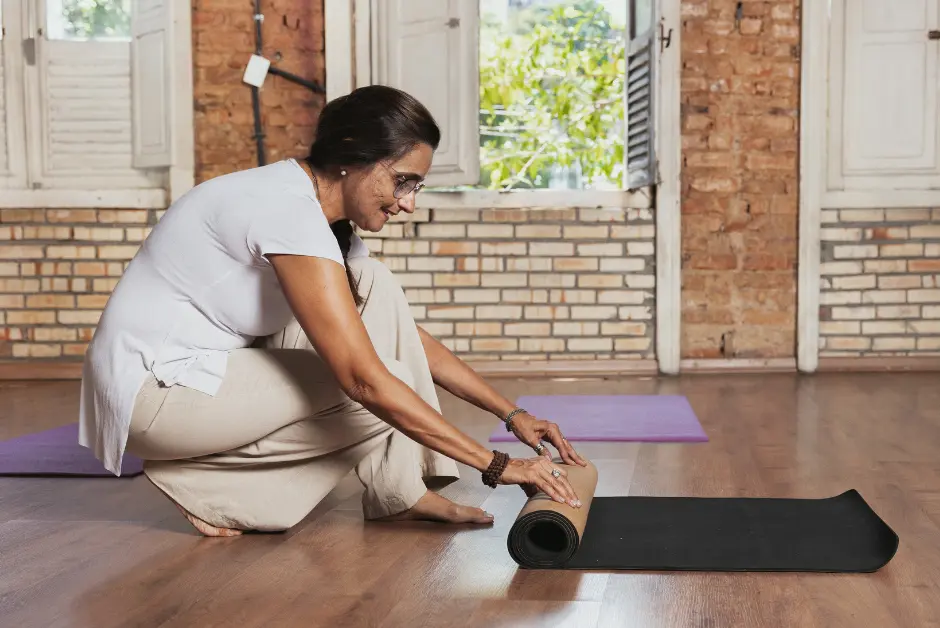
What is āsana practice?
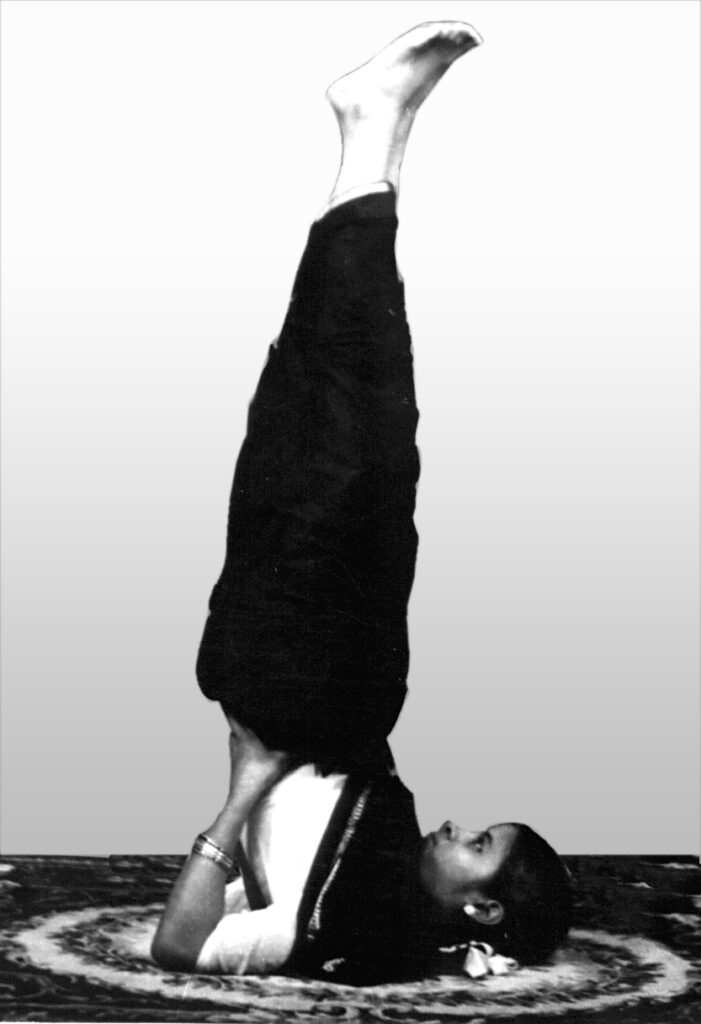
Āsana practice activates specific areas of the body. Performing āsanas directs the blood flow to the affected area.
As a result, āsana highly rejuvenates the area, resulting in increased energy levels.
What is the best time for āsana practice?
There are two options for performing āsana – morning and evening. Āsanas performed in the evening are less grueling, as the body has undergone the rigors of the day and is already pliable. However, our emotional and intellectual energies are usually low by evening. Hence, there usually is lower awareness during exercises. Also, very often, not enough time has elapsed since the last meal. Āsanas (exercises) induce peristalsis, forcing undigested food through the intestines, reducing absorption of nutrients. In certain cases, where the meal has been heavy, or the gap less than four hours, resistance from a full stomach could induce stomach cramps.
Āsanas activate specific areas of the body. Āsana practice helps in rejuvenation of the focus area, due to the direction of blood flow to that area. When āsanas are performed in the morning, there is an increase in energy levels due to the optimization of various body systems. However, the mind and body are rested, but stiff after sleep, in the morning. Āsana practice can be painful when starting but with exercising, the organs fire up, loosen and begin flexing. The stomach and intestines are empty and offer no resistance to bending and stretching actions. A vigorous peristalsis action actually assists in the evacuation of waste matter from the outer colon and rectum.
Our recommendation
Āsana practice is highly recommended in the morning, though schedules may force people to exercise in the evening. However, it is most important that the same time be maintained every day for the āsana practice.
This ensures that the system gets acclimatized to a routine and overcomes lethargy.
What is the difference between āsana, bandā, and kriyā?
It is also important to recognize the difference between āsana, bandā, and kriyā. Āsana is a static pose, while bandā is a holding
pose and kriyā is a dynamic pose. All three manipulate the movement of prāṇa in different ways.
Examples of bandā are uḍḍīyana, while nauli and sūryanamaskāra are kriyā exercises.
All yield different benefits, and need to be practiced.
What is the recommended environment for āsana practice?
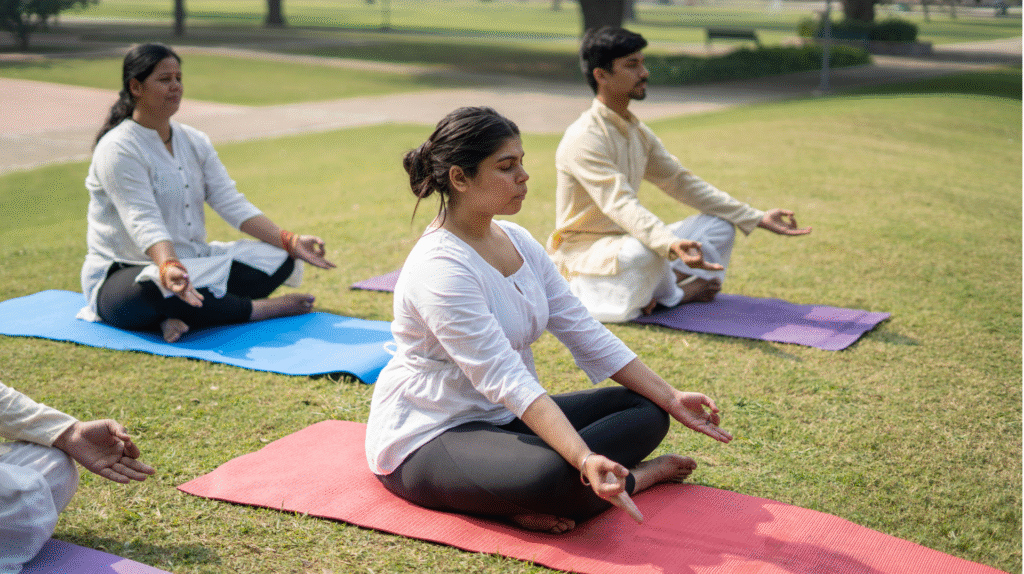
All forms of exercises give us an opportunity to increase the oxygen content in the body, remove toxins and stress and harmonise with the environment, thereby increasing one’s awareness of the environment (prajñā). Therefore, a tranquil and peaceful environment is very important when exercising.
Therefore, School of Yoga recommends performing the exercise in any place that has plenty of fresh air and quiet.
What should one wear during āsana practice?
Wear clothes that allow stretching and do not run or fall when stretching or bending. Clothes should breathe and absorb sweat. Men should wear athletic supporters. Both men and women should wear well-fitting innerwear to prevent injury during exercise. If one prefers going to classes for the sake of regularity and discipline, it is advisable that one wears appropriate clothing.
Why is diet a vital ingredient for getting the best results from āsana practice?
Diet is absolutely vital to realize the full potential of the exercises. Eating the right food ensures the absorption of essential ingredients and the optimization of the senses. Eat to stay within your weight range.
It is important to start exercises after the lapse of at least 4 hours after consumption of solid food, 1 hour after consumption of liquid food such as milk or juice, and 20 minutes after drinking water.
The reason for this recommendation is that food takes roughly 4-6 hours to completely move out of the digestive system. The process of digestion begins with the chewing of food and finishes with the absorption of nutrients in the small intestine. Vigorous exercise induces peristalsis or pulsing of the intestine, which results in the food hurrying through the intestine without nutrients getting completely absorbed. Also, the presence of food in the digestive system induces resistance to bending and stretching. This acts in various ways; it can stop the full movement of the diaphragm thereby impeding full ingestion of air or induce sprains and cramps when the body is stretched/bent.
How should one maintain homeostasis when performing āsana ?

Yoga is great for building a capacity reservoir, so that homeostasis is recovered quickly even if there is an illness.
When performing āsana, it is important to try and stay close to the condition of homeostasis. The reason is that the muscles and internal organs should not experience stress during exercise to maximize blood flow and movement of the tissue resulting in rejuvenation of the area.
Internal Links: Dharma (conditioning), Stress and Situational Awareness, Prana, Pranayama, Hatha Yoga Pradeepika,
External Links: Pancha Tattva, Pancha Prana, Pancha Kosha
Points to ponder on āsana practice:
- Do you exercise? What is your āsana routine?
- When do you prefer to practice āsana? Morning or evening? Why?
- Do you do āsana alone or in a group? What are the advantages and disadvantages?
- Do you wear any special clothing for āsana? Why?
- What is your diet? How do you manage your diet?