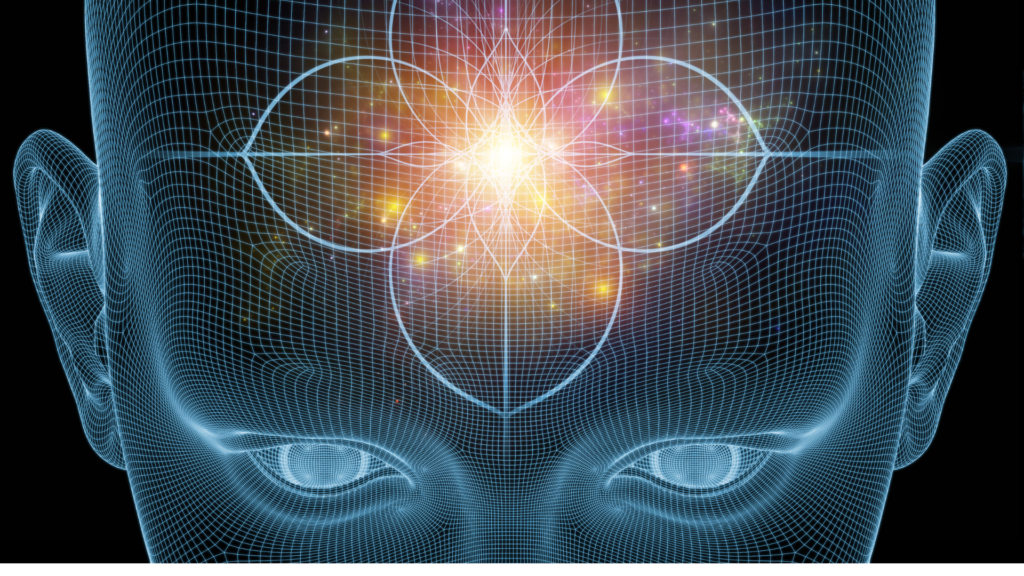
Patanjali Yoga Sutra – Chapter 1 – samadhi pada
What is the definition of yoga? What is samadhi pada?
1- This is a dissertation into the subject of Yoga.
2- In summary, Yoga is cessation of sensation (activity of the senses) (cittavṛtti-nirodhah).
3- To reach one’s natural state, a person needs go in that way.
4- There is a tendency to associate one Self where one’s thought waves go.
What are the 5 kinds of mental activity in samadhi pada?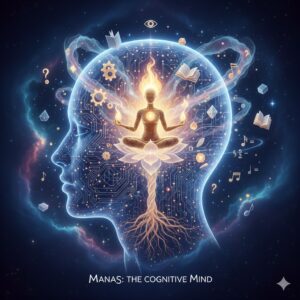
5- There are 5 kinds of mental activities – some hard, some agreeable.
6- These are, availability of proof, contrariness, vacillation or confusion, sleep, memory.
7- Availability of proof are called pramanas (requirement of proof). These are – pratyaksha (personal experience), anumana (inference), upamana (comparison and analogy), arthapatti (postulation and derivation from evidence), anupalabdhi (non-apprehension or negative cognitive proof) and sabda (verbal testimony).
8- In fact, perversity is logic based on incorrect understanding of identity or the Self.
9- Contrariness is created by words which convey knowledge of the self in proportion to void created by the difference between objects.
10- Absence of sentience in the Self, which is the root cause of stimulus is the sleep of mental activity.
11- Subject which has lost its experience is memory.
How to practice non-attachment or vairagyam in samadhi pada?
12- Practice non-attachment (vairagyam) for these stop mental activity.
13- Ultimately, that steady focus comes after painstaking practice.
14- You must devout long, uninterrupted, focused effort like the unyielding earth.
15- Perception can be controlled to make one a free from desire by becoming a disciple of non-attachment (vairagyam).
16- Notably, the human should have as intent, freedom from desire generated by attributes (gunas).
17- Deliberation, reflection, happiness, feeling of “I” leads to understanding the Self accurately.
18- Importantly, stopping consciousness by practice of removal of the leftover of samskaras (religious practice) leads to void.
19- Notably, within consciousness, dead and creation are certainly merged.
What are the efforts detailed in samadhi pada of yoga sutras.
20- Additionally, dedication, valour, mindfulness, absorption, awareness, is qualities required.
21- Intense effort and controlled breathing increase power of the asana.
22- Importantly, the quality of effort – mild, middle or intense effort, determine the quality of outcome.
23- Also, deep contemplation on the divine being is another path.
24- Suffering comes from action, ripening or maturing which comes from its impact, makes human special to God.
25- This is the seed of supreme knowledge of the sublime.
26- He is the earliest of Gurus, not bound by time.
27- In fact, that which describes the Brahman is the pranava (OM).
28- Also, continuous incantation (japa) reveals its meaning.
What are the qualities that positively and negatively impact samadhi pada?

29- Thus, reversals to attainment of Self come by stripping the inside of sentiments.
30- Without doubt, sickness, apathy, doubt, negligence, laziness, despair (lack of determination), prejudgemental, inconsistency of focus on concepts result in scattering of mental activity.
31- Also, grief, melancholy, trembling of the body and agitated breathing are extensions of this state.
32- This can be overcome by practice of focus on the concept.
33- Friendliness, compassionate, joyful, indifference, happiness-sadness, good-bad are aspects which should be inculcated for calming the mind.
34- Additionally, exhalation and holding of breath enable attainment of the goal.
35- Stimulus and selective focus arise from the cognitive areas of the brain and determines ones attitude.
36- Exemption from grief comes from inner light.
37- In fact, dispassionate management (vairagyam) should become the mental activity.
38- On this, dream- sleep- cognition of the Self becomes the foundation.
How does meditation impact mental activity in samadhi pada?
39- Meditation on any desired or pleasing object is OK.
40- Truly, from an atom to a large entity, any subject can be brought under one’s will.
41- Finally, reduction of mental activity leads to crystal like clarity in cognition so that the relationship between the subject and object make them equal.
42- Thus, the different meaning of “knowledge of the Self”, when contracted into acceptance yield samadhi.
43- Memory is purged when the image of one’s identity is null only. Then, there is a luminous experience of samadhi.
44- By this, contemplation-non contemplation of the subtle object is explained.
45- In fact, subtle subject can reach a point of being indefinable.
46- This is the root/ seed (beeja) of samadhi.
47- When one reaches the state of null thought, transcendence is the result.
48- Notably, where there is truth, there is awareness of the Self.
49- The awareness gained by what’s heard, measured or inferred, is of one kind, but knowledge of the truth is special.
50- The impressions gained by samskara (practices of agama) prevent greater growth
51- And so the cessation of everything results in the samadhi of no-seed (nirbhijam) Patanjali Yoga Sutra Chapter 1
You can also read about Yoga in my book, The Yoga Manual, available at all major e-marts.
- Notion Press – https://direct.notionpress.com/in/read/the-yoga-manual
- Amazon – https://www.amazon.in/dp/B0FNWN35BK?&tag=notionpcom-21
- Flipkart – https://www.flipkart.com/the-yoga-manual/p/itmc241083c7e7bd?pid=9798896734147&affid=editornoti
- Amazon world-wide – https://www.amazon.com/dp/B0FNWN35B
- Amazon UK – https://www.amazon.co.uk/dp/B0FNWN35BK