How to integrate jnana yoga practice into daily life?

Change is constant, and no one can stop the changes happening in the external world. Since change impacts our sense of identity, there is anxiety and fear. This affects our ability to accept change, even though the stimulus may ultimately have a positive impact.
Stimuli can be active (such as an oncoming bus), passive (such as a stationary car or umbrella) or subconscious (such as the sky, building or grass).
- Negation of active stimuli is difficult because it demands immediate response. For example, in the case of an oncoming bus, you have to move out of the way.
- Passive stimuli are easier as the consequences of negation are easier to manage. For example, if you are late to office and see your boss’s car at the entrance, there is anxiety, but it is less than an oncoming bus. This is because the existential threat is more in your control.
- But, how do you negate the subconscious stimuli? For example, how do you negate the sky? How do you say, it does not exist? Or that the existence is an illusion.
Jnana yoga practice helps ease the anxiety and fear that often accompany change, thus helping us accept it and face the challenges with steadiness. Integrating jnana yoga practice into our daily life routines involves cultivating dispassion and discrimination in our awareness, observing our cognition, and pausing to reflect on the stimulus – all of these while continuing to show up for our routine and our duties. As one progresses with discrimination and dispassion by negating the material aspects of existence, the ability to negate existential stimuli increases.
How does jnana yoga practice sensitise us to our bonds (bandhana) ?

Stimuli can also be graded by levels of distance from the identity, this being defined by the relationships we have.
- Primary bonds are those that we have with our parents, children or spouses.
- Secondary bonds would include close friends, relatives etc.
- Tertiary bonds are casual one-on-one relationships.
- Formal bonds are those made at work or in any team.
- Societal bonds are those which would impact our existence in society such as elections, environment etc.
- Conditioning or dharmic bond is one which is given to us by DNA, parents, home, family, school and society. This is very difficult to negate as it affects the core of our sense of Self (asmita).
Each bond (bandhana) assumes importance in different situations. Therefore, as the importance of a particular bond reduces, so will the attachment.
However –
- Negation of activity does not mean stoppage of activity. It only means reducing the impact of the bond on our sense of Self (asmita). Therefore, we should guard ourselves against reducing the quality of our transactions as we begin to realise the impermanence of the bond.
For example, when working in a team, it is possible that when negating a stimulus, the person negates the team or the activity. This is not the intent of the concept. One should remain engaged in the activity, yet completely conscious that it is illusory, maya or farce.
- As one grows older, the importance of each bond changes. So, achieving career objectives often changes to maintaining quality of career as one grows older. However, each experience leaves residues. Purging this memory is very important for negation of stimulus because baggage is a source of inertia, demanding attention but contributing very little development.
- The final goal is negation of existence of one’s own identity (Shiva). As one begins the negation process from outside to inside – first, society is made irrelevant, events lose significance. Next, there is negation of stimuli which add no direct value. This includes exit from social media, TV, and over time – news. Finally, there is negation of ambition, imagination and expectation.
Some tips for jnana yoga practice:
- Jnana yoga practice entails clear discrimination of stimuli. Isolate and negate what is temporary or impermanent.
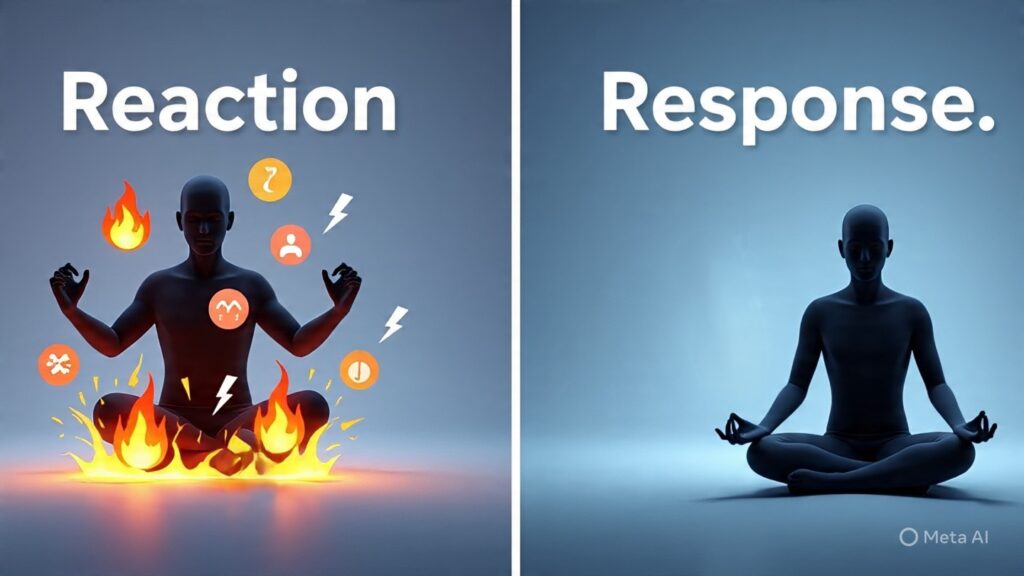
- Avoid the compulsion to react.
- Accept change and its associated uncertainties.
- Find friends with similar yoga goals. Compare notes and seek help.
- Maintain motivation (nidhidhyasana).
- Manage fear and anxiety by exercise, breathing and rationalizing.
- Negate conditioning or dharma – Slowly, work towards a position where no situation is considered permanent without evidence. For example: In sensitive subjects such as marriage, birth, death, or even matters of faith, there is no evidence that any one position is valid. This means accepting that a situation of ambivalence exists, even though one’s conditioning or dharma might dictate otherwise.
- Keep discarding baggage, attitudes, and judgements.
- Finally, negate your own existence. This is incredibly difficult and might not occur while primary bonds exist.
- Be prepared for many and recurring experiences of sense of loss, detachment, and lack of fit with society.
Start each day as a fresh day with no baggage. Use the “present” as a “gift” and negate all images of the past or future.
Summary of suggestions for jnana yoga practice:
The below mentioned important steps for jnana yoga practice need to be experienced, not just intellectually or emotionally but as a part of one’s identity.
- Learn to discriminate stimuli, isolate and negate what is temporary or impermanent.
- Choose your battles, avoid the compulsion to react unless required.
- Accept change and its myriad uncertainties.
- Manage fear and anxiety by exercise, breathing and rationalizing.
- Negate conditioning or dharma – slowly, work towards a position where no situation is considered permanent without evidence – For example: Sensitive subjects such as marriage, birth, death, or even God. In such matters, while there is no evidence that one position is valid, there is also no evidence that a counter position is valid. This means accepting that a situation of ambivalence exists even though one’s conditioning or dharma might dictate otherwise.
- Stop seeking solutions, accept whatever comes your way and work without attachment. Keep discarding baggage, attitudes, and judgements.
- Finally, negate your own existence. This is incredibly difficult and might not occur while primary bonds exist.
- Be prepared for many and recurring experiences of a sense of loss, detachment, and a lack of fit with the environment, called virakti.
Points to ponder on jnana yoga practice:
Internal Tags: Dharma (conditioning), Stress and Situational Awareness, Stress and prana, Awareness measures, Hatha Yoga Pradeepika, Patanjali Yoga Sutra, Jnana Yoga, Bhakti Yoga, Karma Yoga, Hatha Yoga and Raja Yoga.