What is bhastrika pranayama or the bellows breath?
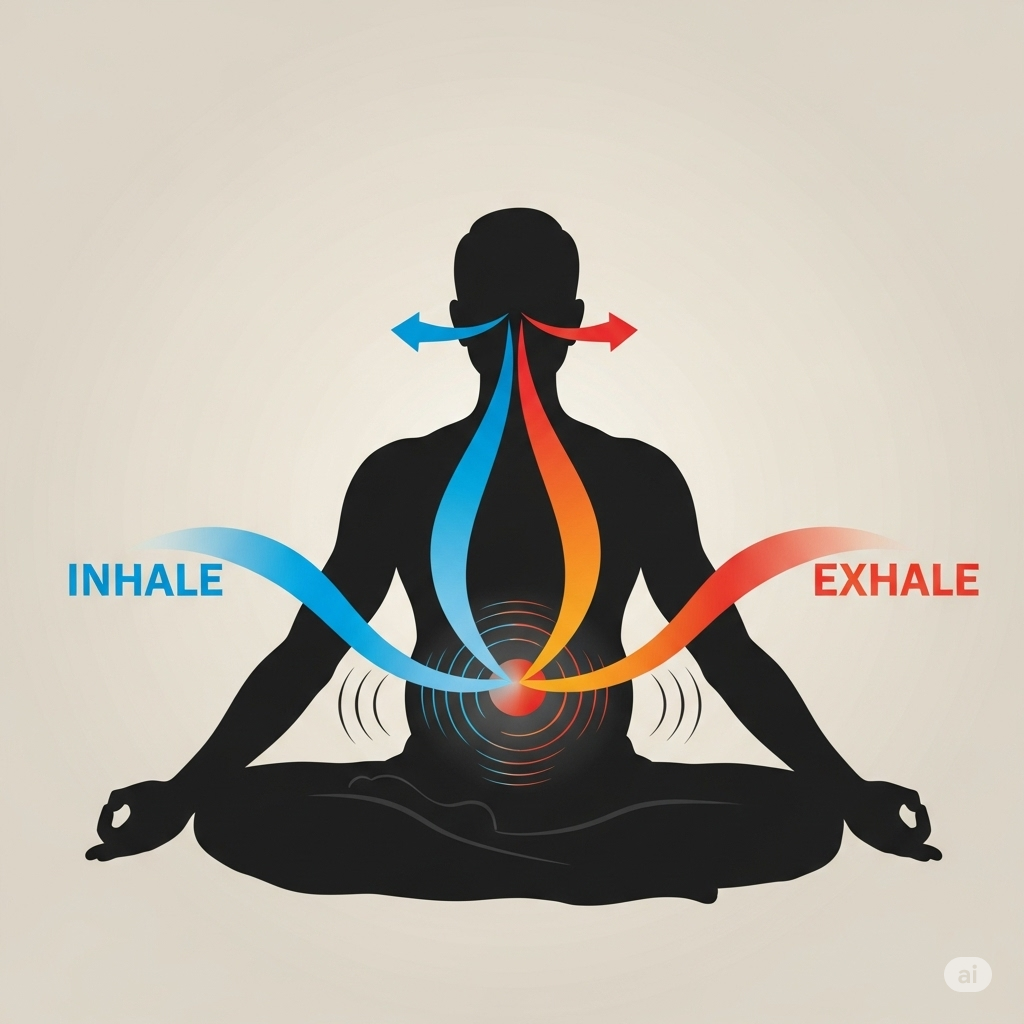
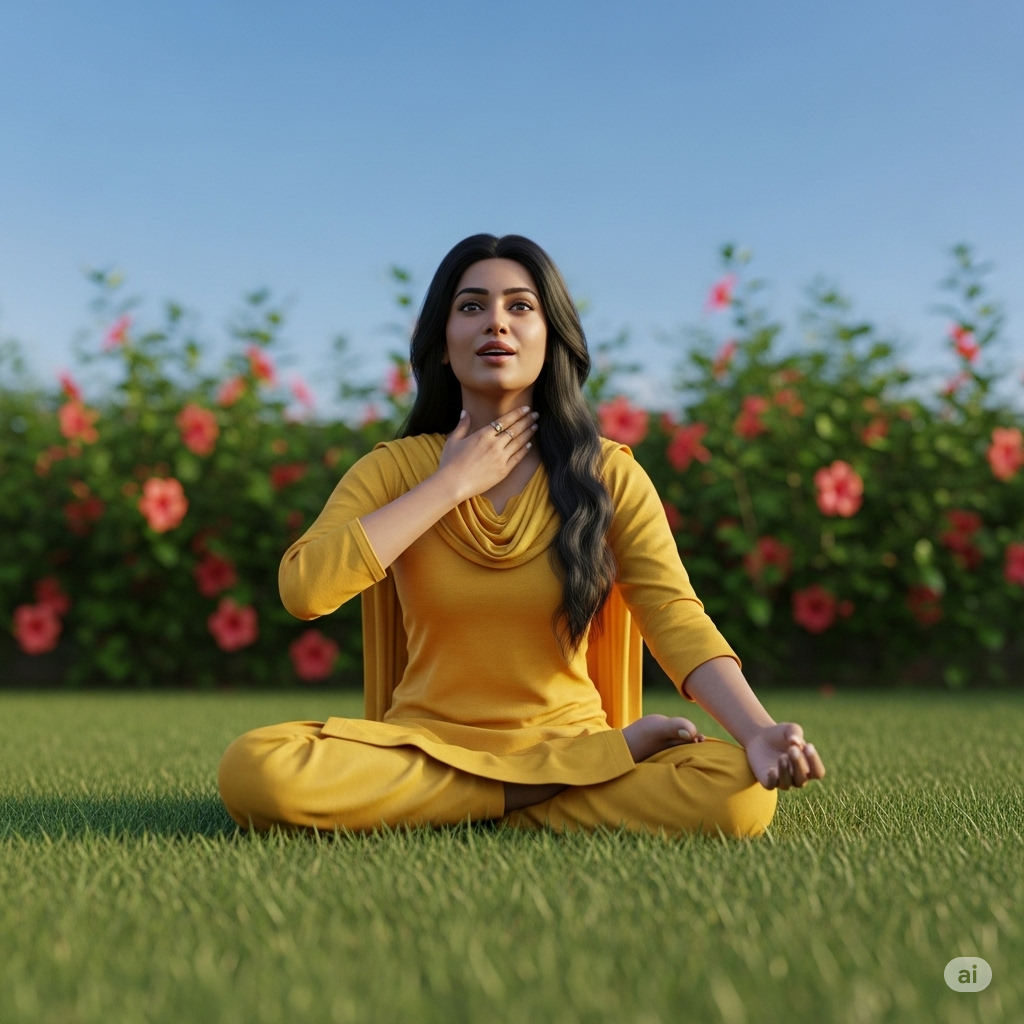
Bhastrika pranayama is a type of yogic breathing in which the practitioner rapidly inhales and exhales using the diaphragm only.
How to do bhastrika pranayama ?
- First, sit comfortably in padmasana, sukhasana, or vajrasana. Keep your back erect.
- Keeping the mouth closed, let the tongue touch the top of the palate to close the circuit of prana flow.
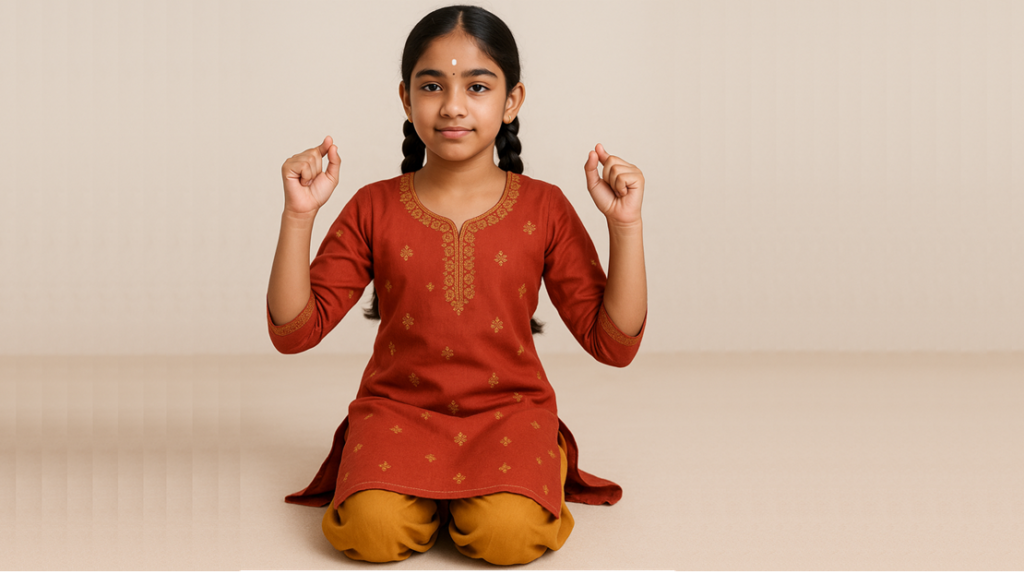
- Also, place your hands in the chin–mudra or chinmaya mudra.
- Now breathing in through the nostril, draw the diaphragm down rapidly.
- Lastly, at the end of inhalation, exhale rapidly, thus pushing the air out vigorously.
- Repeat 5 to 10 times to a maximum of 2 sittings.
- Breathe normally, and relax.
What are the benefits of bhastrika or bellows breath technique?
- Firstly, this pranayama strengthens the upper respiratory tract. It also cleans out the mucosa along the track. The discharge of waste helps maintain the body temperature. This results in homeostasis.
- Additionally, the rapid movement of air also strengthens the trachea and lungs. Consequently, there is activation of the stagnant alveoli, resulting in improved lung health.
- Bhastrika helps in preventing cold.
- Also, the rapid movement of air increases the volumetric efficiency of the lungs and heart function.
- Lastly, this breathing exercise strengthens the functioning of the thoracic nerves. This also helps control the functioning of the heart and lungs.
Hatha Yoga Pradeepika on bhastrika pranayama (Chapter 2, verses 59 to 67)
Bhastrika– It is ideal to sit placing the feet on the opposite thighs, in the padmasana – named the destroyer of all sins.
Assuming a balanced padmasana and an erect body, the intelligent practitioner should exhale through the nostrils.
It should then be inhaled rapidly with force until there is an experience of resound in the heart, throat, upto the skull.
Next, it should be expelled repeatedly and filled again and again like a blacksmith using his bellows.
In the same manner, he should move the prana within the body and when experiencing fatigue, inhale using the right (pingala-nadi) nostril.
As soon as the lungs are filled quickly with air, the right nostril should be closed with the ring finger and kept confined.
Having performed kumbhaka properly, it should be expelled through the left nostril. This destroys vata (air), pitta (bile) and kapha (phlegm) and increases gastric fires.
The kundalini is quickly aroused; pleasant, purifying, and beneficial. Any phlegm and other impurities which may be accumulated at the entrance to the brahma nadi are destroyed.
Bhastrika pranayama should be performed plentifully, for it breaks the 3 knots that are firmly placed on the sushumna nadi. (brahma-granthi in the anahata, vishnu-granthi in the visuddhi and rudra-granthi in the ajna )