What is sannyasa (renunciation)?
The word sannyasa is a compound word comprising संन (sann) = present + न्यास (nyasa) = throwing away the present. So संन्यास (sannyasa) = throwing away and it means discarding everything associated with existence, from material possessions, to relationships, attachments, bonds, passion and even the present.
So, in sannyasa (sanyasa), the person negates the existence of everything, including his or her own existence.
How is sannyasa related to dharma ?
In dharma, there are four stages of existence (ashrama), namely brahmacharyashrama (stage of youth/ studentship), grihasthashrama (stage of a house-holder), vanaprasthashrama (stage of retirement), and finally sannyasashrama (stage of renunciation).
Brahmacharyashrama is a phase of learning and formation of conditioning (dharma). Importantly, this is the most critical stage for a country and society that invests efforts in teaching its youth to work with dedication (shraddha), to sacrifice (yajna), act (karma-yoga). Also, at this stage, the individual is taught that sacrifice (yajna) with Truth (satya) will determine the country’s conditioning (dharma) and consequently, its individuality (svatantra).
Grihasthashrama is that stage where maximum consumption occurs. Here, one’s awareness (prajna) is the quality that needs to be developed. Importantly, the householder (grihastha) implements everything that was learned in brahmacharyashrama, and begins to understand the value or shortcoming of everything that was taught. Also, they become alert to income, expenses, waste, and its disposal. Additionally, they learn discrimination (viveka) and dispassion (vairagya). As a result, householders understand and contribute to all aspects of the country’s development (kshetrajna).
Vanaprasthashrama is a stage when the person steps back from activity, and reflects on the learnings of his or her grihasthashrama. Importantly, in this stage, the individuals should have ensured that they have enough resources to face the remainder of life and not be dependent on anyone. The key personal development at this stage is the ability to view the Self dispassionately (vairagya).
Sannyasashrama is the last stage, where a person is expected to focus on the nature of the Soul (atma-vichara), absolute freedom (moksha) and nature of death. Unfortunately, people often baulk at any suggestion that they should reflect on the nature of death and after-life. However, the result of ignoring this major life-event, is having to face anxiety and fear of death when one is least prepared.
Entering the final stage of renunciation (sannyasashrama)
This is one of the most critical ashrama of the rashtra, one that is unique to Bharat. Unfortunately, the number of people willing to enter this ashrama has dwindled to almost nothing. The root cause for this can be traced to the education system (lack of knowledge of brahma-vidya and moksha) and excessive expectations of artha and kama in grihastashrama.
How this can be changed is a difficult question, but one that will need to be answered by individuals because sannyasis are the embodiment of dharma and Truth. They become role-models when they are physically seen, acting as a counter-balance to materiality. They bring back balance to the civilisation (rashtra).
Section 4 of the Jabala-upanishad explains sannyasashrama well:
Introduction: Renunciation means letting go of the sense of identity (asmita). When there is no identification of the person with material existence, there is no karma and memory is extinguished. In this state, there is no past or future, there is only the present, which results in the person having no desire to achieve (sankalpa). Also, such a person treats everything, be it mud, gold, or another being, equally. So, there is no duality (dvandva). In this state, the person’s consciousness (citta) stops responding to stimulus, it becomes unmoving (vritti-nirodha) and the person experiences the unchanging, infinite tranquillity (nirvikalpa-samadhi) and merges with the Brahman.
There is no prerequisite for a person wanting to be a sannyasi. Such a person could be a brahmachari, grihasta, or a hermit. He can be from any of the varnas (brahmana, kshatriya, vaishya or shudra). He may follow a specific school of thought or he may be independent.
Types of sannyasis :
There are two types of renunciates (sannyasis), vividisha (renunciation of the seeker) and vividvat (renunciation of the knower). Importantly, in vividisha, the sannyasi renounces seeking of knowledge (this path is regression through vijnana), while in vividvat the sannyasi renounce knowledge through introspection (this path is through jnana). Generally, vividisha sannyasis tend to be householders who wish to transcend materiality, but are still mired in attachment. Kutichaka and bahudaka–sannyasis generally conform to the vividisha classification of sannyasis.
There are four levels of vividisha-sannyasis :
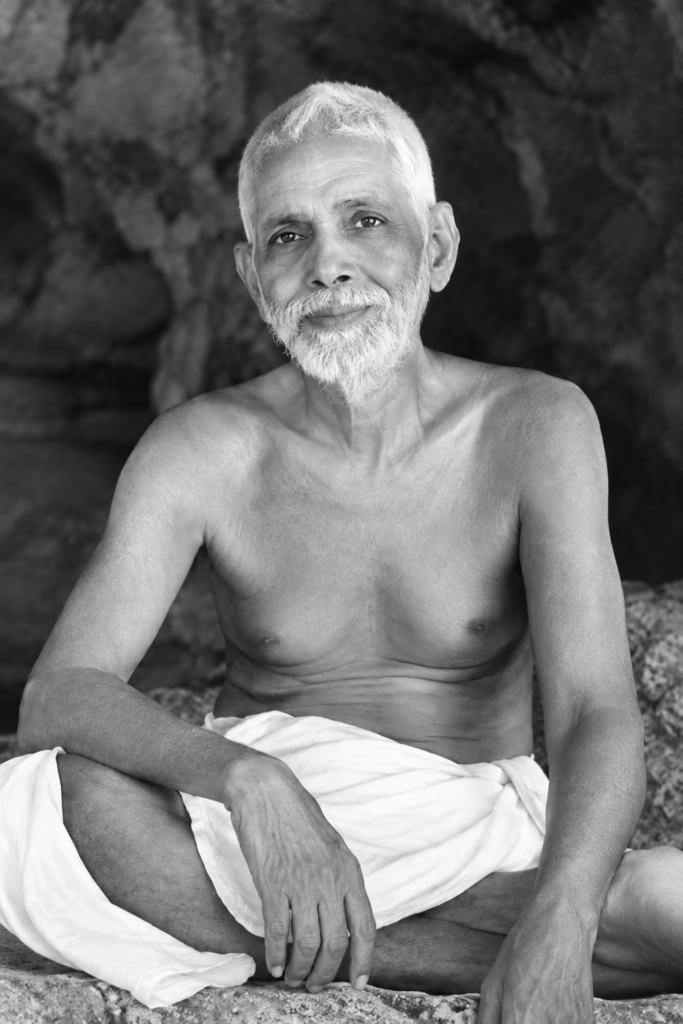
- Kutichaka-sannyasi (kutir = hut + chaka = reject) – Such a person lives in a secluded portion of his or her family home but is unattached to it. So, the business of food and other administrative aspects are covered, and the person can focus purely on emancipation by restrain of speech, food and control of the senses.
- Bahudaka-sannyasi (bahu = multiple + daka = donors) – This is similar to the above, except that the sannyasi accepts alms from others.
- Hamsa-sannyasi – basically hamsa stage is a lower stage of paramahamsa stage of sannyasa. Here, the sannyasi develops a detachment for not just material things but also supra-material knowledge such as knowledge of heavens etc.
- Paramahamsa-sannyasi – hamsa means swan, and that state when there is complete merger with the Truth. Also, this sannyasi does not identify with his own body of with any form of materiality. In fact, such a person has transcended maya and karma, thus cycle of birth and death (samsara) and is called jivanmukta. A classic example of such a sannyasi is Ramana Maharishi and Sadasiva Brahmedrar.
Importantly, the foundational quality of a sannyasi is detachment (vairagyam). Furthermore, in each of the above types of sannyasis, this quality will vary. Also, those of kutichaka and bahudaka level are considered lower level sannyasis as they have not transcended all their insecurities.
What is the process to become a sannyasi ?
Before becoming a sannyasi, a person should get permissions from the country’s rulers for two reasons. First, to determine that the person is competent and has the requisite cognitive capabilities to become a sannyasi. Secondly, the person ceases to be a productive member of society and depends on society for sustenance. So, a filtration process was required to remove the immature from entering this stage. Today, this is done by the guru of the ashram into which the person seeks diksha (initiation).
The process of renunciation:
Once the person has passed this stage, the person must next perform shraddha (offering to the manes) to the following eight entities – deva (various deities), arsha (Vedas), divya (celestal beings), pitrya (ancestors), matruka (mothers), manusha (mankind), bhautika (physical world), atmaka (world of souls). Hence, one can see that in this process, the individual severs himself or herself from all material association. After this, the person ceases to exist as an entity and takes on a name that is related to brahma-vidya (knowledge of the truth).
One can see that becoming a sannyasi is not easy and requires enormous drive (mumukshutva). One can also see that there is an enormous volume of information on sannyasashrama available in the ancient texts, in fact, far more than any other ashrama. Consequently, one can conclude that sannyasa-ashrama was a sought-after state by both men and women. For instance, Shukracharya’s daughter Devayani’s release from her coils is vividly explained in Srimad-Bhagavata-purana.