What is naukasana ?
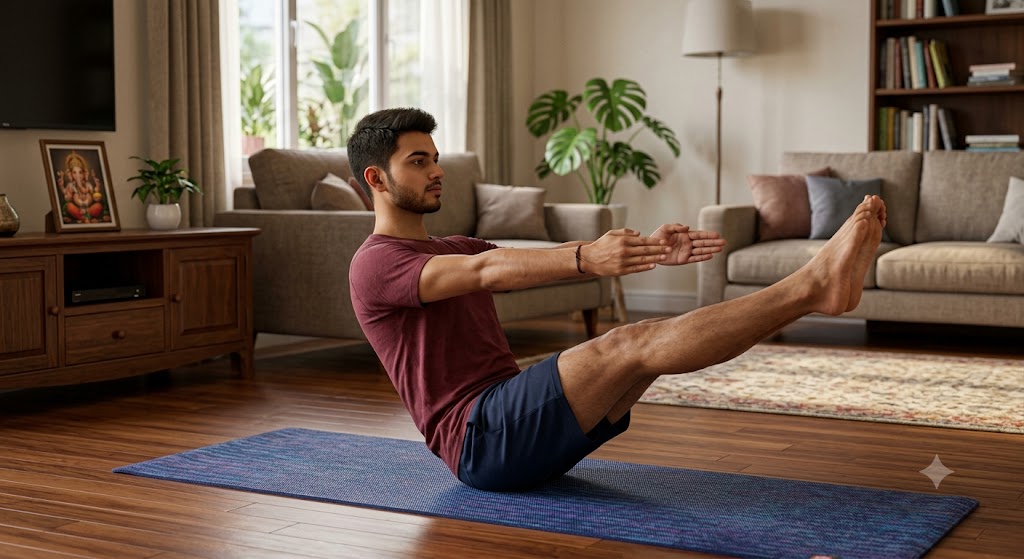
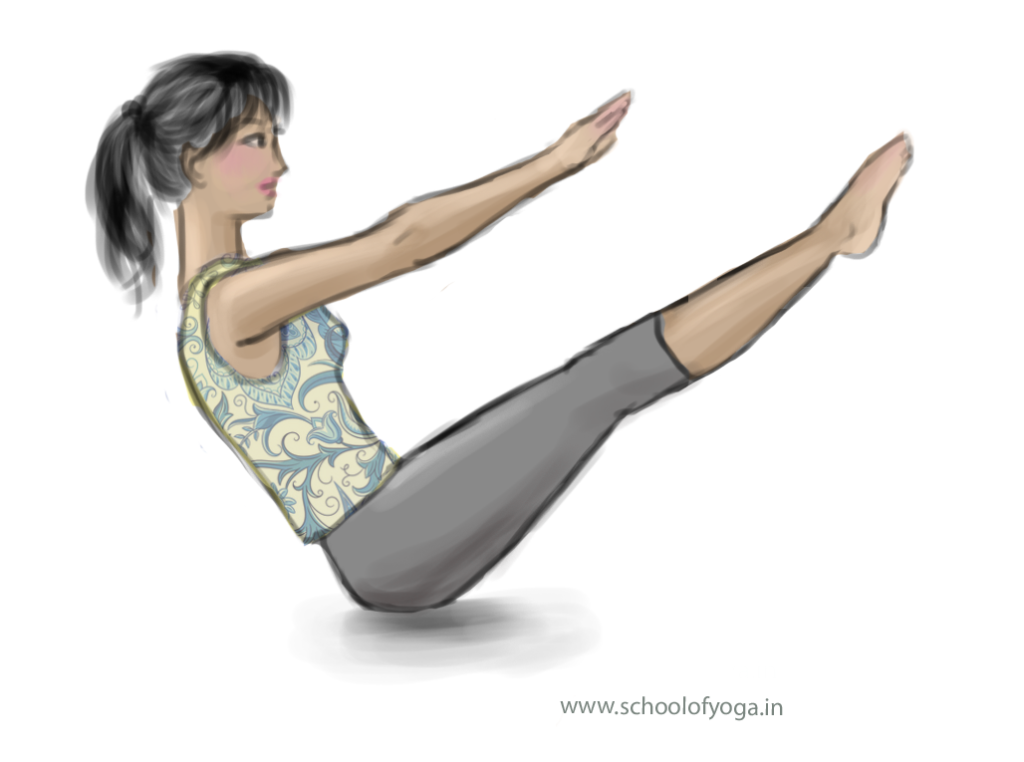
Naukasana (nauka = boat, asana = pose) is a seated yoga posture wherein both the legs are stretched and lifted up such that the torso holds in the shape of a boat.
What is the technique to practice naukasana ?
- Sthithi (starting) position: Sit on the floor with both your legs stretched out ahead.
- Place your hands, palm down, next to the thighs. Breathe in.
- Breathing out, bend your torso forward, and using your hands and abdominal muscles, lift your legs up as far as possible.
- When your legs are steady, remove your hands from the sides, and stretch them towards your toes.
- Keep your legs straight.
- Keep your eyes, thumbs and toes in a straight line.
- Balance your body on the buttocks. Maintain shallow breathing.
- Hold for 5 counts. Increase gradually to 30.
- Breathing in, slowly come back to sthithi (starting) position. Repeat 3-5 times.
- The recommended drishti (gaze) is padayogre-drishti (tip of the toe gaze).
What are the benefits of naukasana yoga pose?
- This asana is excellent for removal of adipose tissue around the abdomen.
- Also, the downward pressure of the abdomen on the colon sets up peristalsis and cures constipation.
- The upward movement of the torso and legs increases muscle tension on all the elements of the muscles of the upper and lower back.
- The thigh, hamstring and calf muscles get strengthened on account of the forced leg stretching action, which is required to keep the leg up.
- This asana rejuvenates the cartilages and muscles in the spine as well as the sympathetic and parasympathetic nervous system.
- Menstruation related issues are resolved by this asana.
- This asana is good for increasing sense of balance.
What are the contraindications of naukasana or boat pose ?
- Do not perform this asana if you are suffering from lower back problems and hernia.
- If you have blood pressure, consult a doctor before practicing naukasana.
- Do not perform this asana during menstruation or pregnancy.
Some noteworthy points on naukasana :
Internal Links: Dharma (conditioning), Stress and Situational Awareness, Prana, Asana overview 1, Asana Overview 2, Asana Focus or gazing, Pranayama, Paschimotanasana
External Links: Prana, Chakra, Pancha Tattva, Pancha Prana, Pancha Kosha, Nadi
- Do not do this exercise in case of high BP, cervical spondylitis, hernia or renal disease, etc.
- Do not relax your abdomen. It can cause the walls to collapse and lead to tearing of the inguinal hernia.
- Do not take your hands back as in paschimottanasana to use the momentum of the forward hand movement to lift torso. A sudden jerk could result in stomach cramps.
- Keep both knees together and legs straight for maximum benefit.
- The subsidiary benefits are increased flexibility of the ankles, knees, hips and lower back.