School of Yoga explains Srimad-bhagavad-gita, chapter 18 – moksha sannyasa-yoga (yoga of liberation by renunciation)
How do dharma, guna and human stratification impact liberation?
- Karma acts continuously. In fact, action, inaction and inappropriate action are all karma.
Prakriti and Purusha weave to generate gunas - Also, even if a person were to exercise free will to avoid action (karma), prakrti (creation) will force the person to act through his or her svabhava which are driven by the gunas, to ensure an outcome.
- All activities look daunting at the start, like smoke envelopes fire. Let go your fear, control yourself, abandon duality such as like-dislike, stop judging and take one step at a time (verse 48).
- Guna comes out of prakriti and drives conditioning (dharma).
- Everyone has a competence that aligns with one’s own natural state (dharma). Dharma drives behaviour (svabhava). So, it is always better for one to act in congruence with one’s own competence in a bad situation that try to function on borrowed competence. The outcome will never be satisfactory. (verse 47).
- The mix of gunas determines the personality and behaviour (svabhava) of individuals and consequently, duties that they are expected to perform in society. There are 4 categories (varna) of people – brahmana (one who has cognised the state of Brahman, kshatriya (warrior and leader in any situation requiring honour and virility), vaishya (trader, businessman, farmer or arbitrator) and shudra (workman).
- An examination of the definition will confirm that these structures are defined by capability, so generally people who act according to their dharma would acquire specific competencies and become SME’s (Subject Matter Experts).
- Since varna comes from dharma which is driven by guna, one can conclude that everyone’s behaviour (svabhava) is driven by guna.
- Also, anyone acquiring a particular specialisation would require an ecosystem as well as conditioning (dharma) and oftentimes, this comes from DNA and upbringing during childhood, which makes family and community living important.
- Consequently, specific communities end up specialising in particular tasks. These are called jati (community). It is important to note that jati is not caste but community, because caste has a hierarchy, which jati does not have.
- Finally, anyone from any community can reach Brahman by focussed application in performance of duties. For example: Shri Sant Gora Kumbhar (1236 to 1317 A.D) (link: https://www.hindujagruti.org/hinduism-for-kids/335.html) was a potter by profession who merged with the Brahman (verse 49).
- So, no matter what activity a person may perform, everyone should be respected for their competence and contribution and not personality or position (samaḥ-sarveṣu-bhūteṣu) (verse 45-46).
School of Yoga explains Srimad-bhagavad-gita, chapter 18 – moksha sannyasa-yoga (yoga of liberation by renunciation)
What is the connection between dharma, moksha-sannyasa and surrender to Shri Krishna?
Renounce all conditioning (dharma) and surrender unto me. Then, I shall liberate you from all sins. This verse is critical in understanding the process of Yoga. (verse 65-66).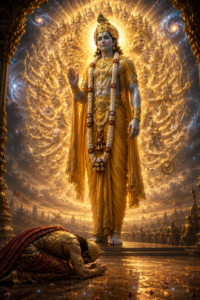
- All yoga is about transcending the material Self and merging with Brahman.
- The material Self is maya and created and operationalised by purusha and prakriti that drive guna.
- Karma has a circular relationship with dharma (natural state), it creates dharma and in turn, gets governed by rules of sanatana-dharma.
Hence, to transcend the Self, one would need to transcend dharma. What are the types of dharma that a person needs to transcend?
- Sva-dharma (personal conditioning) – here a person will need to overcome all inhibitions and influences of DNA, education, upbringing, conditioning arising from employment, life experiences etc., truly a formidable challenge!
- Vishesha-dharma (specific dharma) or conditioning of society,
- Samanya-dharma (generic dharma of a genus) or instincts of being human and,
- Sanatana-dharma (universal dharma) or state, such a dharma of creation.
Obviously, transcending sva-dharma should allow a person to overcome all existence (maya) because all macrocosm dharma is embedded in the microcosm (sva-dharma).
How does one transcend dharma? Shri Krishna answers this in the opening verses, by sannyasa which is renunciation of action motivated by desire (kama) or abandonment of fruits of action (tyaga). At an activity level, there are three main actions. These are yajna – sacrifice, dana – donate without expectation of return and tapas – self-restraint. Dana adds advantage to internal development, but without sacrifice (yajna), dana cannot be performed. Tapas is self-control and integral to development, but tapas requires sacrifice (yajna). Also, sannyasa and tyaga, both require sacrifice. Hence, yajna is the most important of all, without which transcending maya and merger with Brahman is not possible.
Importantly, all sacrifice (yajna) creates debt (rinn) and we take many for granted. Some examples,
- Parents sacrifice for us; we incur two debts to them – debt of birth and debt of upbringing. Debt of birth, we can repay by ensuring a decent funeral and appropriate remembrance ritual. Next, to reconcile debt of upbringing, we can repay them by looking after them when they are old and infirm in a manner that ensures grace and dignity.
- We take our teachers for granted. We think that paying fees is adequate repayment of debt, an incorrect assumption. Also, we forget that we learn from many people whom we never even acknowledge. Education without knowledge has no value because only knowledge prepares us for life, hence repayment to teachers has to extend beyond school and monetary elements.
- The earth sacrifices everything so that we may live well, but we take the Earth for granted, thereby incurring a debt. We pollute the five cardinal elements (panchabhutas = earth (prithvi), water (ap), fire (agni), air (vayu), space (akasha)) unthinkingly. This debt has to be repaid.
While there is no doubt that much of karma is out of personal control, repayment cannot be denied and this should be done to the extent free will permits. That, in itself is sacrifice (yajna).
School of Yoga explains Srimad-bhagavad-gita, chapter 18 – moksha sannyasa-yoga (yoga of liberation by renunciation)
How does Srimad-bhagavad-gita end?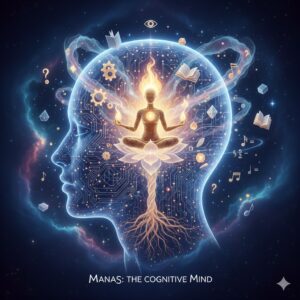
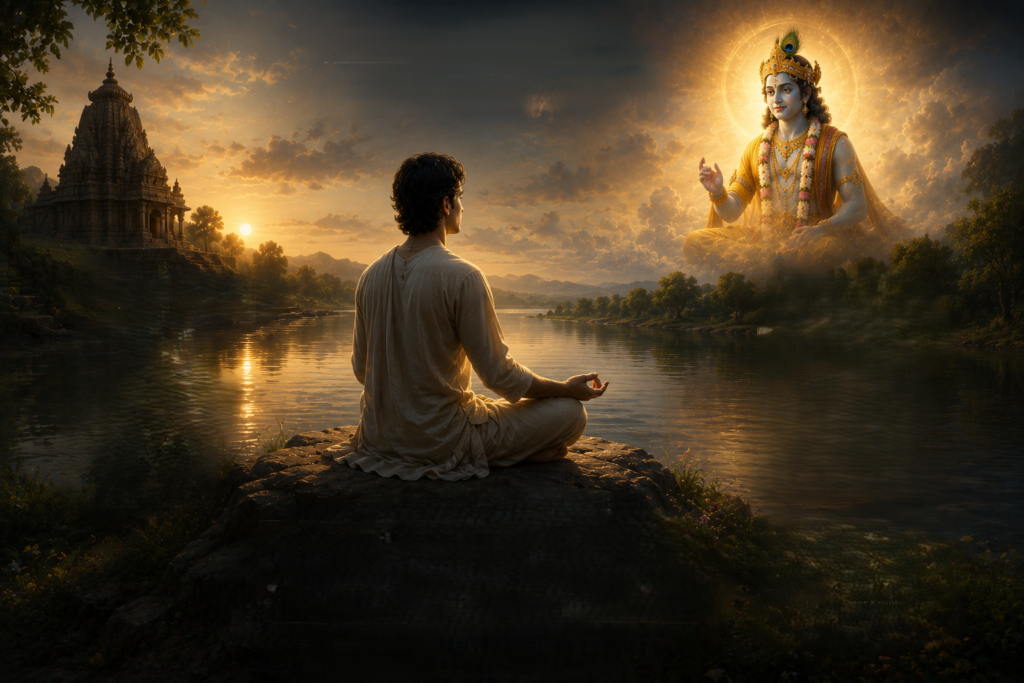
Shri Krishna said – Thus, I have declared to you the profound wisdom. Hereafter, reflect and decide what you wish to do. Also, you are beloved to me and steadfast of heart. So, fix your cognition on the Brahman or on Me. Them, be devoted to me, sacrifice to me, prostate to me, you will then merge with me. This is my pledge to you.
Renounce all conditioning (dharma) and surrender unto me. Then, I shall liberate you from all sins.
This information should not be shared with one who is not disciplined or one who does not perform service. But if you teach this to the deserving, you will surely reach the Brahman and such a person will understand the meaning of sacrifice of his identity. Also, one who learns with an open mind shall also attain liberation. So Arjuna, has your delusion been destroyed?
Arjuna said – my delusion has been destroyed. Also, I have regained my awareness through your maya. Consequently, I am firm and free from doubt and will do as you say.
Sanjaya said: I heard the wonderful dialogue between Arjuna and Śrī Kṛṣṇa, causing my hair to stand on end. Also, I have heard, through the grace of Vyasa, the secret of the supreme yoga espoused by the Lord of Yoga himself. Indeed, I rejoice again and again at the dialogue. Consequently, when I recall the wondrous form of Hari, I continue to remain astonished and rejoice again and again. Now, I am convinced that where there is Arjuna and Śrī Kṛṣṇa, there will be victory, prosperity, wealth and correct policy.
School of Yoga explains Srimad-bhagavad-gita, chapter 18 – moksha sannyasa-yoga (yoga of liberation by renunciation)
Some contradictions to accepted positions on liberation.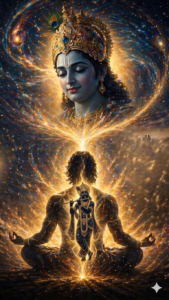
From verses 64 onwards, Shri Krishna advises Arjuna to surrender to him (Shri Krishna) for liberation.
Herein lies the problem, of existence and availability of free will, whether a person will be able to surrender out of personal volition and whether there will be any results. Will conditioning (dharma) or prarabdha-karma allow such a surrender? If prakriti forces action, it stands to reason that all situation, action and reaction is pre-ordained, so surrender may not be in the individual’s control.
Next comes the question as to whether a person should surrender to Shri Krishna – the person, or Shri Krishna – the primordial sacrifice (adi-yajna).
- If surrender is to Shri Krishna the person, then obviously one should be able to surrender to any favourite deity (ishta-devata) and results should be the same (bhakti-yoga).
- However, if the surrender is to Shri Krishna as primordial sacrifice, then the surrender becomes process driven, one of systematic destruction of personal sense of Identity (jnana-yoga, rāja-yoga, haṭha-yoga etc).
School of Yoga explains Srimad-bhagavad-gita, chapter 18 – moksha sannyasa-yoga (yoga of liberation by renunciation)
What are the lessons learned in Chapter 18 on liberation or moksha?
- Sannyasa is expectation management, it is renunciation of action motivated by desire. This means – perform action because you need to, not because you want to.
- Tyaga is renunciation of fruits of action. This means letting go the fruits once the results come in, whether good or bad. Being content with the result and using the outcome to move forward to the next goal post. It is the attachment to an expected outcome that brings pain.
- When we perform action as a sacrifice (yajna), charity (dana) or austerity/ self-denial (tapas), then selfishness reduces and selflessness increases, this ensures that we are not dependent on others for our self-worth (asmita). this increases our individuality (svatantra) as well as thought that action occurs because of our own effort (ahankara).
- This increases discrimination between value/ non-value (vivekam) and dispassion (vairagyam).
- Segregation of people according to their attributes (guna) is natural and occurs everywhere because each person has a natural state (sva-dharma) which is a result of prarabdha-karma. This endows people with different attributes (guna) and each adds different values to society and each other.
- However, it is essential that all people and creation are treated in the same manner, Brahman does not discriminate (samaḥ-sarveṣu-bhūteṣu) .
- The only requirement to reach Brahman is dedication (shraddha).
The transliteration and translation of Srimad-bhagavad-gita, chapter 18 moksha sannyasa-yoga (yoga of liberation by renunciation) follows.
The Sanskrit diacritic words are in red italics.
Śrī Kṛṣṇa said (41-44) The duties of brahmāṇas, kṣtriyas, vaiśyas and śūdras are distributed according to their personality traits (svabhava) and these traits are driven by guṇas (brāhmaṇakṣatriyaviśāṃ śūdrāṇāṃ ca parantapa । karmāṇi pravibhaktāni svabhāvaprabhavairguṇaiḥ ॥ 18-41॥). Personality traits of brahmāṇas are – serenity, subdued/ restrained, self-restraint/ denial, cleanliness, peacefulness, uprightness, awareness of the Self, sentience of the environment or kṣetra (vijñāna) and belief in the Vedas (śamo damastapaḥ śaucaṃ kṣāntirārjavameva ca । jñānaṃ vijñānamāstikyaṃ brahmakarma svabhāvajam ॥ 18-42॥). Next, personality traits of kṣtriyas – valour, virility, firmness, skill and cleverness, not flying in battle, generosity, and behaviour of a lord (śauryaṃ tejo dhṛtirdākṣyaṃ yuddhe cāpyapalāyanam । dānamīśvarabhāvaśca kṣātraṃ karma svabhāvajam ॥ 18-43॥). Personality traits of vaiśyas can be found in activities such as agriculture, taking care of cattle and trade. śūdras are born for service (kṛṣigaurakṣyavāṇijyaṃ vaiśyakarma svabhāvajam । paricaryātmakaṃ karma śūdrasyāpi svabhāvajam ॥ 18-44॥).
(45-46) Everyone has a zone of competence and when activity is performed in this zone (sva-karma-nirataha) with dedication, person finds utopia (samsiddhi) (sve sve karmaṇyabhirataḥ saṃsiddhiṃ labhate naraḥ । svakarmanirataḥ siddhiṃ yathā vindati tacchṛṇu ॥ 18-45॥). When acting within one’s competence (sva= self + karmana = action), if dedication of the act is to the Brahman, (sarva = all + idam = this + tatam = pervaded + pravrittih = evolution), mankind attains utopia (siddhim) (yataḥ pravṛttirbhūtānāṃ yena sarvamidaṃ tatam । svakarmaṇā tamabhyarcya siddhiṃ vindati mānavaḥ ॥ 18-46॥).
(47-48) It is better to act in conformance to one’s conditioning even though it may have fewer merits, rather than to perform good work which is the conditioning of others. Action performed in conformance to one’s own personality traits, no matter how badly performed, incurs no negativity (kilbhisham) (śreyānsvadharmo viguṇaḥ paradharmātsvanuṣṭhitāt । svabhāvaniyataṃ karma kurvannāpnoti kilbiṣam ॥ 18-47॥). Innate nature is action. Even though action comes with its own challenges/ defects one should not abandon it, because when whenever activity is started, each effort will have challenges, like smoke which covers the fire (sahajaṃ karma kaunteya sadoṣamapi na tyajet । sarvārambhā hi doṣeṇa dhūmenāgnirivāvṛtāḥ ॥ 18-48॥).
(49-51) A person whose logic is unattached at all times, has subdued the Self and is devoid of desire, who is completely without desire, that person attains supreme renunciate state (asaktabuddhiḥ sarvatra jitātmā vigataspṛhaḥ । naiṣkarmyasiddhiṃ paramāṃ sannyāsenādhigacchati ॥ 18-49॥). Learn from me in brief, that supreme knowledge of how to reach the highest state of perfection and attain Brahman (siddhiṃ prāpto yathā brahma tathāpnoti nibodha me । samāsenaiva kaunteya niṣṭhā jñānasya yā parā ॥ 18-50॥). Purify the intellect and join firmly to the Self through self-control. Then, relinquish sound related subjects and abandon duality such as like-dislike (buddhyā viśuddhayā yukto dhṛtyātmānaṃ niyamya ca । śabdādīnviṣayāṃstyaktvā rāgadveṣau vyudasya ca ॥ 18-51॥).
(52-53) Live in solitude, eat sparingly, keep speech, body and cognition yoked by meditation, while constantly taking refuge in dispassion (vairāgya) (viviktasevī laghvāśī yatavākkāyamānasaḥ । dhyānayogaparo nityaṃ vairāgyaṃ samupāśritaḥ ॥ 18-52॥). Abandon feeling of being the doer, all forms of power, arrogance, passion, anger, greed, then freed from non- possessiveness, peaceful Brahman transformation occurs (ahaṅkāraṃ balaṃ darpaṃ kāmaṃ krodhaṃ parigraham । vimucya nirmamaḥ śānto brahmabhūyāya kalpate ॥ 18-53॥).
(54-56) On realising Brahman, this serene soul neither grieves nor has expectations. Treating all alike my devotee attains supreme (brahmabhūtaḥ prasannātmā na śocati na kāṅkṣati । samaḥ sarveṣu bhūteṣu madbhaktiṃ labhate parām ॥ 18-54॥). Devoted to me, he perceives Truth in the Self. Then, recognising that “I” and “Truth” are the same, thereafter there is merger (bhaktyā māmabhijānāti yāvānyaścāsmi tattvataḥ ।tato māṃ tattvato jñātvā viśate tadanantaram ॥ 18-55॥). Performing all actions always while taking refuge in me, by my grace, he attains, the indestructible, eternal abode (sarvakarmāṇyapi sadā kurvāṇo madvyapāśrayaḥ । matprasādādavāpnoti śāśvataṃ padamavyayam ॥ 18-56॥).
(57-58) Consciously renounce all actions in devotion to me, always be with the approach of joining the intellect with the consciousness on me (cetasā sarvakarmāṇi mayi sannyasya matparaḥ । buddhiyogamupāśritya maccittaḥ satataṃ bhava ॥ 18-57॥). Devoted to me, you will overcome all obstacles, by my grace. However, if you listen to my words with the attitude of a doer, then you will lose everything (maccittaḥ sarvadurgāṇi matprasādāttariṣyasi । atha cettvamahaṅkārānna śroṣyasi vinaṅkṣyasi ॥ 18-58॥).
(59-60) In fact, even if you take refuge in your attitude of doer-ship and use your cognitive abilities in refusing to fight, prakṛti will compel you and your resolve will be in vain (yadahaṅkāramāśritya na yotsya iti manyase । mithyaiṣa vyavasāyaste prakṛtistvāṃ niyokṣyati ॥ 18-59॥). Despite your delusion, you are bound by karma which drives your own nature and you cannot do as you wish. Indeed, you are helpless (svabhāvajena kaunteya nibaddhaḥ svena karmaṇā । kartuṃ necchasi yanmohātkariṣyasyavaśo’pi tat ॥ 18-60॥).
(61-62) The Brahman is present in all beings. However, it is Brahman’s māyā (Brahmamaya) which causes all beings to imagine that they are mounted on a machine (īśvaraḥ sarvabhūtānāṃ hṛddeśe’rjuna tiṣṭhati । bhrāmayansarvabhūtāni yantrārūḍhāni māyayā ॥ 18-61॥). So, seek refuge in that, with all your faculties in the grace of Brahman you will gain supreme peace and obtain eternal abode (tameva śaraṇaṃ gaccha sarvabhāvena bhārata । tatprasādātparāṃ śāntiṃ sthānaṃ prāpsyasi śāśvatam ॥ 18-62॥).
(63-64) Thus, an exclusive wisdom that is a secret has been declared by me to you. Reflect over it completely and take the course of action that you wish (iti te jñānamākhyātaṃ guhyādguhyataraṃ mayā । vimṛśyaitadaśeṣeṇa yathecchasi tathā kuru ॥ 18-63॥). The biggest secret of all, hear my supreme word. Deeply beloved you are to me; therefore, I will tell you that which is favourable to you (sarvaguhyatamaṃ bhūyaḥ śaṛṇu me paramaṃ vacaḥ । iṣṭo’si me dṛḍhamiti tato vakṣyāmi te hitam ॥ 18-64॥).
(65-66) With your cognition fixed on me, devoted to me, sacrifice to me, prostrate to me, verily you will come to me, this truth I confirm to you because you are beloved of me (manmanā bhava madbhakto madyājī māṃ namaskuru । māmevaiṣyasi satyaṃ te pratijāne priyo’si me ॥ 18-65॥). Abandoning all conditioning (sarva-dharma-parityajya) to me alone, take surrender, I will liberate you from all wretchedness, do not grieve (sarvadharmānparityajya māmekaṃ śaraṇaṃ vraja । ahaṃ tvā sarvapāpebhyo mokṣayiṣyāmi mā śucaḥ ॥ 18-66॥).
(67-68) You should not share this with anyone who does not practice austerities, never to one who is not devoted, one who does not pay attention or is can be blamed in his actions or one who is jealous (idaṃ te nātapaskāya nābhaktāya kadācana । na cāśuśrūṣave vācyaṃ na ca māṃ yo’bhyasūyati ॥ 18-67॥). This supreme secret shall be declared to those who are supremely devoted to me, who undoubtedly shall come to me (ya idaṃ paramaṃ guhyaṃ madbhakteṣvabhidhāsyati । bhaktiṃ mayi parāṃ kṛtvā māmevaiṣyatyasaṃśayaḥ ॥ 18-68॥).
(69-70) And there is none dearer to me among men who works with happiness, there shall be none dearer on Earth (na ca tasmānmanuṣyeṣu kaścinme priyakṛttamaḥ । bhavitā na ca me tasmādanyaḥ priyataro bhuvi ॥ 18-69॥). And who shall study this consensual conversation (sam-vaadam) of ours on natural states through sacrifice of intellect (jñānayajñena), him I shall like and this is my intuition (adhyeṣyate ca ya imaṃ dharmyaṃ saṃvādamāvayoḥ । jñānayajñena tenāhamiṣṭaḥ syāmiti me matiḥ ॥ 18-70॥).
(71-72) Even that person who hears with integrity (śraddhā), without envy (anasooyah) will also be liberated and be in a happy world, begetting the benefits of stain-free action (puṇyakarmaṇām) (śraddhāvānanasūyaśca śaṛṇuyādapi yo naraḥ । so’pi muktaḥ śubhā~llokānprāpnuyātpuṇyakarmaṇām ॥ 18-71॥). Have you heard this with a single pointed focussed consciousness, Arjuna? Have the delusions arising from ignorance been destroyed? (kaccidetacchrutaṃ pārtha tvayaikāgreṇa cetasā । kaccidajñānasammohaḥ pranaṣṭaste dhanañjaya ॥ 18-72॥)
Arjuna said (73) My delusions have been destroyed, mindfulness has been gained through your grace, I am freed from doubts and firm. I will do as you say (naṣṭo mohaḥ smṛtirlabdhā tvatprasādānmayācyuta । sthito’smi gatasandehaḥ kariṣye vacanaṃ tava ॥ 18-73॥).
Sanjaya said (74-78) Thus I heard this high-level dialogue between Vaasudeiva and Parth, this visionary, wonderful experience that causes my hair to stand on end (ityahaṃ vāsudevasya pārthasya ca mahātmanaḥ । saṃvādamimamaśrauṣamadbhutaṃ romaharṣaṇam ॥ 18-74॥). Through the grace of Vyaasa, I have heard this supreme secret on Yoga from the Lord of Yoga, Krishna directly, declaring himself (vyāsaprasādācchrutavānetadguhyamahaṃ param । yogaṃ yogeśvarātkṛṣṇātsākṣātkathayataḥ svayam ॥ 18-75॥). King, have remembered again and again, this wonderful and virtuous dialogue between Krishna and Arjuna, I rejoice again and again (rājansaṃsmṛtya saṃsmṛtya saṃvādamimamadbhutam । keśavārjunayoḥ puṇyaṃ hṛṣyāmi ca muhurmuhuḥ ॥ 18-76॥). And then having remembered again and again the most wonderful form of Hari I wonder, my great king, again and again (tacca saṃsmṛtya saṃsmṛtya rūpamatyadbhutaṃ hareḥ । vismayo me mahān rājanhṛṣyāmi ca punaḥ punaḥ ॥ 18-77॥). Wherever there is the Lord of Yoga Krishna, wherever there is Partha the archer, there will always be prosperity, victory, happiness, stable conduct is my conviction (yatra yogeśvaraḥ kṛṣṇo yatra pārtho dhanurdharaḥ । tatra śrīrvijayo bhūtirdhruvā nītirmatirmama ॥ 18-78॥)
With this, ends Śimad-bhagavad-gītā …
Om-tat-sat (hope that this adds value)
The complete text is available in my book, A Seeker’s Śrīmad-Bhagavadgītā.
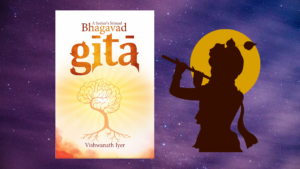
Buy your copy today – Notion Press home / Flipkart / Amazon / Amazon India / Amazon UK / Amazon US / Amazon Australia
Acknowledgement –
School of Yoga is profoundly grateful to Saṃskṛta scholars and academics Pijus Kanti Pal (pal.pijuskanti@gmail.com) and Dolon Chanpa Mondal for their support in Saṃskṛta transliteration and quality control.