
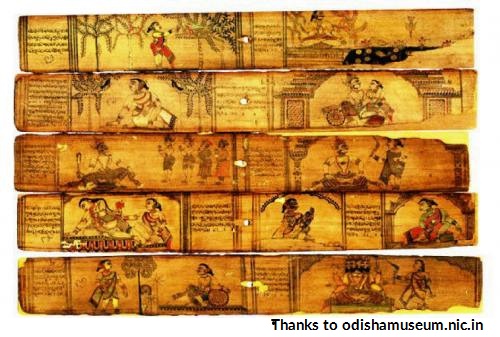
Why are Vedas important for Indian culture?
The Vedas are over 6000 years old and were conceived by rsis in a state of merger with the Supreme Identity. Hence they are called “not of man or apourusika”.
Yoga is the yoking of the Self to the Source,
Dharma is the natural state that resonates with every entity and situation.
Dharma provides the framework, Yoga keeps the entity yoked to the source in the world of existentiality or māyā.
Later, for a Yogī to merge with Brahman, he needs to transcend Dharma.
Dharma is the natural state of any entity and exists in multiple states,
In the primordial state, it is the natural state of each entity / element or Sanātana-dharma.
In mankind, it is the natural state of each person.
In Bhārat, it is āsthika-dharma, the dharma of the Vedas, Hindu-dharma or Hinduism. Sikhism is also āsthika-dharma, while Jaina and Buddha Dharma are nāstika-dharma, or dharma which don’t uphold the primacy of the Vedas as the source of knowledge.
The Vedas are over 6000 years old and were conceived by rsis in a state of merger with the Supreme Identity. Hence they are called “not of man or apourusika”.

Vedānga (limbs of the Vedas) are six sub-disciplines connected with the study of the Vedas. These subjects provide the gramatical underpinning to the Vedas.
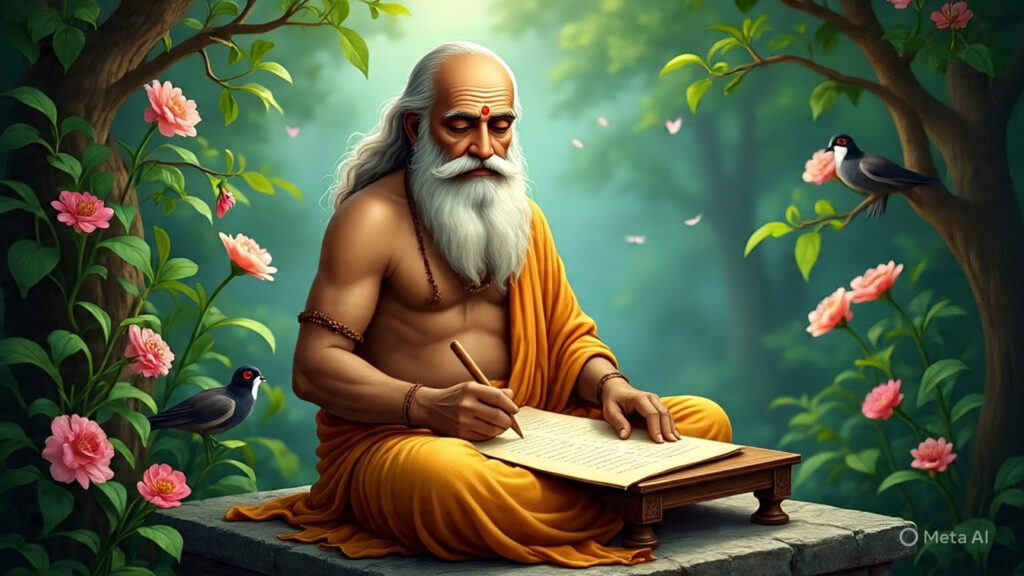
Vedanta, also known as Shruti (that which is recited), forms part of the Vedas. It forms the philosophical base of much of Sanātana dharma philosophy.
Shad-darśana comprises nyāya (logic), vaiśeṣika ( nature of elements), sānkhya (union of prakriti and purusha), yoga, mīmāṃsā (rituals) and vedānta
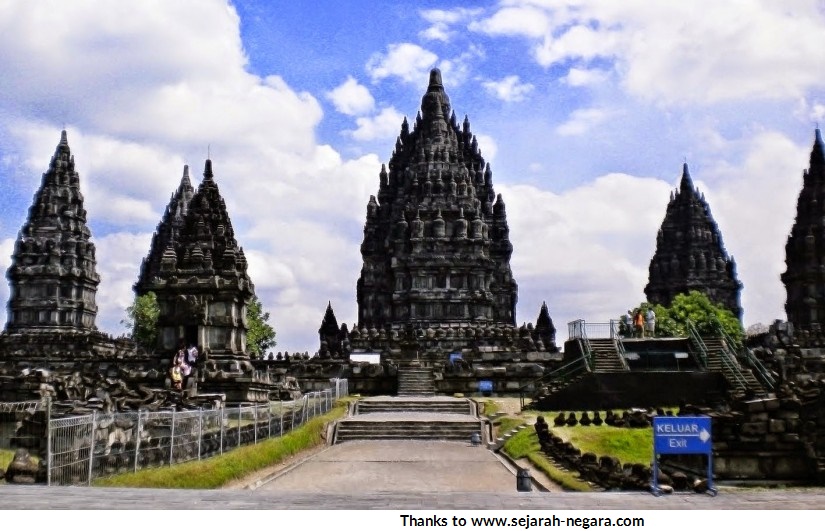
Āgamas are instructions for rituals, yoga and temple construction. Purāṇa deal with history, genealogy, and tradition, written in the form of stories.
Sanatana dharma or universal harmony is the civilisational base from which all of Bharat’s (India’s) culture and thoughts and philosophy’s emerge. What is it?
This foundational blog covers the aspects that one needs to know in order to understand the background to Śrīmad Bhagavad Gītā.

Arjuna asked Śrī Kṛṣṇa to drive between the opposing armies, but when he saw his relatives in the opposing forces he lost courage and questioned himself.
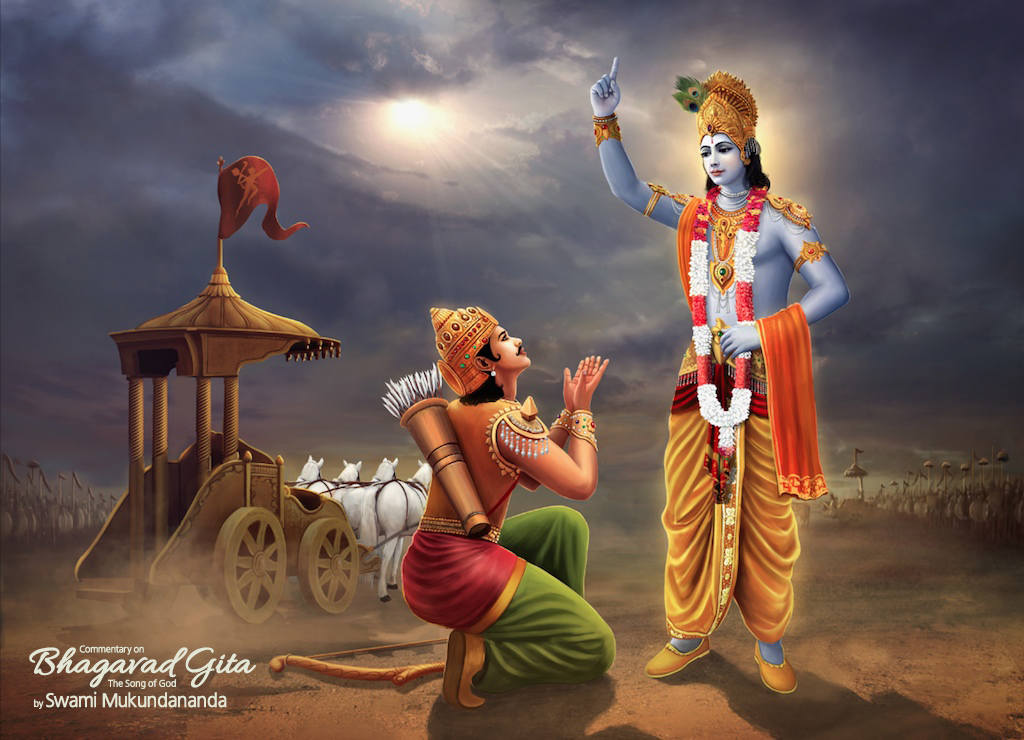
In ch2a, Śrī Kṛṣṇa explains the philosophy of life, meaning of action, why performance of duty is the only solution to any problem and situational awareness.
When we receive stimulus, we either react or not-react, resulting in change. Importantly, change occurs as an outcome of stimulus and response.