What is bhramari pranayama ?
Bhramari pranayama (bhramar = bee) is a form of diaphragmatic breathing exercise where the fingers are pressed against the sinuses, to open the septum and other energy channels or nadi.
Significantly, in brahmari pranayama, during inhalation and exhaling, the epiglottis is constricted to make a buzzing sound which sounds like simulated snoring, and sounds like a bee. This yogic breathing technique is also called bee breath.
What is the technique to practice bhramari pranayama ?
One can learn and practice the bhramari pranayama technique easily with this step-by-step guide :
- Firstly, sit in a comfortable position, in padmasana, sukhasana, or vajrasana , and keep your back erect.
- Next, keep your mouth closed. Press your tongue to the roof of the mouth, to close the circuit of prana flow.
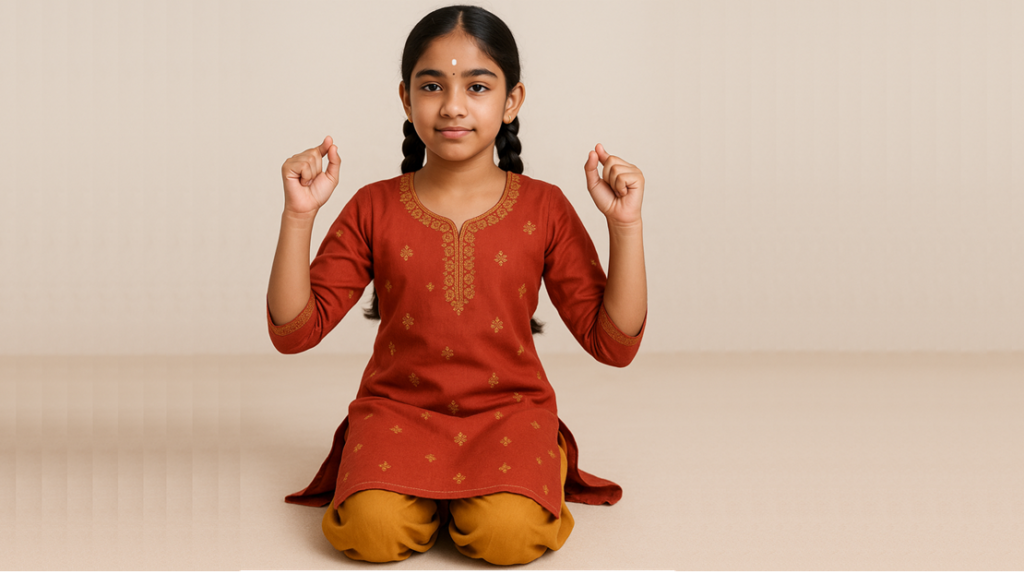
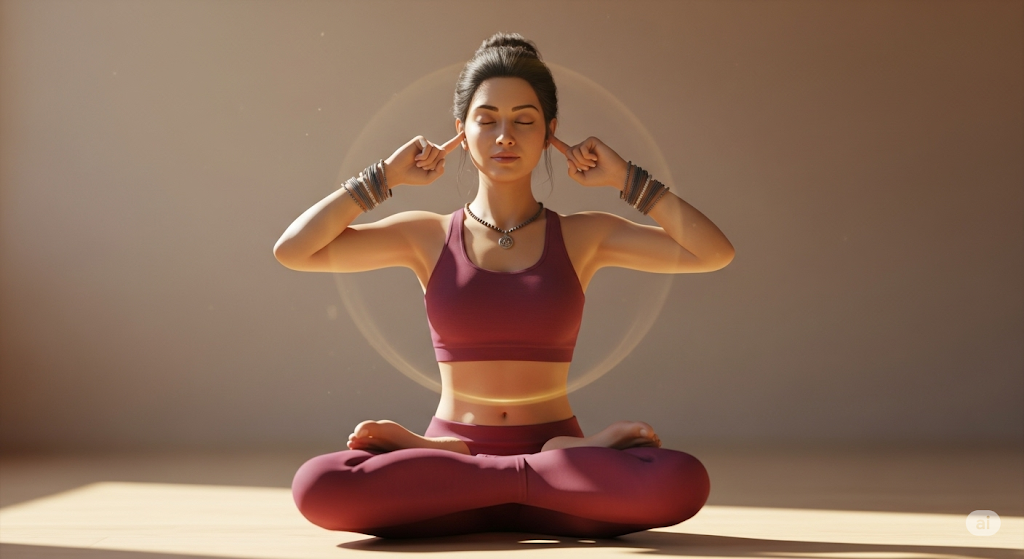
- Lastly, place your hands in the yogic hand gesture called shanmukhi-mudra, following the steps mentioned below: (Please refer to the given image)
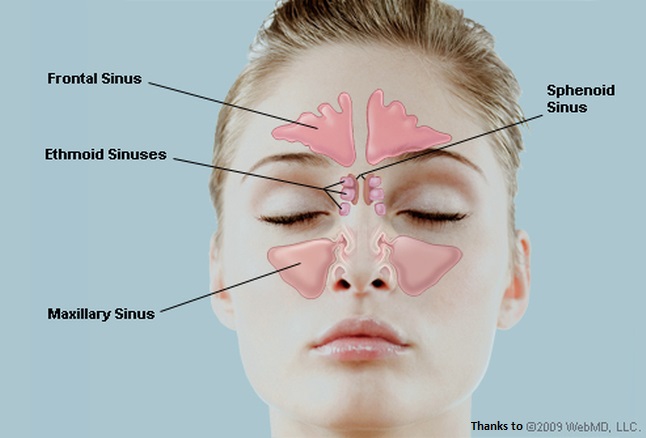
- Forefinger – Place the forefinger just above the eyebrows, thus covering the frontal sinus.
- Middle finger – Place the middle finger at the corner of the eye, covering the ethmoid sinus. This increases the efficiency of filtration of air going into the nasal cavity.
- Ring finger – Place the ring finger on the side of the nose, next to the bridge, also called nasopharynx – this opens the nasal septum and passageways and also improves connectivity to the middle ear.
- Little finger – is placed next to the nostril Maxillary Sinus, which is the largest in the face and keeps the nasal, throat, and mouth/ teeth areas free from infection.
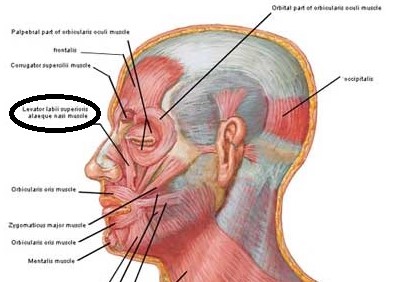
- The 4 fingers press a muscle that runs along the length of the nose, called the levator labii muscle (translated from Latin, the “lifter of both the upper lip and of the wing of the nose”) which is important for the expression of emotions.
- Press the thumb on the cartilage covering the ear lightly.
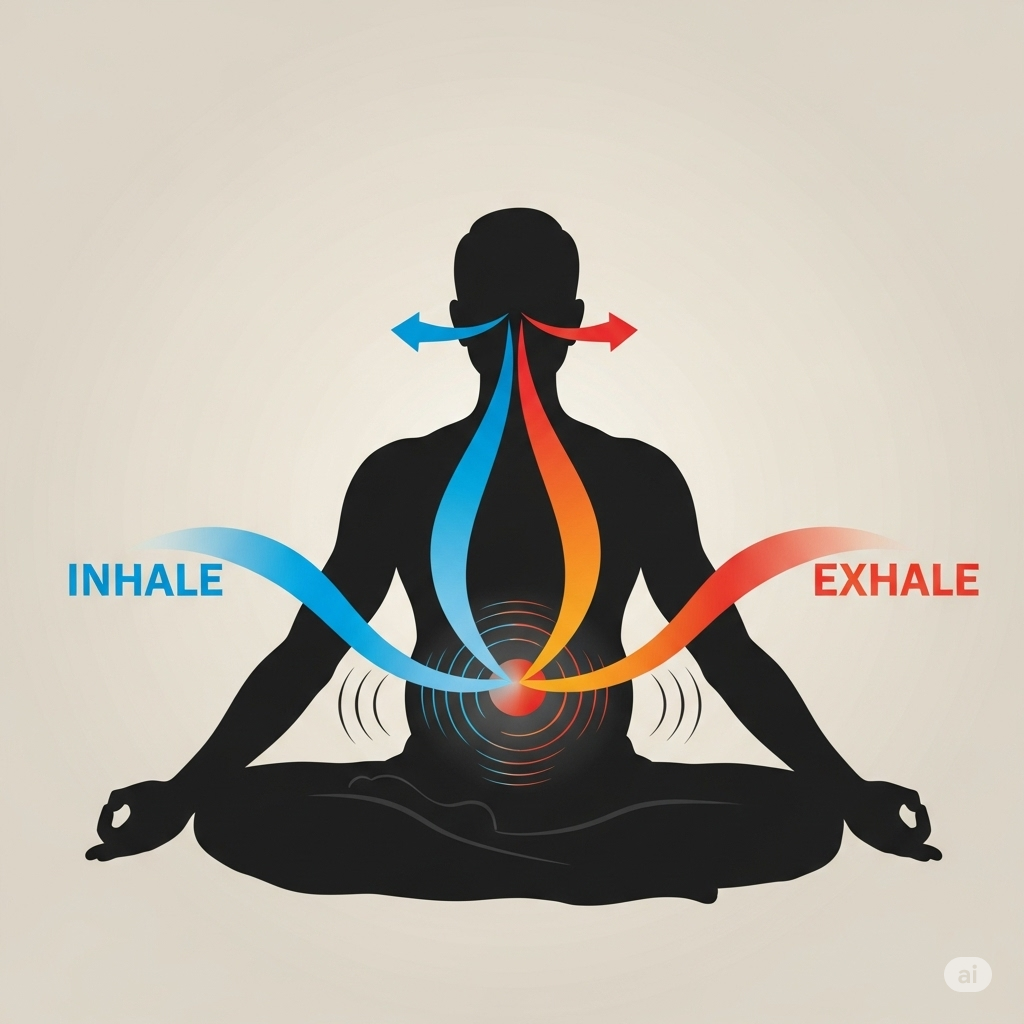
- Now, inhale (do puraka). Remember to vibrate the epiglottis to make a buzzing sound when inhaling. This is also known as bhramar-dhwani or the buzzing sound made by a bee.
- Importantly, try to maintain a steady and constant sound.
- Lastly, exhale (do rechaka). When exhaling, make the same vibration sound as mentioned above. This is also known as bhramar-dhwani.
- Lastly, return to normal breathing. Relax. Repeat once or twice.
There are two variations to the bhramari technique:
Variation 1 –
Perform bhramari pranayama without holding the fingers along the nose. Perform bhramar-dhwani (humming sound) on inhalation only.
Variation 2 –
Include kumbhaka (holding) in the bhramari process.
What are the health benefits of bhramari pranayama ?
- Aids in the generation of mucous and lubrication of the air passages.
- Importantly, reduces sinusitis, migraines, and other illnesses associated with the sinus.
- Additionally, strengthens the glottis, epiglottis, and larynx and improves the functioning of the thyroid/ parathyroid glands.
- Useful in controlling snoring and sleep apnea which are related to the glottis muscles losing strength.
- Finally, brahmari pranayama strengthens the throat as well as the carotid artery (blood vessels that supply blood to the brain, face and neck).
- Lastly, the practice of bhramari improves concentration.
Hatha Yoga Pradeepika on bhramari (Chapter 2, verse 68)
Bhramari– Inhale forcefully, making a sound like the hum of a bee, exhale slowly making the same sound. This practice brings indescribable ecstasy to yogis.
Points to ponder on bhramari pranayama :
Internal Links: Dharma (conditioning), Stress and Situational Awareness, Prana, Asana overview 1, Asana Overview 2, Asana Focus or gazing, Hatha Yoga Pradeepika
External Links: Prana, Chakra, Pancha Tattva, Pancha Prana, Pancha Kosha, Nadi, respiration