
What is dhanurasana (bow pose)?
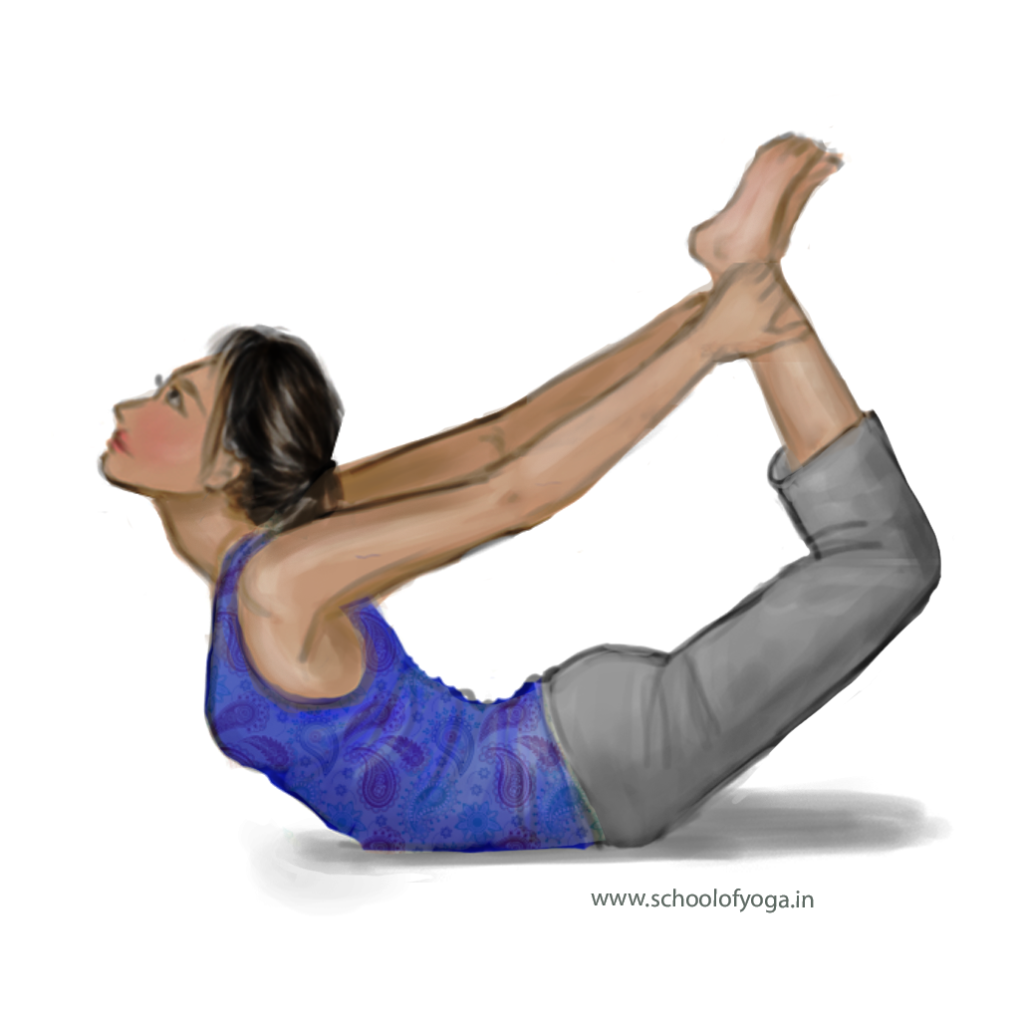
Dhanurasana (dhanurāsana) or bow pose is a pose where the yogī balances his body on his abdomen, thereby massaging the abdominal viscera and energising the maṇipūra-cakra.
How does one perform dhanurasana ?
- Sthithi (starting) position: Lie down on the stomach.
- Spread the legs as widely as you can. Breathing in, fold the legs back at the knees. Reach out and grab the ankles with both hands.
- Breathing out, raise the legs by pulling the legs upwards. Balance the entire body on the stomach.
- Once you have sufficient experience, you may rock the body forward and back on the abdomen.
- Repeat the exercise by rocking sideways and in a circular motion.
- Breathe in when coming to rest on the ground.
- Release the legs. Get back to sthithi (starting) position.
- Breathe normally. Repeat 3 to 6 times.
- The dṛṣṭi (gaze) recommended is ūrdhva-dṛṣṭi (open sky gaze).
What are the benefits of performing the bow pose?
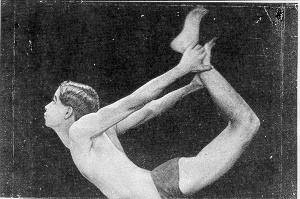
- The action of rocking the body on the stomach increases intra-abdominal pressure and ensures excellent peristaltic action. This exercise is also excellent for stimulating and toning the complete digestive system, especially the stomach, liver, pancreas, intestines, etc. This exercise is very effective in improving pancreatic function. Here is the image of Yogacharya Sundaram performing dhanurasana – Bow pose.
- The action is also very good for reducing fat in the adipose tissues, due to the nature of the abdominal massage induced by the asana. Consequently, this āsana reduces obesity.
- In obese people, fat and adipose tissue results in reduced blood supply to the region. However, performing dhanurasana re-establishes blood supply and improves functioning of the entire abdominal region.
- Good for most digestion related ailments, especially diabetes, or as a tool for managing recovery from hepatitis, as the rocking movement massages the pancreas, liver and other organs related to digestion.
- Rejuvenates the reproductive system and relieves menstrual discomfort. Though asanas in general are not advisable during menstruation, the regular practice of dhanurasana could help alleviate menstrual cramps.
- The action of reverse flexing the back results in toning of the entire spinal cord, sympathetic and parasympathetic nervous system.
- The pulling of the legs back simultaneously in a stretched condition induces tension in the vertebrae, increasing the strength of the back and toning up the spinal column.
What contraindications should one be aware of in the bow pose?
Initially, you may experience difficulty in lifting yourself up. This is because the back muscles are unused to this kind of exercise. Go slow, over time, you will be able to lift yourself.
- If you have any form of backache, push yourself only to the point where there is no discomfort. When pain or discomfort starts, stop immediately. With practice, the back will begin to flex better.
- Practitioners suffering from vertigo must also be careful not to strain beyond the limits of their bodies.
- Since this exercise exerts pressure on the heart, people with cardiac concerns should perform this asana under supervision.
- Pregnant women should not practice this āsana.
How does Hatha Yoga Pradeepika describe dhanurāsana ?
Hatha Yoga Praeepika on dhanurāsana: Chapter 1, verse(25) dhanurāsana – that which is called dhanurāsana is performed by catching the toes of the feet and bringing it to the ear.
Some noteworthy points on dhanurasana :
Internal Links: Dharma (conditioning), Stress and Situational Awareness, Prana, Asana sequence, Asana scheduling, Asana Focus or gazing, Pranayama, Hatha Yoga Pradeepika
External Links: Prana, Chakra, Pancha Tattva, Pancha Prana, Pancha Kosha, Nadi,
- This āsana is considered one of the 32 most important āsanas by all ancient texts.
- Obese people should perform this asana with help and not try too hard to get to the complete pose, as it could lead to internal damage, including that of blood vessels. First, do one leg, then do with the other, before attempting both together. Initially, one may keep the legs together when lifting them. Gradually, with experience, spread the legs to get maximum benefit.
- The final pose of this āsana must always be done with exhalation, and any breathing thereafter should be shallow. The reason is that, if this asana is done with lungs filled with air, the diaphragm will push the abdomen down tightening it. This will reduce the massaging effect of the rocking motion on the abdominal organs, especially the intestines. Also, a tight abdomen can lead to cramps during rocking.