 What are the Vedanga – the limbs of the Vedas.
Vedanga (वेदाङ्ग – limbs of the Vedas) are six disciplines connected with the study and practice of the Vedas. Importantly, the intent of Vedanga was to ensure retention of purity of the original texts from degradation arising from time, local syntax, pronunciation changes, introduction of grammatical changes etc., all of which impact languages over time. Consequently, Vedanga allow the Vedas to retain their original design purity.
This makes vedanga a critical element in the studies of the vedas, and of the overall system of athika-dharma which dictates that the vedas are the undisputed source of knowledge of the Truth.
What are the elements of the Vedanga?
1- Shiksha or study in phonetics and pronunciation.
Firstly, the focus here is to ensure that the recitation of the Vedic texts follows a specific accent, stress, melody and incantation. Additionally, it had six elements – varna (quality), svara (accent), matra (cadence), bala (strength of delivery or articulation), saman (recital) and samtana (continuity of delivery).
This allows the chanting of the various verses to be taught in the same manner across multiple locations, so much so that when practitioners meet and chant the Vedas, there will be no difference in the chanting.
2- Chandas or study of meter in the poetry of the Vedas,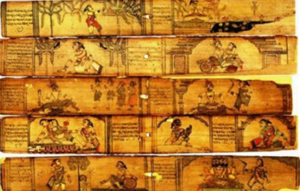
Importantly, this area includes how many syllables, words, spacing etc can exist and be placed in the structuring of the shloka or verse. Additionally, the placement of words is defined and precise. Therefore, when this is used in conjunction with vyakarana and shiksha, the meaning and formation could remain unchanged for centuries.
Chandas is important for both, how Sanskrit verses are designed and intonated. It is a critical part of the structure of any Sanskrit verse and determines how the verses are vocalised.
3- Vyakarana or grammar.
Next, this is the study of grammar which allows correct formation of words and sentences to represent ideas. Furthermore, though there were many, the most famous of Sanskrit grammarians are Panni and Taska (around 500 BCE).Importantly, the term literally means “separation, analysis or explanation”.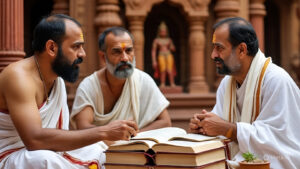
Importantly, the most celebrated vyakarana work is Panini’s 4,000-sutra ashtadhyayi, which set the linguistic standards for classical Sanskrit. However, it should be understood that development of vyakarana principles have been enunciated in the Rig Veda (2000 BCE) and there have been many since, such as Patanjali who have worked on vyakarana.
It is important to understand that Sanskrit is the only language that has 6+1 cases. Also, the word construction is based on cognitive understanding of it’s root or dhatu and how they are strung together.
This makes it an incredibly precise language. Hence, the study of Sanskrit grammar is an important vendanga.
4- Nirukta is study of etymology or glossary of words.
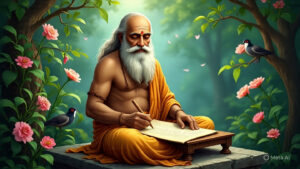
To begin, nirukta emerged as a limb of the Vedas due to a requirement whereby the meaning and source of almost 20% of the words used in the Vedas started getting lost due to loose usage. Importantly, nirukta ensures that the meaning and correct usage are explained. Consequently, this removes ambiguity in the meaning of various words and establishes the context in which they may be used. Additionally, major contribution in this limb is credited to Yaska (around 500 BCE).
Sanskrit words are based on cognitive understanding of a state of existence. For example, dharma is based on the root word “dhr” which means steady, steadfast or stable. So, dharma means anything that makes an individual, group, people or culture steady or stable.
So, understanding etymology is a critical part of vedanga.
5- Kalpa or ritual processes.

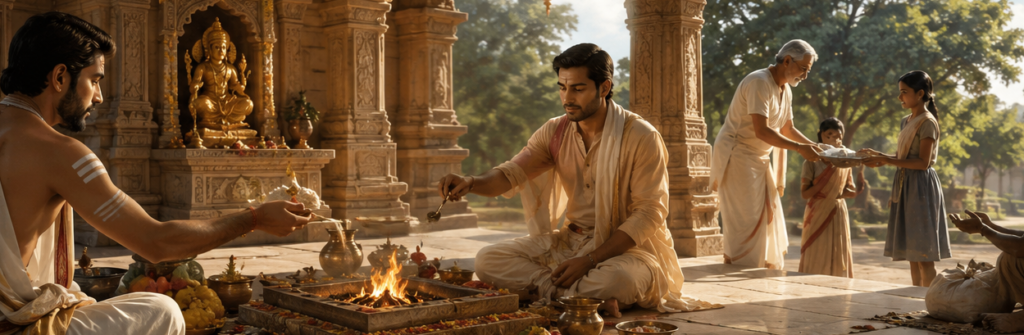
Kalpa means proper or fit. Importantly, this is the instruction manual of how various rituals need to be performed. Also, there are four primary kalpa-śāstra
- First, shrauta-sutra which primarily deal with public rituals or yajna (sacrifice)
- Second, grhya-sutra which deals with rituals connected with the home, often major life events as detailed in the samskara such as birth, thread ceremony, marriage and funeral rites.
- Third, dharma-sutra which deals with the duties of various individuals, castes and communities. This deals with conditioning of behavior within a society.
- Lastly, shulba-sutra – which deal with the mathematical and geometric rules for creating fire alters or pits.
6- Jyotisha
Importantly, this limb refers to astrology/ astronomy or study of movement of planets and their impact on various elements of life, used mainly for conducting rites and rituals. Over time, the science of jyotisha was used for many other activities such as astrology.
For example, we know the moon impacts the tides, that’s water. Our body is 70% water, so it stands to reason that the position of the moon will impact the movement of electrolytes in the body. Furthermore, it also stands to reason that other planets will also have an impact on us. As a result, the position of the planets in our birth chart will impact us in a multitude of ways. This makes the study of jyothisha or astrology a significant one.
What was the logic behind the vedanga?
It is important to understand the relevance and importance of the vedanga. Before, writing was discovered, all knowledge was passed down by rote learning or smriti and verbal transmission or shruti. Importantly, the dangers of errors creeping into the transmission and mistakes, misunderstandings and misrepresentations become very high. This necessitates the development of a transmission system and structure that that outlive the ravages of mistakes.
What you should know after reading this blog;
- What are the vedanga? Why are they important?
- Detail the connection between veda and vedanga?
- What are the elements of the vedanga?
- Explain shiksha, its importance to the vedas and its elements.
- What is the relevance of chandas and its importance to the vedas.
- Explain vyakarana and its importance to the vedas.
- How does nirukta impact the study of the vedas.
- Explain kalpa, its importance to the vedas and its elements.
- What is the relevance of jyotisha and its importance to the vedas.
You can also read about Yoga in my book, The Yoga Manual, available at all major e-marts.
- Notion Press – https://direct.notionpress.com/in/read/the-yoga-manual
- Amazon – https://www.amazon.in/dp/B0FNWN35BK?&tag=notionpcom-21
- Flipkart – https://www.flipkart.com/the-yoga-manual/p/itmc241083c7e7bd?pid=9798896734147&affid=editornoti
- Amazon world-wide – https://www.amazon.com/dp/B0FNWN35B
- Amazon UK – https://www.amazon.co.uk/dp/B0FNWN35BK