Why are the Upanishad also called Vedanta or end of the Vedas?
Upanishad means “sitting at the feet of”. Also, Upanishads are considered to be texts which philosophically follow the Vedas, hence are also called Vedanta (end of the Vedas).
Additionally, while the Vedas cover many topics, Vedanta are almost exclusively devoted to the philosophical underpinning of Sanātana-dharma.
What are the features of the Upanishad?
- Firstly, Upanishads are part of a collection of material called vedanta (Veda + anta = end), meaning end of the Vedas.
- Next, all Upanishads deal more or less with the same subject. In fact, they explain the nature of the Brahman, the atman (soul), moksha (salvation) and the method of reaching it.
- Importantly, they are all generally believed to have been composed between 1000 BC and 1000 AD. Since, written was not discovered at the time, the Upanishads rely heavily on shruti (speech/ verse) and smriti (rote learning).
- Also, the most important or mukhya-upanishads can be traced to the same period (1000 BC to 500 BC). Consequently, it is possible to assume that most of the authors were contemporaries and found different methods to reach the same goal.
- Furthermore, Buddhism was founded around the same period (Gautama Buddha – between 580 BC and 400 BC) as was Jainism as founded by Mahavira (between 480 BC and 408 BC). Hence, there is likely overlap of concepts and practices between the three major philosophical schools.
Which are the most important or mukhya-upanishads?
Importantly though more than 108 Upanishads are known to exist, 13 are considered important of principal upanishad (mukhya-upanishad). These are:
- Īśā upaniṣad is part of Vajasaneyi Madhyandina of shukla (white) Yajurveda. It is one of the shortest Upanishads, embedded as the final chapter (adhyaya) of the Shukla Yajurveda. It is a Mukhya (primary, principal) Upanishad, and is known in two recensions, called Kanva (VSK) and Madhyandina (VSM). This Upanishad is a brief poem, consisting of 17 or 18 verses, depending on the recension.
- Kena upaniṣad is a Vedic Sanskrit text that is classified as one of the primary or Mukhya Upanishad that is embedded inside the last section of the Talavakara Brahmanam of the Samaveda, and comprises 28 main + 6 epilogue = 34 verses. It is listed as number 2 in the Muktikā, the canon of the 108 Upanishads of Hinduism. It is considered to have been composed around the middle of the 1st millennium BCE
- Kaṭha upaniṣad, is one of the mukhya (primary) Upanishads, embedded in the last eight short sections of the Katha school of the Krishna Yajurveda part of krishna (black) Yajurveda. The Katha Upanishad is divided consists of two chapters (Adhyayas), each divided into three sections (Vallis). It is an ancient Hindu text and is listed as number 3 in the Muktika canon of 108 Upanishads.
- Praṣna upaniṣad, part of Atharvaveda. It answers 6 questions and is set in three chapters and six sections. It is a Mukhya (primary) Upanishad, an ancient Sanskrit text, ascribed to the Pippalada shakha of Vedic scholars. Each chapter end with the phrase prasnaprativakanam, which literally means “thus ends the answer to the question”. It is listed as number 4 in the Muktika canon of 108 Upanishads of Hinduism.
- Muṇḍaka upaniṣad is an ancient Sanskrit Vedic text, embedded inside AtharvaVeda. It is a poetic verse style Upanishad, with 64 verses, divided into 3 parts (mundakams), each having two sections written in the form of mantras. It is a Mukhya (primary) Upanishad and is presented as a dialogue between sage Saunaka and sage Angiras. It is listed as number 5 in the Muktika canon of 108 Upanishads of Hinduism.
- Māṇḍūkya upaniṣad is part of Atharvaveda and contains 12 short verses and is associated with a Rig Vedic school of scholars. It discusses the nature of “Om” and 4 states of consciousness. The Mandukya Upanishad is the shortest of all the Upanishads, and is assigned to Atharvaveda. It is listed as number 6 in the Muktikā canon of 108 Upanishad. It asserts that Aum is Brahman – which is the Whole – and that Brahman is this self (ātman).
- Taittirīya upaniṣad, is a Vedic era Sanskrit text that is part of krishna (black) Yajurveda. It is structured into 3 chapters (adhyaya), shiksha-valli having 12 lessons, ananda-valli having 9 lessons and brighu-valli having 10 lessons, totalling to 31 lessons. It is a mukhya (primary, principal) Upanishad, and likely composed about 6th century BC and associated with the Taittirīya school of the Yajurveda, attributed to the pupils of sage Vaishampayana
- Aitareya upaniṣad, is a Mukhya Upanishad associated with the Rigveda comprising the fourth, fifth and sixth chapters of the second book of aitareya-aranyaka which is one of the four layers of Rig Veda. Aitareya Upanishad discusses three philosophical themes: first, that the world and man is the creation of the Atman (Universal Self); second, the theory that the Atman undergoes threefold birth; third, that Consciousness is the essence of Atman
- Chāndogya upaniṣad belongs to the Tandya school of the Samaveda and contains eight prapāṭhaka or lectures with many volumes and verses. Additionally, it is one of the oldest upaniṣads, generally dated to have been composed between the 8th and 6th centuries BCE in India. It is listed as number 9 in the Muktikā canon of 108 Upanishad. The broad unifying theme of the Upanishad is the importance of speech, language, songs, and chants in the pursuit of knowledge and salvation, to metaphysical premises and questions, as well as to rituals.
- Bṛhadāraṇyaka upaniṣad is a part of Shukla (white) Yajurveda. It contains 6 chapters. is one of the Principal Upanishads, associated with the Shukla Yajurveda, and is one of the first Upanishadic scriptures of Hinduism. This key scripture is tenth in the Muktikā or “canon of 108 Upanishads”and is preserved in two recensions, Mādhyandina and Kāṇva. It is considered have been composed about 7th–6th century BCE.
- Śvetāśvatara-upaniṣad is a part of kṛṣṇa (dark) Yajurved. It is arranged in 6 chapters containing 113 verses and is number 14 in the Muktika canon of 108 Upanishads. This Upanishad is also one of the 33 Upanishads from Taittiriyas, and associated with the Shvetashvatara tradition within Karakas sakha of the Yajurveda.
- Kauṣītaki upaniṣad is a common upaniṣad, originally part of Rigveda. It is associated with the Kaushitaki shakha, but is considered a Sāmānya Upanishad, meaning that it is “common” to all schools of Vedanta. It is considered one of the 13 Principal Upanishads and lists as number 25 in the Muktikā canon of 108 Upanishads. It is part of the Kausitaki Aranyaka which comprises 15 chapters arranged in 4 chapters containing 5,15, 9 and 20 verses respectively. and four of these chapters form the Kaushitaki Upanishad.
- Maitrī upaniṣad is an ancient Sanskrit text that is embedded as a part of kṛṣṇa-Yajurveda and is listed as number 24 in the Muktika canon of 108 Upanishads. The Maitrayaniya Upanishad consists of seven Prapathakas (lessons). The first Prapathaka is introductory, the next three are structured in a question-answer style and discuss metaphysical questions relating to Atman (Self), while the fifth to seventh Prapathaka are supplements.
What are the main teachings of vedanta?
- First, final emancipation can be attained only by knowledge of the Ultimate reality, or Brahman (Brahmajnana).
- Second, those equipped with the four means of salvation, viz. vivekam (discrimination), vairagyam (dispassion), shad-sampatham (the six-fold virtues comprising: Shama or being calm, Dama or control of the senses, Uparati or not acting against dharma, Titiksha or persevering despite setbacks, Shraddha or dedication, sincerity and effort, Samadhana or concentration and focus and mumukshutva (yearning for liberation), can attain Brahman.
What you should know after reading this blog on vedanta.
- What is Vedanta?
- How are they related to the Vedas?
- What is the central theme of the Upanishads?
- How many Upanishads exist? Also, which are important?
- Lastly, how are the various Upanishads attached to Vedas?
- Finally, what is the central theme of the Upanishads?
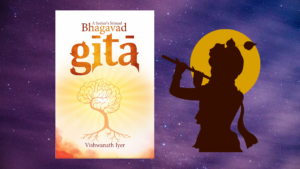
The complete text is available in my book, A Seeker’s Śrīmad-Bhagavadgītā.