
What is the gurukul system?
- Firstly, gurukul is a combination word, where gu = darkness + ru = light + kul = residence and flock. So, this means a residence, where a group of people are taken from darkness to light and the person is called “guru”.
- Secondly, the gurukul system was an important aspect of life in ancient South Asia, and finds place in the samskara (refining or gateways) process as explained in the grhyasutra (rules of family life).
- Importantly, this refining process in the ancient Indian gurukul system was designed to prepare a person to live his or her life in accordance with the stage in life or ashrama – namely, initiation (brahmacharya-ashrama), family (grhasthashrama), retirement (vanaprasthashrama), and renunciation (sannyasashrama) , and the measure of success was the ability to live it according to the purushartha (aim of human existence).
- In fact, every aspect of the samskara was designed to instil discipline and awareness (prajna) of the Self in the person.
- Also, the samskara assumed that all individuals were born ignorant, but became perfect through a systematic application of knowledge.
Gurukul system : What are the brahmacharya-samskaras?
Firstly, the brahmacharya-samskara follows the childhood samskara (until karnavedha or ear piercing). In fact, it starts with vidhyarambha (starting of knowledge or learning of the alphabet). Also, this is called by different names by different texts, such as akshararambha in samskara-ratnamala or aksharavikarana in markandeya-purana. Importantly, these texts are dated around seventh and eight centuries AD.
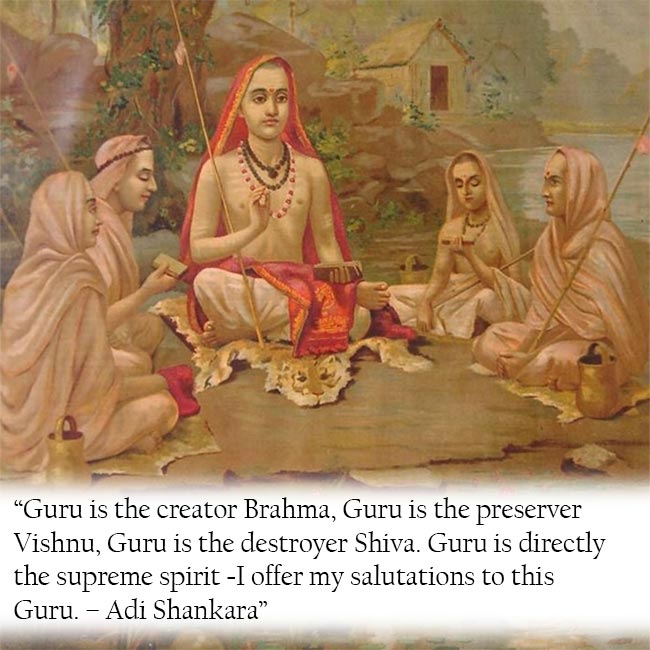
Significantly, the timing of introduction of education (vidyarambha-samskara) into the formal socio-cultural list of essential samskaras follows the evolution of Samskritam from an oral to a written language.
In fact, this evolution of Samskritam from an oral to written system occurred around 500 BCE with the seminal works on grammar by Panini (ashtadhyayi – eight-chapter grammar), Patanjali (mahabhashya) and Katyayana’s commentary. Indeed, ashtadhyayi became the foundation of vyakarana, an element of the vedanga.
Also, it seems significant that this knowledge of Samskritam alphabet and grammar took approximately 1000 years to get formalised into the education system (vidyarambha-samskara). Additionally, this samskara is done before the initiation ritual (upanayana) and represents the start of formal learning of Samskritam as a medium of knowledge.
The gurukul system: What happens during brahmacharya-samskara?
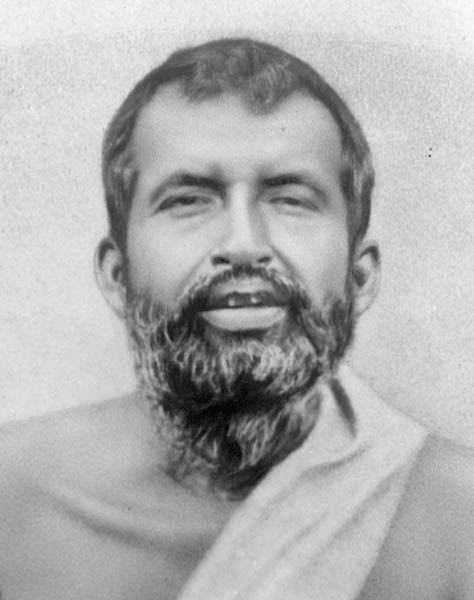
- Firstly, upanayana-samskara was one of the most significant samskara. Here, the student became “dvija” (twice born) and graduated from a “shudra” to a “vipra” or “an initiate / student”. This ceremony is a very old samskara as it is mentioned in the Rigveda. Initially, this samskara initiated formal learning of brahma-vidya (knowledge of the Self/ Brahman), rites and rituals, but later metamorphosed to cover all knowledge.
- Importantly, upanayana means “taking charge of a student” and can also mean savitriya-vandanam (Savitri-salutation). So, upanayana was the rite by which a teacher accepted a student, and it was performed every time the student went to another teacher to learn something new. Hence, it is a sacred and formal bond between the student and the teacher for imparting knowledge.
- In fact, in the gurukul system, during the period of learning, the student lived with the teacher as a part of his family, performing tasks as demanded by the teacher, living a vow of poverty. Importantly, the intent was that in a boarding environment, the relationship becomes one of intimacy and family.
- Consequently, this allows the teacher to observe the pupil closely and regulate the lessons, to ensure greater understanding (vijnana), while this allows the pupil to absorb the non-verbal and subconscious aspects of living from the teacher. In fact, when the devotion (upasana) of the pupil is complete, he begins to mirror the teacher.
The gurukul system : Influence of guru-vandana in the oriental world:
- Interestingly, the gurukul system of learning is not exclusive to India, but almost of all of Asia. In fact, when Deming and Juran, the great teachers of Quality Control, visited Japan for lectures, they were surprised to notice many of the Japanese students mimicking the way they walked, talked and ate. In fact, this is upasana, extreme dedication to the guru.
- However, it is possible that with increased streams of knowledge and increased population, the demand for varied forms of knowledge increased beyond supply. Consequently, all teaching was not residential but also included day scholars.
Is there a classification of gurus as per the gurukul system?
(Excerpts from Prof. Mahadevan’s, IIM-B Speech “On Re-engineering Higher Education in India”)
Categories of teachers as per Sanskrit scriptures:
- शिक्षकः (shikshakaha) – A simple teacher of syllabus or a tutor. In fact, this might be a senior student under a guru.
- अध्यापकः (adhyapakah) – Somebody who can explain the lessons better. Also, this should be somebody who does adhyayana (अध्ययन), little thinking before talking, knows how to reflect a little.
- प्रॉध्यापकः (pradhyapakah) – Somebody who can explain things even better. Significantly, they prepare before going to class. In fact, even though they are subject matter experts, they keep reading all the time and upgrading their knowledge.
- उपाध्यायः (upadhyayah) – Somebody who can take student closer to the issue being taught. Importantly, they develop an interest in the student on the subject regardless of the difficulty of the subject.
- महामहोपाध्यायः (mahamahopadhyayah) – Somebody who is a veteran in the above skill, and can inculcate a lifelong interest in the subject in the student.
- देशिकोत्तम्: (deshikottamah) – A teacher who is more than the subject matter. In fact, they are role models and imbibe values in their students. Students love them, not only for their expertise on the subject, but also for the values they hold.
- आचार्यः (acharyah) – An acharya is one who has not only mastered all shastra (sciences), but is able to put the concepts into practice. Additionally, an acharya enables his students to practice these concepts.
- Guru – A person who can lead people who come into their influence out of darkness into brightness.
What is the role of a guru in the gurukul system ?
Gu means darkness, ru means annulment that removes darkness. Importantly, the ultimate role of the teacher is to remove the darkness from the minds of the students, i.e. show them the light and not just train them to get marks. Also, they are a lifetime inspiration to their students. Significantly, the guru/ acharya do not take the horse to the pond. However, they create so much thirst, that the horse will go and look for the pond to drink water.
Obviously, this system of learning is far more lasting and eternal because the the focus is on increasing awareness (prajna).
So, the role of teachers is not to manage a syllabus, but to show the way of learning. Also, the intent is not to teaching excessively and inhibit the student’s exploration and learning.
Importantly, the difference between teaching and learning is that, teaching is downloading information with no encouragement of feedback. However, learning is a symbiotic process where students expand their knowledge by interactive understanding of the subject (vijnana).
In fact, there is no a word for teach or teacher in Samskritam. All the above words are having the suffix ‘kah‘. In Samskritam, putting suffix ‘kah’ in the end of the word actually means causing some body to do something.
For example, shiksha is learning, shikshakaha is somebody who is causing you to learn.
What are the stages in learning as per the gurukul system?
SWAMI GURUBHAKTANANDA – Reflections on Chandogya Upanishad
All education is imparted by communication. First, let us consider what actually happens at the subtlest level prior to uttering the actual gross speech:
- Para-vani – This is when speech is still in its unmanifest or dormant form. For example, all the information of our school would be in our mind in an unmanifest form most of the time.
- Pashyanti – As soon as someone mentions the name of our school, the picture of the school pops up in the consciousness. Here, we see the building and other aspects associated with the school.
- Madhyama – The way we give expression to the thoughts when we wish to speak about our school.
- Vaikhari – The actual articulation of expression.
Also, acquisition of knowledge has 3 stages:
- First, concentration is practice of focusing the consciousness (citta) on a given theme or idea, a picture or a sound.
- Next, contemplation is a form of concentration, but done in silence, in a meditation posture (dhyana).
- Finally, meditation is the advanced form of contemplation on the Self. Here, the consciousness is completely stilled (samadhi).
How is contemplation (achieving an internal peace) explained in the Chandogya Upanishad (6.1)?
Ch Up (6.1) dhyayati-iva-prithivi-dhyayati-iva-antariksham-dhyayati-iva-dyauh-dhyayanti-iva-apah-dhyayanti-iva-parvata-dhyayanti-iva-deva-manushyah.
The earth contemplates as it were. The sky contemplates as it were. Heaven contemplates as it were. Water contemplates as it were. The mountains contemplate as it were. Divine beings and men contemplate as it were.
Ch Up (7.1) explains the importance of vijnana (conceptual understanding of any subject) as the core of all knowledge acquisition.
• vijnena-va-rig-vedam-vijnanati – by cognition alone can rig-veda be understood,
• yajur-vedam-sama-vedam-atharvanam-chaturtham – yajur and sama vedas; the atharvana as the fourth,
• itihasa-puranam-panchamam-vedanam-vedam-pitryam-rashim-daivam – the itihasas and puranas as the fifth veda – grammar; rules for the worship of ancestors; mathematics; the science of portents and deities,
• nidhim-vako-vakyam-ekayanam-devavidyam-brahmavidyam – the science of logic, the science of ethics, the knowledge of the deities, the ancillary knowledge of the Brahman/ Vedas;
• bhutavidyam-kshatravidyam-nakshatravidyam-sarpa-vidyam-devajana-vidyam – knowlege of creation, the science of war, science of stars; the science related to serpents, cognition of the deities.
• divam-cha-prithivim-cha-vayu-cha-akasha-cha-apa-cha-teja-cha – also deities, also earth element, also air, also space, also water also fire.
• devan-cha-manushyan-cha-pashun-cha-vayamsi-cha – also deities and humans, as well as animals and birds.
• trina-vanaspatin-shvapadani-akeeta-patanga-pipilikam – grasses and trees, beasts down to worms, flying insects and ants.
What is Adi Shankaracharya’s advice for knowledge acquisition?
- All knowledge acquisition is based on sankalpa. In fact, sankalpa is defined by Sri Shankaracharya as “the ability to discriminate between what is done and what is not”. Thus, knowledge acquisition is a gap analysis and its closure.
- Sri Shankara delineates 6 qualities of a student for spiritual progress in Vivekachudamani, but these qualities are equally applicable for any form of knowledge acquisition –
- sama (treating everything equally),
- dama (rigid self-control),
- uparathi (control over the senses),
- titiksha (forbearance),
- shraddha (sincerity in effort), (read what Sri Krishna says about shraddha in the Bhagavad-gita)
- samadhana (flexibility in solution).
- Additionally, Sri Shankara adds mumuksutvam (burning drive for knowledge) as a critical requirement. Sri Sankara says, that for knowledge transfer, an attitude of complete surrender to the Guru is required. Literally, this means that the student must unlearn everything that he knows on the subject to relearn from the guru.
- However, this does not mean that the pupil accepts everything that the guru says. In fact, the student is expected to question the guru, and learn to discriminate real from unreal (vivekam). He must not get sentimental about the truth, but step back and view knowledge dispassionately (vairagyam). Thus, there is transfer of knowledge.
This is the ancient South Asian gurukul system (gurukula system).