What is tadasana (mountain pose)?
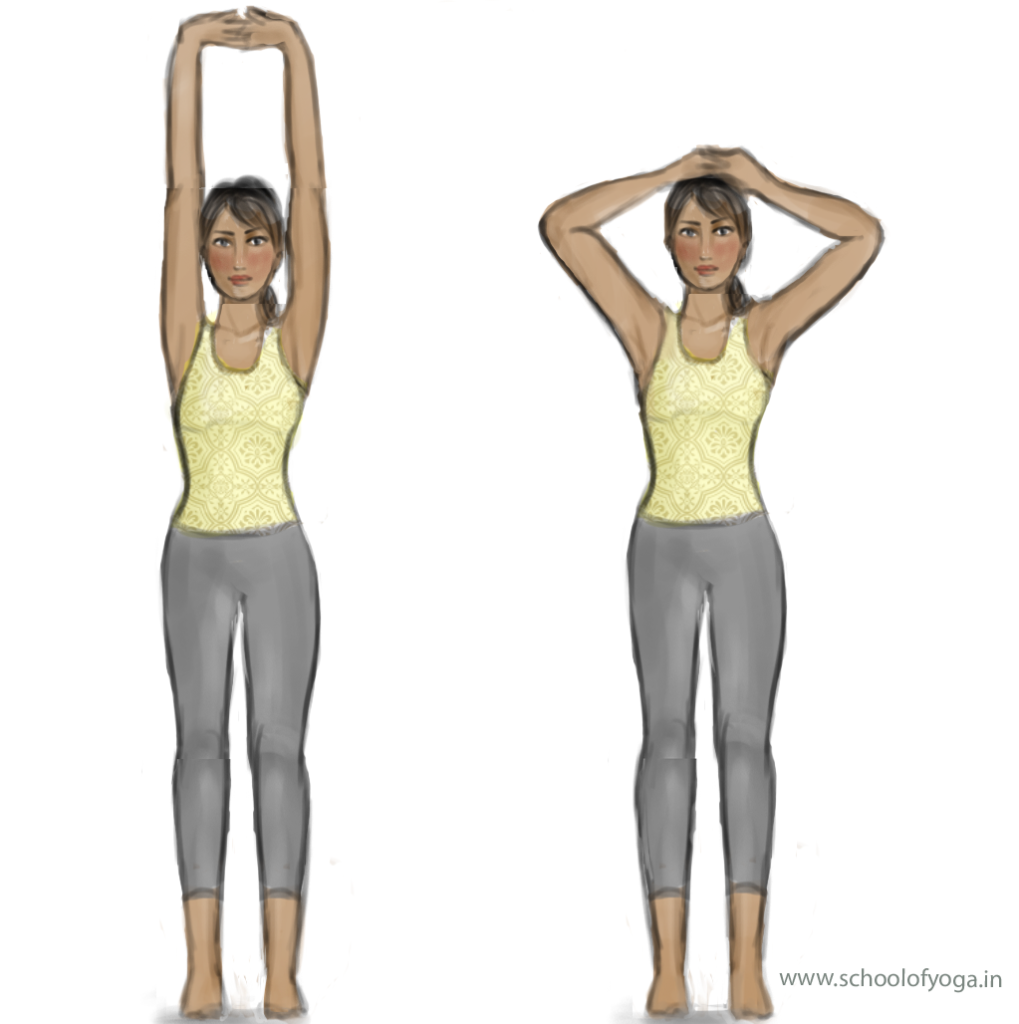
Tadasana, also known as the mountain pose, is a standing and stretching asana that helps improve posture and balance.
How should one practice tadasana yoga pose?
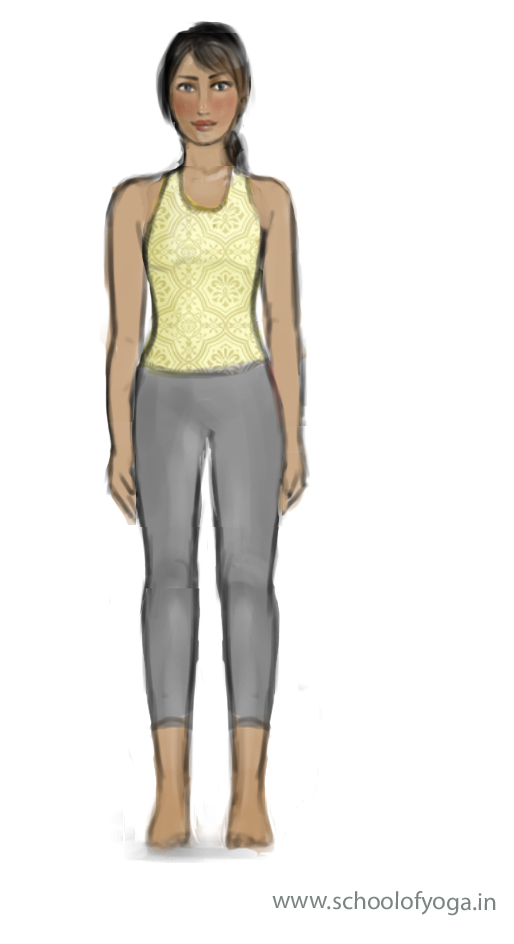
- Sthithi (Starting) position: Stand with your feet together, such that they are touching each other.
- Ensure you distribute your body weight equally across your feet. Now breathe in.
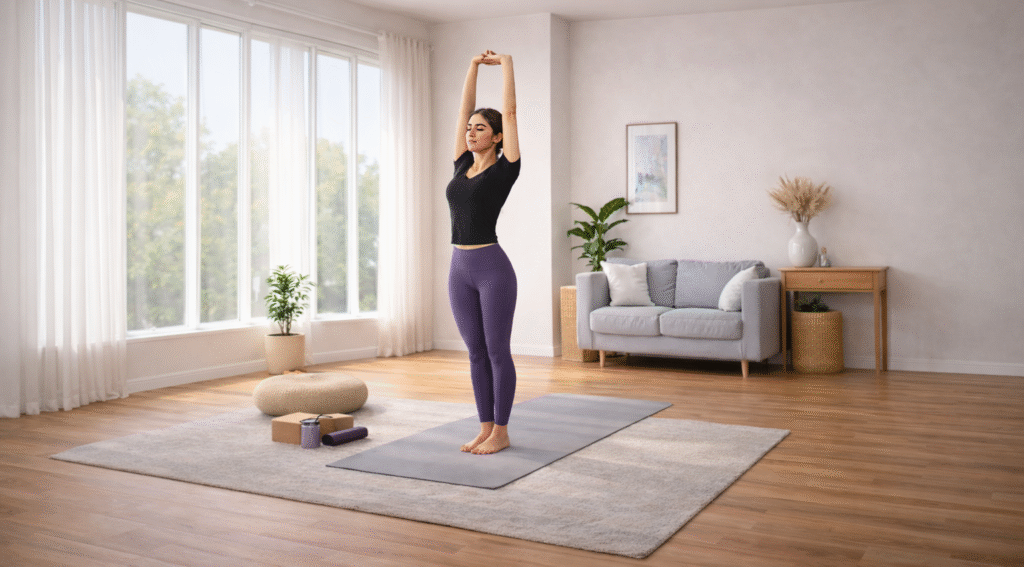
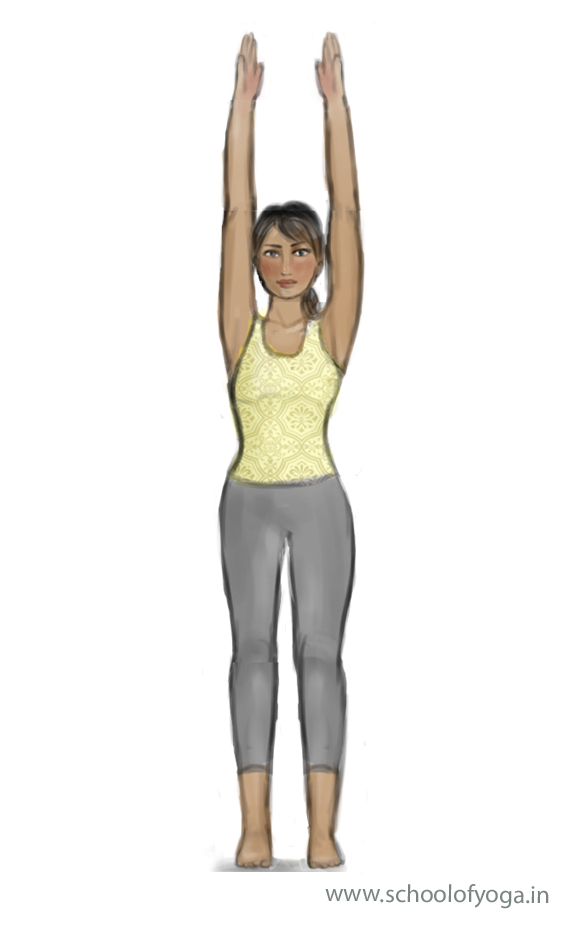
- Next, interlace the fingers and slowly raise your hands to the top of your head.
- Keep your palms facing outwards above your head.
- While breathing out, stretch your hands, maintaining the alignment of the body along the line of the spine.
- Let the tongue press the upper palate. Tighten your throat.
- Tighten the abdomen and tuck the anus inward. This will cause the knee muscles to tighten.
- Hold for 10 counts while you maintain shallow breathing.
- Finally, bring your hands back to the top of the head and then to the side. Relax.
- Slowly increase the duration of the asana.
- The recommended yoga drishti (gaze) is urdhva-drishti (gaze into space).
What are the variations of tadasana ?
Some of the variations which can be used in this asana are:
- Variation 1– Stand with both legs slightly apart. Spread your body weight equally. Hold this position and breathe normally. This is called samasthithi asana (Equal position pose).
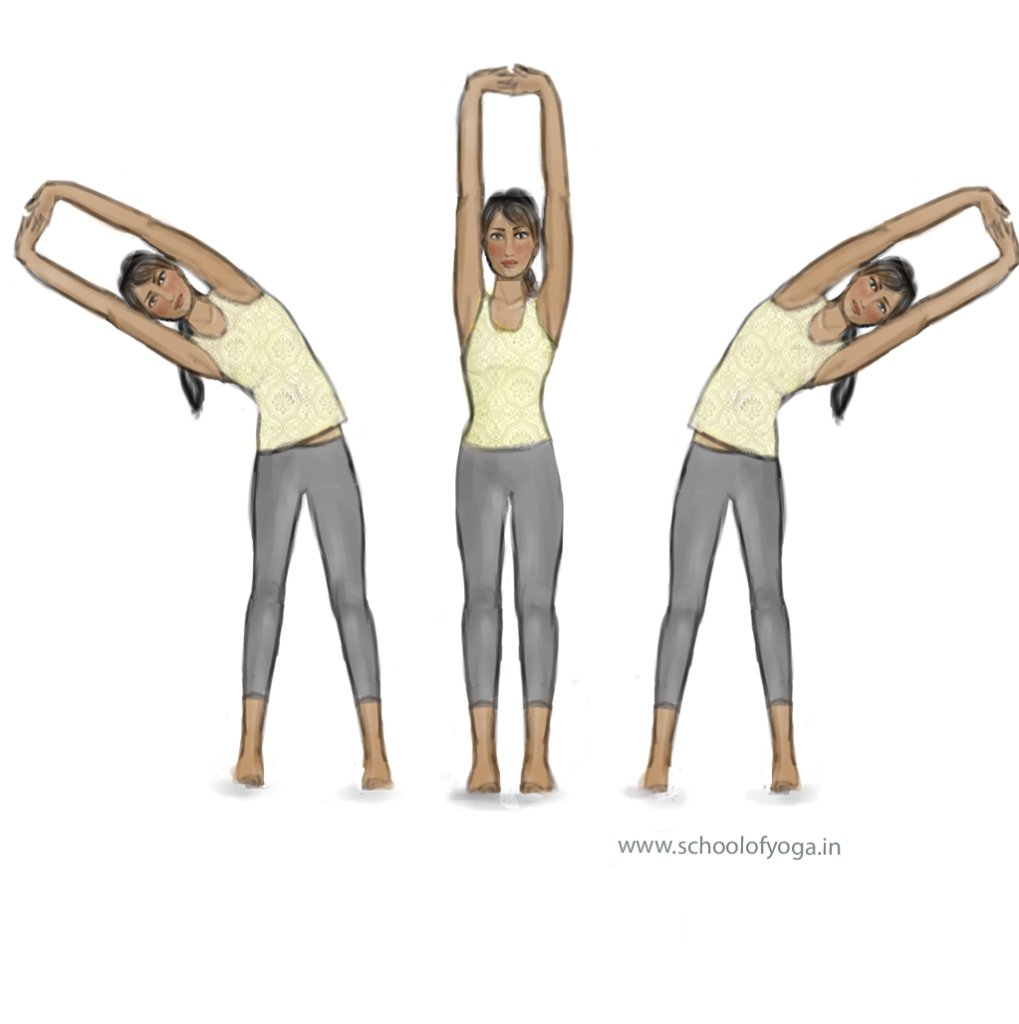
- Variation 2 – tiryaka tadasana – While you are breathing out, slowly bend the body to one side at the hip, stretching as far as possible. Slowly, come back to a straight position. Now bend your body to the other side. Ensure that the pressure exerted by the feet on the ground is equal. Also, ensure that the knees do not bend or flex, and the hips stay as a unit.
- Variation 3– Firstly, stand with your legs together, your hands to the side. Slowly raise both hands, taking them above your head. Importantly, when your hands pass the shoulder level, follow your thumbs with your eyes. Maintain shallow breathing, holding for 10 counts. This is called “urdhva hastasana (upright hand pose)”
What are the benefits of the mountain pose?
- The upward stretching of the hands results in the stretching of the pectoral, infraspinatus, serratus, as well as the intercostal muscles. It also stretches the abdominal oblique muscles. This tones up the entire sympathetic and parasympathetic nervous system due to the direction of blood to the region.
- This asana helps bring suppleness as well as strength to the spine, hence it is very useful in all back-related illnesses.
- The breathing out and tucking in of the abdomen results in strengthening of the abdominal muscles and also assists in the reduction of adipose tissue around the abdomen.
What are the contraindications for the mountain pose?
- People with back problems and circulatory disorders should not attempt this asana without first consulting a physician.
Some noteworthy points on tadasana:
Internal Links: Dharma (conditioning), Stress and Situational Awareness, Prana, Asana overview 1, Asana Overview 2, Asana Focus or gazing, Pranayama
External Links: Prana, Chakra, Pancha Tattva, Pancha Prana, Pancha Kosha, Nadi ,